
Christian Travel News & Information
Christian Tours

Jews of Khaybar: Four Traditions, One Desert Mystery
Ninety-five miles north of Medina, the ruins of a Jewish fortress rise above a date-palm oasis. The locals call it Jabal al-Yahud, the Mountain of the Jews. The two leading tribes called themselves priestly and claimed descent from Aaron. Four traditions explain how they got there, and they do not agree.
Did Jethro Know YHWH Before Moses?
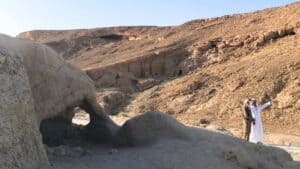
Midian was Abraham’s son through Keturah. Abraham sent those sons east with more than livestock. Before Moses ever climbed it, Exodus already calls the place the mountain of God. When Jethro says “Now I know,” the Hebrew points to confirmation, not conversion. The genealogy, the bush, and what Exodus 18 actually says.
Temple Zero and the Tent of David: Where Zadok Anointed Solomon King
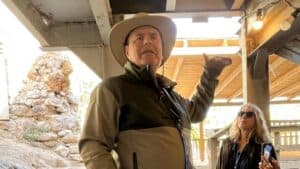
When King David brought the Ark of the Covenant to Jerusalem, he did not place it in the existing tabernacle at Gibeon. Instead, he pitched a tent for the Ark in the city of David, set Zadok the priest before it, and there the Ark remained for forty years, until Solomon completed the Temple. The tent has always been a…
Tower of Babel: Was it Actually in Northern Mesopotamia?
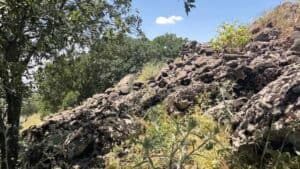
Two Candidates at Opposite Ends of Mesopotamia Genesis sets the Tower of Babel in a place it calls Shinar, and says nothing about where Shinar was. That single missing detail has produced two rival proposals that could hardly sit farther apart. One places Babel in the far south of Mesopotamia, near Babylon or older still at Eridu, among the first…

King Abgar’s letter to Jesus: Edessa’s ancient Christian claim
How a small Syriac kingdom in what is now southeastern Turkey may have been among the first on earth to believe. A kingdom on the edge of the Syrian desert became Christian while Rome was still feeding believers to the lions. It kept in its royal archives a letter its kings believed Jesus had written by his own hand, and…
The Corinth Canal: The Shortcut Paul Never Got to Take
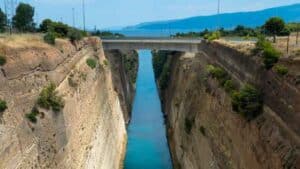
Why the Isthmus of Corinth Demanded a Canal When the Apostle Paul boarded a ship at Cenchreae bound for Jerusalem, he was leaving from the eastern harbor of Corinth (Acts 18:18). The Corinth Canal that today cuts straight through the isthmus, connecting the Aegean and Ionian seas, did not yet exist and would not exist for another eighteen centuries. Roughly…

The Chariot Without a Charioteer: Sinai Petroglyphs and Exodus 14
The Lure of Serabit el-Khadim Most of what brings scholars to Serabit el-Khadim is on top of the mountain. The Temple of Hathor sits at the summit, surrounded by the proto-Sinaitic inscriptions that Flinders Petrie first documented in 1905 and that Dr. Douglas Petrovich has argued, on a reading still debated in the field, may name Joseph’s children. The temple…
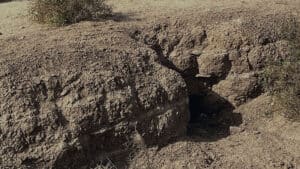
The Bricks at Pithom Have No Straw
Standing On the Slavery Site of Exodus 1:11 The wind moves across a low brown rise about sixty miles east of Cairo, and our group of travelers stops walking. The guide, an archeologist and Egyptologist, Mido, has bent down to pick up a piece of broken brick. He turns it in his hand and looks up. “100% here who made this one was…
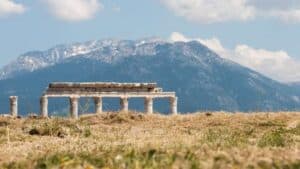
Laodicea: The Lukewarm Church and Its Warning for Today
The Warning Among the Seven Churches of Revelation, few cities speak to the modern church as powerfully as Laodicea. Located in western Turkey, Laodicea was once one of the wealthiest and most influential cities in Asia Minor. Today, it stands as one of the most well-preserved archaeological sites connected to the Book of Revelation — a city whose ruins still…
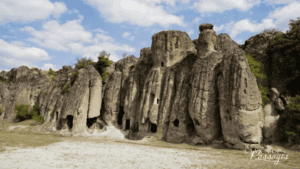
Paul’s First Missionary Journey in Turkey: Visiting Iconium, Lystra, and Derbe
“Now at Iconium they entered together into the Jewish synagogue and spoke in such a way that a great number of both Jews and Greeks believed. “ Acts 14:1 Visiting the Turkey Sites that Paul’s First Missionary Journey Began In Acts 14, Paul and Barnabas pushed deep into the Roman province of Galatia. They were preaching in synagogues, healing the…