The History of Baal Peor in the Bible

"But I have a few things against you: you have some there who hold the teaching of Balaam, who taught Balak to put a stumbling block before the sons of Israel, so that they might eat food sacrificed to idols and practice sexual immorality. "
Baal Peor in the Bible: Israel at the Threshold of the Promised Land
When the risen Christ addresses the church at Pergamum, he warns them about "the teaching of Balaam" and the stumbling block at Baal Peor. This event recounted in Numbers 25, remained so significant that almost 1500 years later, Jesus himself cited it as an active threat to the church.
What happened at Baal Peor that made it more than ancient history? Why does this incident carry such weight that Christ makes a warning of it for Christian communities? To understand why, we need to go back to the narrative from the book of Numbers which recounts how Israel risked losing everything at the threshold of promise.
The exodus generation has died off in the wilderness. Their children, the ones who will
actually, inherit the land, stand poised across the Jordan from Jericho, camped near Mount Nebo. But at Beth Baal Peor the people encountered a deceiving pitfall.
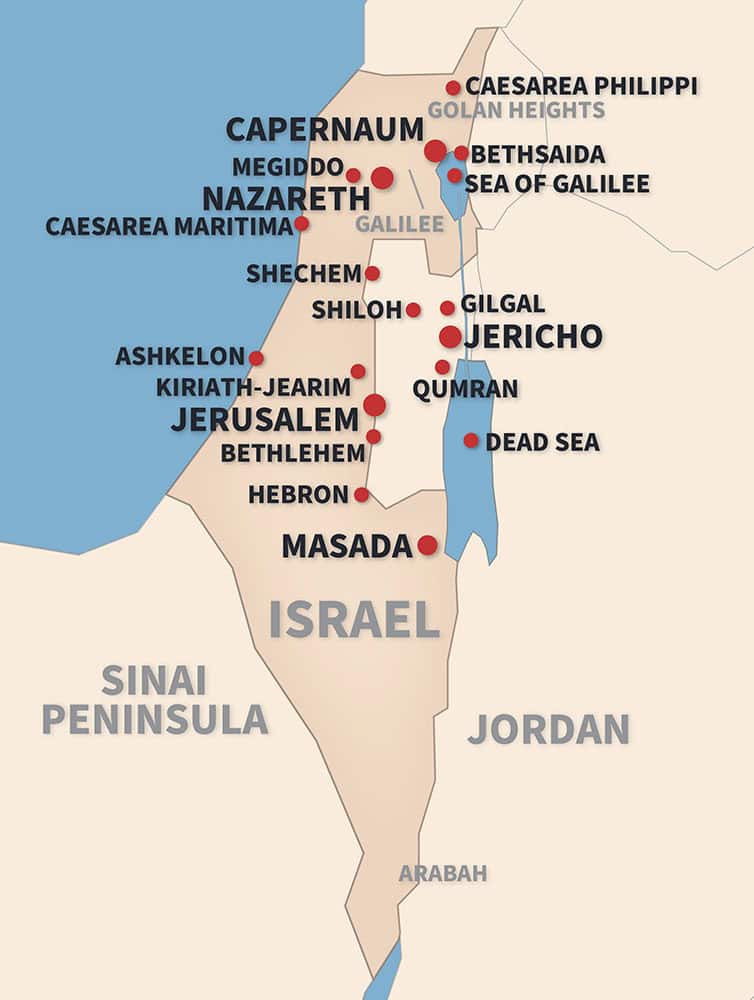
The Israelites' journey to this point had been carefully choreographed by divine command. They had avoided the territory of Edom (descendants of Jacob’s brother Esau), passed peacefully alongside the Ammonites and Moabites (descendants of Lot), and defeated the Amorites who occupied the region. But at this crucial threshold moment with the Promised Land in sight they encountered something beyond military opposition: a spiritual ambush.
Balak’s Fear and Balaam’s Summons
The Midianite leaders operating from their capital at Balqa (modern as-Salt in Jordan) were getting nervous. King Balak of Moab watched this massive Hebrew migration and panicked. Unable to defeat them militarily, he sought supernatural intervention from a prophet named Balaam, asking him to curse the Israelites.
Balaam, son of Beor, was from Pethor (PeTuR H#1860 to interpret, translate /“explain”; Aramaic PShR) located alongside the river Abraham and Lot crossed from Harran toward Canaan generations earlier. An ink on plaster inscription relating his visions even exists in the Jordan Archaeological Museum in Amman today. Although dated to the 9th century BC, it nevertheless provides extra-biblical evidence for the existence of Balaam in the biblical account.
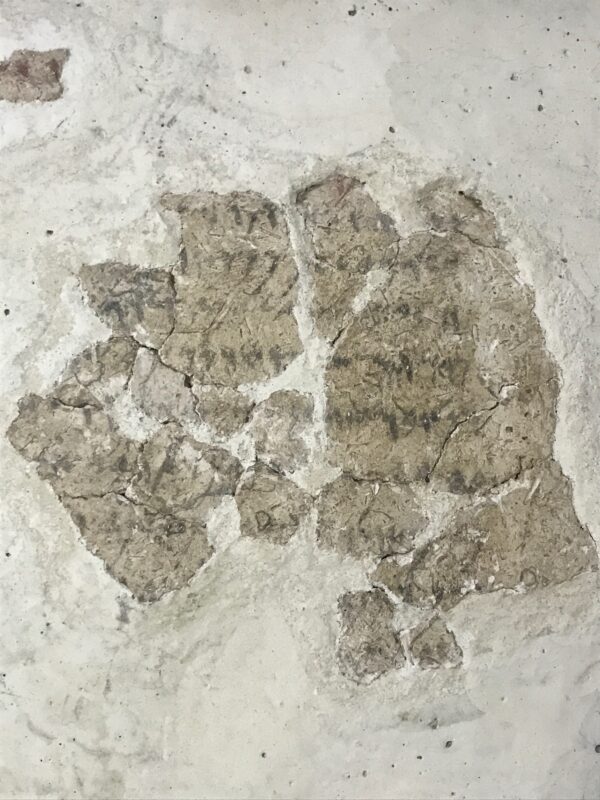
Deir Alla Inscription Fragment at the Jordan Archaeological Museum
What follows is legend-class material with an angel appearing and a talking donkey. On the road, his path is blocked by "the angel of the LORD standing in the road, with a drawn sword in his hand" (Numbers 22:23). The donkey sees the danger and turns aside three times, but Balaam, the prophet whose spiritual insight was sought by kings, saw nothing. Though a non-Israelite, Balaam is under a divine mandate from the Lord who commands him directly, "only do what I tell you.”
Balaam’s Oracles from the Mountains of Moab
Balak meets him at the extreme border of Moab formed by the Arnon River (known today as Wadi Mujib). Then Balak takes him on a prophetic road trip stopping at multiple vantage points, each revealing more of Israel's encampment. At each stop, altars are built and sacrifices are offered. Balaam can only speak what he sees, what the Lord shows him: inevitable outcomes, truths that matter regardless of who want to hear them.
Balak was hoping a change in perspective would yield a different result, but at each stop, instead of curses, blessings pour out. They start at Bamoth-Baal in the southeast, move west to hills above the plains, then north through the mountains, and arrive at the descent from Abarim and Mount Pisgah. There Balaam proclaims: "The LORD their God is with them, and the shout of a king is among them" (Numbers 23:21), identifying Yahweh himself as Israel's true king, dwelling in their midst.
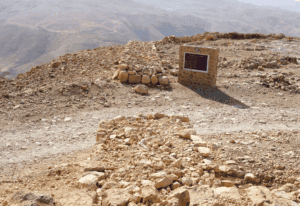
Balak at last took Balaam to the overlook promontory on mount Peor for his final statement (Numbers 24). By this time, the families of the fighters from the Argob region extending to Bashan had descended to their temporary settlement near the Dead Sea. The people were already transitioning into the acacia groves below (Abel-Shittim), and he has a full view of the people encamped tribe by tribe. The final oracle, delivered from the top of Peor, contains one of the most significant messianic prophecies in the Hebrew Bible.
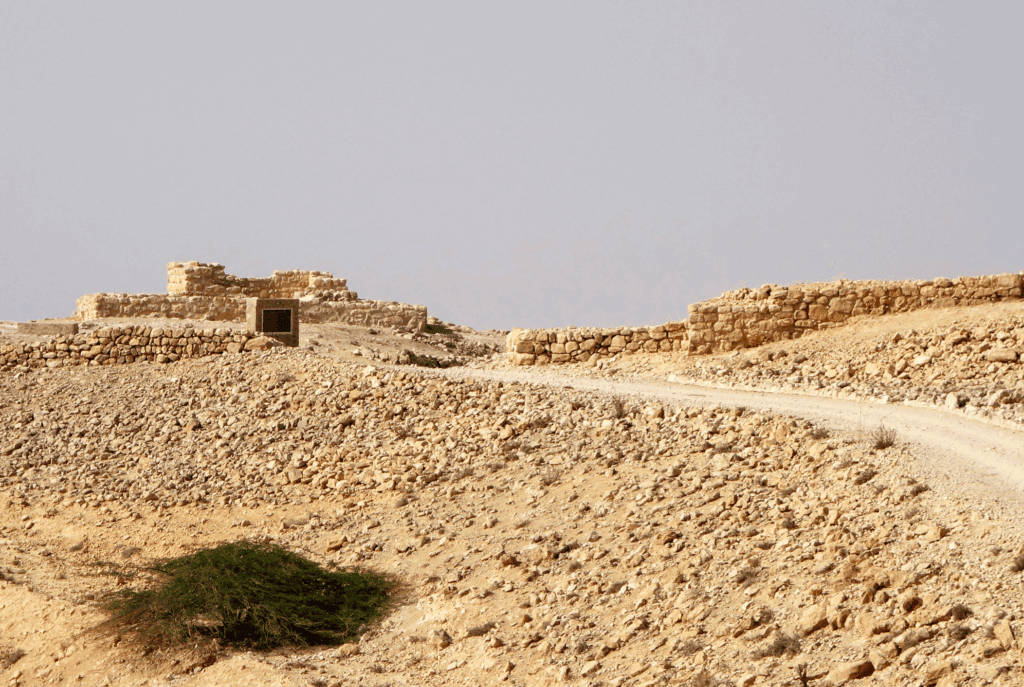
Mount of Baal Peor where King Balak and Balaam once stood.
"I see him, but not now; I behold him, but not near: a star shall come out of Jacob, and a scepter shall rise out of Israel..." (Numbers 24:17) Balaam’s prophecies are extraordinary describing Israel's future glory, their distinctiveness among nations, the coming of a ruler whose star would rise from Jacob, the ultimate defeat of all their enemies. These are soaring theological poetry. The first official prophecy of the LORD within scripture from a non-Israelite source, and it's stunning in its clarity and power.
But the divine protection so eloquently promised in these oracles would immediately
be tested. Balaam genuinely saw what God showed him on those mountains. He genuinely blessed Israel. And yet he also genuinely wanted Balak's reward. When the supernatural constraint lifted, when he was back to operating on his own will he saw a way to profit from Israel's destruction.
Along this optimal descent, the path travelers crossed to reach their encampment below, was set up a local attraction: an ancient Amalekite fertility rite that the Kenites had transformed into a scheme for seducing and entrapping passersby. This particular 'House of Bossing' was a remote resort for leaders who lorded over both Moabites and Ammonites. These elites bearing Bel-names linked to Ashur (Assyria) and Akkad (Babylon) strategically occupied the heads of the mountain passes that controlled trade routes with the Canaanites.
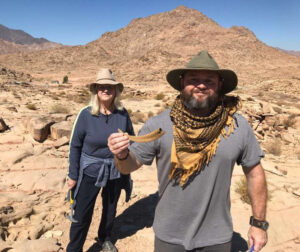
Archaeological discoveries shed light on the cultural background of this event. At Timna in the Arabah, researchers have documented Amalekite rock art depicting ancient fertility rites and evidence of cultic practices involving “sacred prostitution” and even a 3,200-year-old burial of an important Egyptian woman being pregnant. These findings illuminate what the text describes, an established archaic fertilization rite tradition that predated the Israelite encounter but was weaponized against them at this strategic moment.
The Sin at Baal Peor: Israel’s Catastrophic Compromise
From that point onward, Peor (Hebrew PaAUwR, H#1794, meaning “to open wide” or
“gape”) got shifted from a simple hilltop retreat, a kind of Beit Shar campsite overlooking the valley with its inward spring, into a place associated with ritual exposure. What had once been a resting-place became a site marked by the imagery of “stripping bare” (the aA-R etymon) and by stirring or incitement (the Ph-aA etymon). It was here that the men of Israel were enticed into a brief but catastrophic episode of immorality, entering into illicit unions with Moabite women.
One Moabite girl Cozbi (KaZaBiY H#3579 deceitful) the daughter of Zur a head chief in Midian was even brought down and shown to the congregation that day by Zimri a princely son of Simeon and taken into a tent. Only Phinehas the son of Eleazar and grandson of Aaron the priest had the zeal to go after them with a javelin and thrust them through together, thus stopping the curse that killed 24,000. Tribal chiefs were executed (hung facing the sun). Leaders killed those who participated in the idolatry. This was the last foreign attack on unsettled Israel. It was also the first defensive action by the generation that would inherit the land. They would enter the land understanding both Israel's unity and the necessary boundaries with neighboring kinship groups.
A people poised to inherit the promised land discovered how easily they could lose themselves before even making it across the river Jordan. This incident shows that Israel’s greatest vulnerability was spiritual compromise from within.
The pattern Beth Baal Peor established echoes through scripture:
• David, after establishing his kingdom and defeating his enemies, staying home from battle and falling into adultery with Bathsheba
• Solomon, after building the Temple and securing Israel's glory, turning to foreign wives and their gods
• The exiles returning from Babylon, after rebuilding Jerusalem, intermarrying with surrounding peoples
• The church at Pergamum, after surviving persecution, compromising with pagan sexual practices
Perhaps the “teaching of Balaam” is ultimately about this: the moment you think you've
made it is the moment you're most vulnerable. When you're in the wilderness, you're vigilant. When you're facing obvious enemies, you're prepared. When you're struggling, you know you need God.
But when you're standing on the threshold of promise? When the hard part seems over? When you think you can finally relax? That's when the trap is most effective. The enemy doesn't always attack from outside. Sometimes the trap is already there, waiting for the moment when we let our guard down. You can't stand on the threshold of promise and simultaneously embrace what will destroy you. Israel learned it at Peor. The church of Pergamum needed to relearn it. And we're still learning it today.
In Numbers 23:10, Balaam expresses his desire to die like the righteous Israelites. “Who can count the dust of Jacob or number the fourth part of Israel? Let me die the death of the upright and let my end be like his!” He envied their destiny and wanted to share their fate. But Numbers 31:8 records something very different: Balaam died by the sword alongside the five Midianite kings, killed as an enemy of the very people whose death he had once wished to share. His end was the opposite of what he'd prophesied for himself: not among the righteous but among their destroyers.

Living Passages arranges customized Christian travel arrangements for the Bible scholar and their participants that can reach into areas of scripture that are generally overlooked. Call us to plan your next expedition at 208-765-8500.
Related Articles