The Bronze Serpent and the Pole: From Pharaoh’s Court in Egypt to Calvary
Why the single most haunting image in the Bible follows a trail that runs from Egypt through the wilderness to the cross.
Walk into the Imhotep Museum at Saqqara, the great necropolis south of Cairo, and one of the first objects you meet is a limestone pillar standing well above head height. Two serpents writhe up its shaft in deep relief, their bodies carved more than four thousand years ago for the funerary complex of King Djoser. Elsewhere in the complex, a frieze of rearing cobras crowns the walls of Djoser’s Southern Tomb.
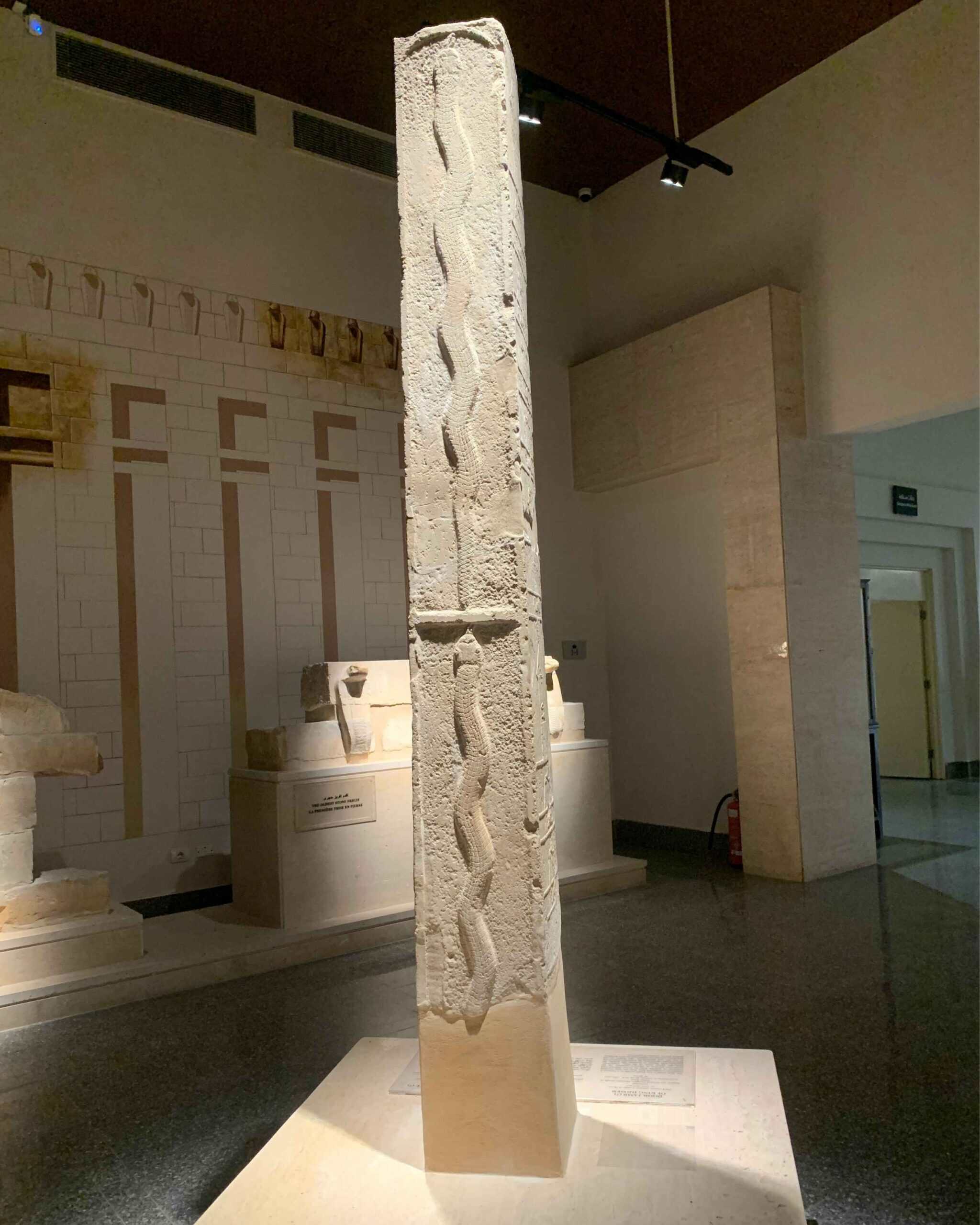
Centuries before Moses was born, before Abraham had left Ur, Egypt’s kings were already ruling in the shadow of the serpent. This is the world the bronze serpent came out of.
The bronze serpent raised in the wilderness of Numbers 21 did not arrive in a vacuum. Egypt had spent a thousand years teaching that the serpent was power. It reared on the pharaoh’s crown, guarded the gates of the underworld, and menaced the sun god himself in the seventh hour of the night. Israel walked out of that country carrying its images. Then, in the wilderness of Numbers 21, God took the emblem of Egyptian power, told Moses to cast it in bronze and raise it on a pole, and told the dying to look at it and live. Fifteen centuries later Jesus told a Pharisee that this was a picture of Himself.
What Genesis 3:15 Means by the Seed of the Serpent
The opening chapters of Genesis do something subtle and permanent. They introduce a character whose defeat the entire rest of Scripture will narrate. In Genesis 3:15, after the fall, the Lord speaks directly to the serpent and declares enmity between him and the woman, and between their offspring down through the generations. One of those lines will crush the serpent’s head. The other will strike only the heel.
Theologians call this verse the protoevangelium, the first gospel. It establishes a long war between two lines of descent. In the older translational tradition, and in the theological vocabulary the church has used for centuries, these lines are called the seed of the serpent and the seed of the woman. Every subsequent confrontation in Scripture between the people of God and the powers that oppose Him carries the residue of that original hostility.
New York Times bestselling author Joel Richardson has pressed this point in his teaching on biblical prophecy: from the beginning, the battle is between these two seed lines. When Moses stood before Pharaoh, the confrontation was not merely political. It was cosmic. The pharaohs of Egypt had spent a thousand years wearing, as Richardson puts it, “literally a snake on [their] forehead.” They were the face of a religious system built on the serpent.
The Uraeus Cobra: Why Every Pharaoh Wore a Serpent
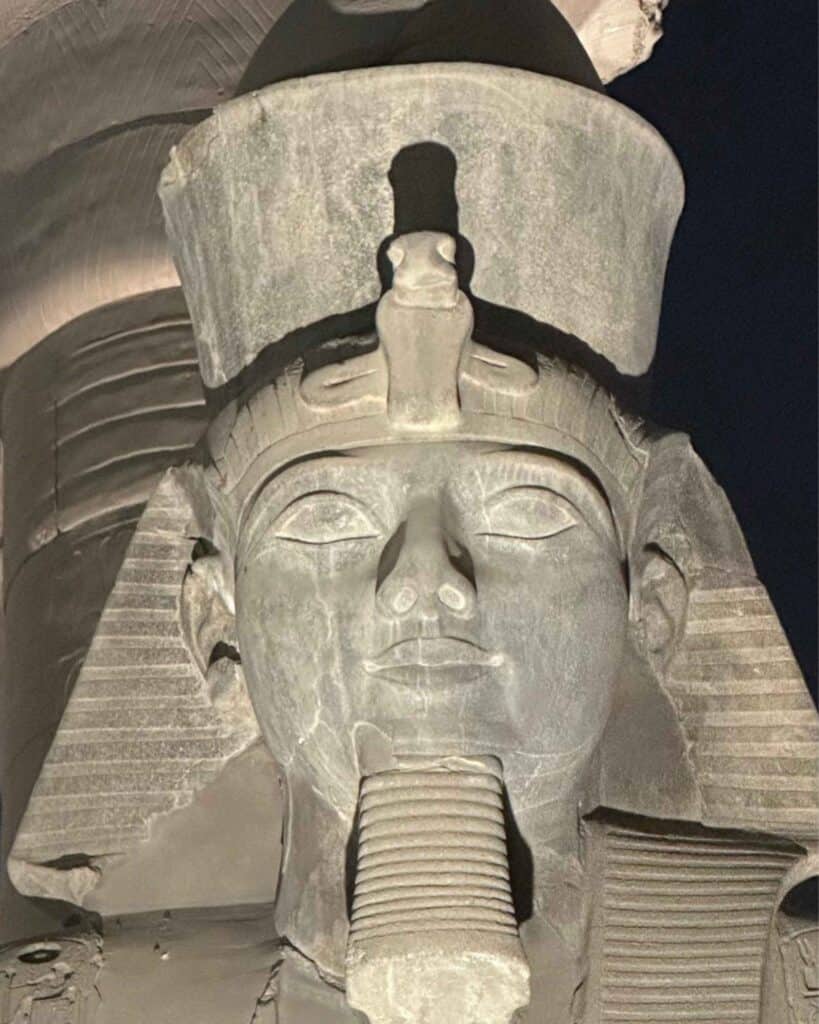
The rearing cobra on the pharaoh’s brow is called the uraeus, a Latinized form of the Greek ouraios, which renders the Egyptian iaret, “she who rears up.” It represented the goddess Wadjet, patron of Lower Egypt, and was paired in royal iconography with Nekhbet the vulture-goddess of Upper Egypt. Together the two were known as the Two Ladies, and together they signified the unified kingdom. Every pharaoh wore it. Every colossal statue that flanked every temple gate displayed it. In Egyptian theology, the cobra did more than adorn the king. It protected him, spat fire at his enemies, and marked him as divine.
Turn from the pharaoh’s crown to the walls of any royal tomb in the Valley of the Kings and the serpent multiplies. In the Book of the Dead and the Book of Gates, the sun god Ra sails his nightly barque through the twelve hours of the underworld, passing through serpent-guarded gates, coiled inside the protective body of the serpent Mehen, and confronting in the seventh hour the great serpent Apophis, the embodiment of chaos. The righteous dead can only reach the morning if they name the serpent guardians correctly and if Ra defeats Apophis before dawn.
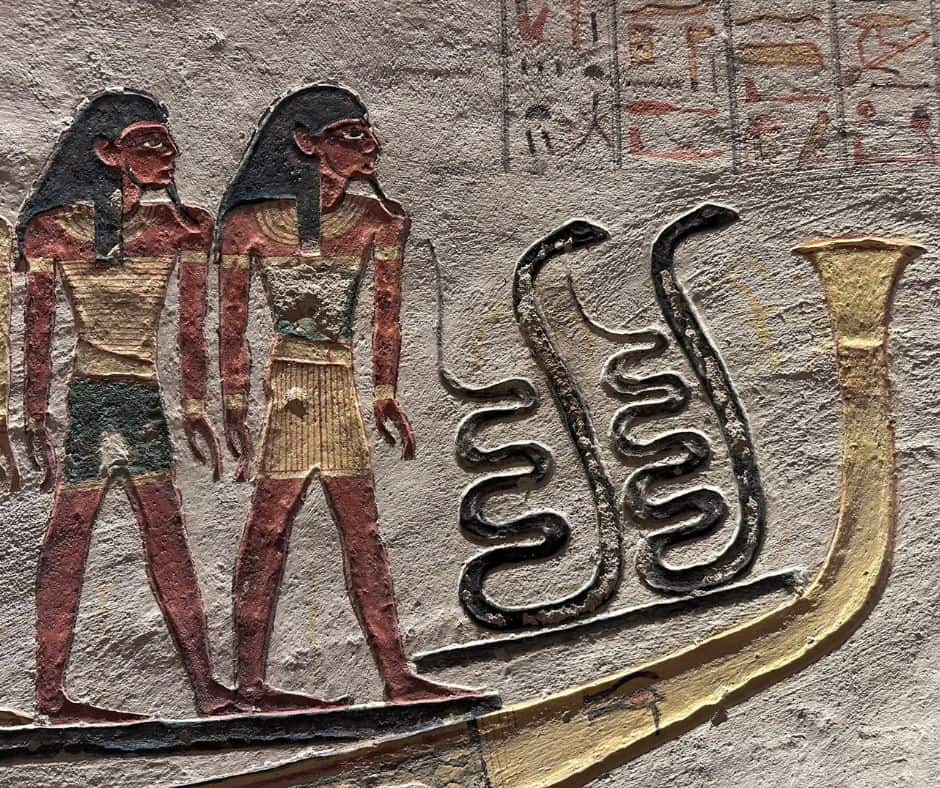
This was the visual and theological universe of Moses’s upbringing. The book of Acts tells us that Moses “was instructed in all the wisdom of the Egyptians” (Acts 7:22, ESV). That education happened in a court where serpents were carved into the thrones, coiled around the crowns, painted on the tomb walls, and whispered about in the priestly schools. The serpent was not an enemy of Egyptian religion. It was Egyptian religion’s most intimate emblem of power.
When the God of Abraham sent Moses back to confront that religion, He commandeered its central emblem.
Why Did Aaron’s Staff Become a Serpent Before Pharaoh?
At the burning bush, the first sign the Lord gives Moses is not fire, not water, not thunder. It is a staff that becomes a snake and a snake that becomes a staff again (Exodus 4:2-4). The shepherd’s rod that had kept Moses’s sheep alive in Midian for forty years is revealed as something that can take on the form of Egypt’s most sacred emblem, and return to ordinary wood at God’s word.
In Exodus 7, Moses and Aaron walk into Pharaoh’s throne room. Aaron throws down the staff. It becomes a serpent. Pharaoh’s magicians are unimpressed. They throw down their own staffs, and theirs become serpents as well. And then: “Aaron’s staff swallowed up their staffs” (Exodus 7:12).
The magicians’ serpents were the uraeus, the royal cobra, the emblem of Pharaoh’s divine authority. When Aaron’s staff swallowed them, the God of the Hebrews was announcing, in a language Pharaoh could not mistake, that the power behind the throne was about to be consumed. Every plague that followed was another blow at a different Egyptian god. The death of the firstborn was the final blow at the son of the sun.
Forty years later, in a very different setting, the serpent would return to the hand of Moses. But this time, it would not be for judgment but for mercy.
Why Did God Tell Moses to Make a Bronze Serpent?
The Israelites had already buried the generation that left Egypt. The progeny to go up went around the land of Edom avoiding conflict with their distant kin by going the low way by the Dead Sea and at Punon (Feynan) they were weary. The complaint in Numbers 21 is one we have heard before: Why did you bring us out here to die? There is no bread. There is no water. We loathe this worthless food.
The text says the Lord sent fiery serpents among them, “and they bit the people, so that many people of Israel died” (Numbers 21:6, ESV). The Hebrew word for these serpents is saraph, the same root later used for the winged seraphim that stand before God’s throne in Isaiah 6. In the wilderness, the word means flaming something whose bite is burning. The Israelites confessed their sin and begged Moses to intercede.
The Lord’s answer is one of the strangest instructions in the Torah:
Make a fiery serpent and set it on a pole, and everyone who is bitten, when he sees it, shall live. So Moses made a bronze serpent and set it on a pole. And if a serpent bit anyone, he would look at the bronze serpent and live. (Numbers 21:8-9, ESV)
God’s remedy for the serpent’s bite was the image of the serpent itself, raised up and looked upon. The cure shared the shape of the curse.
Nothing in the surrounding religious world prepared Israel for this. A Hittite would have expected a counter-spell. An Egyptian would have expected a more powerful serpent-god. Israel received something stranger: a command to look at the very thing that was killing them, cast in bronze and lifted above the camp, as the condition of their healing.
What Archaeologists Found at Timna: A Copper Serpent in a Midianite Tent Shrine
The areas where all the exodus and wilderness narrative happened was one of the richest sources of copper in the ancient Near East. The Egyptians with Canaanites mined the Sinai, the Midianites with Amalekites mined this Arabah — the rift valley running from the Dead Sea south to the Red Sea Gulf of Aqaba — and later the Israelite kings would mine Timna at the southern end on the western side of the valley in what is now southern Israel.
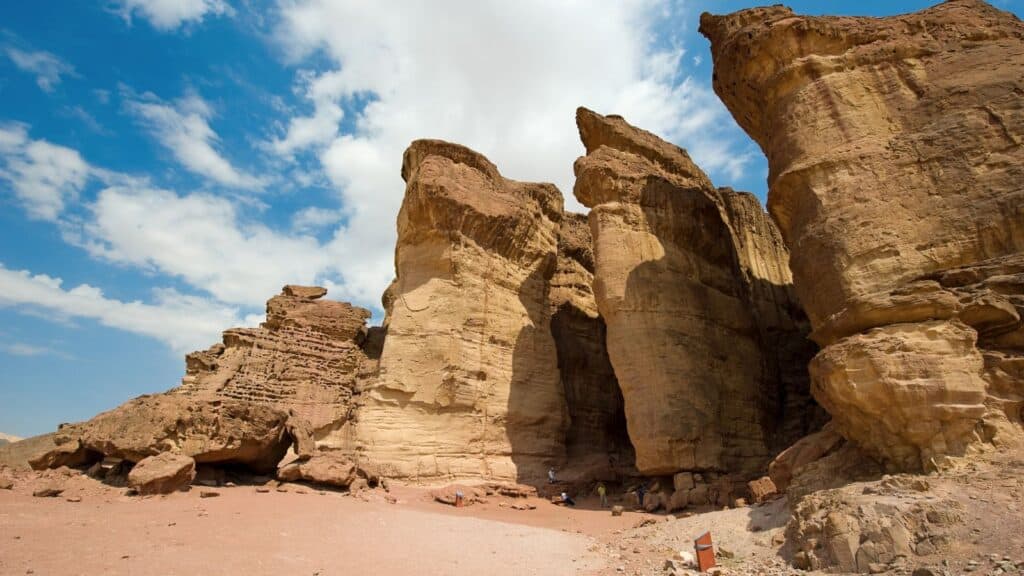
Timna sits opposite the way the Hebrews took when they left Egypt and the route the Israelites took going up, yet it preserves an identification with it. Beginning in 1969 archaeologist Beno Rothenberg excavated a small Egyptian shrine at the foot of the great sandstone pillars of Timna, dedicated to Hathor, the Egyptian goddess of mining. When Egypt withdrew from the region in the twelfth century BC, Midianites took the shrine over. They broke the images of Hathor, raised standing stones along the western wall, and hung the structure with dyed linen and wool until the Egyptian temple had become a tent sanctuary. And in the innermost chamber, the holy of holies, the excavators found a single object: a copper serpent just under five inches long, dated to the thirteenth or twelfth century BC, its head sheathed in gilt.
The pottery that identifies these worshippers as Midianite is Qurayyah Painted Ware, manufactured in northwest Arabia. These were people from the land where Moses met Jethro, worshipping in a tent, before a serpent of copper.
The scholarly debate over what this artifact means will occupy specialists for another generation. What the object shows plainly, now that it sits in a case at the Eretz Israel Museum in Tel Aviv, is something simpler. The Midianites who took the shrine broke Hathor in pieces and threw her out. The serpent they kept. Whatever they made of the Egyptian goddess of the mines, the serpent belonged to a vocabulary they shared with her, and they carried it into their own tent sanctuary and set it in the holy place.
The bronze serpent of Numbers 21 was forged out of that same world, by a people who had just walked out of it, at the command of a God who was teaching them to read it differently.
Nehushtan: Why Hezekiah Destroyed the Bronze Serpent
Israel kept the bronze serpent after the wilderness. For roughly seven hundred years they kept it. It traveled with them into the land, sat somewhere in the orbit of the tabernacle and the temple, and over time they began to worship it.
In 2 Kings 18:4, the reformer-king Hezekiah breaks the bronze serpent in pieces, “for until those days the people of Israel had made offerings to it” (ESV). The object was called Nehushtan, a serpent-likeness.
The name is exact. What Moses raised in the wilderness was never the healer. It was a likeness of the thing that was killing them, lifted up at God’s command, and the healing came from the God who gave the command and the obedience of looking at it. By Hezekiah’s day Israel had lost the distinction that the object’s own name preserved. They were bringing offerings to a likeness.
This is the permanent temptation of religious symbolism. The symbol, once it has delivered what it was meant to deliver, begins to attract the worship that belongs only to the One who stood behind it. The moment a symbol displaces the reality it points to, the symbol has to go.
A thousand years later, in a conversation with a Pharisee named Nicodemus who had come to Him by night, the Lord Jesus would reveal what the bronze serpent had been pointing to all along.
John 3:14: As Moses Lifted Up the Serpent in the Wilderness
Nicodemus had come with a theologian’s questions. Jesus answered with an image Nicodemus would have known from childhood:
“And as Moses lifted up the serpent in the wilderness, so must the Son of Man be lifted up, that whoever believes in him may have eternal life.” (John 3:14-15, ESV)
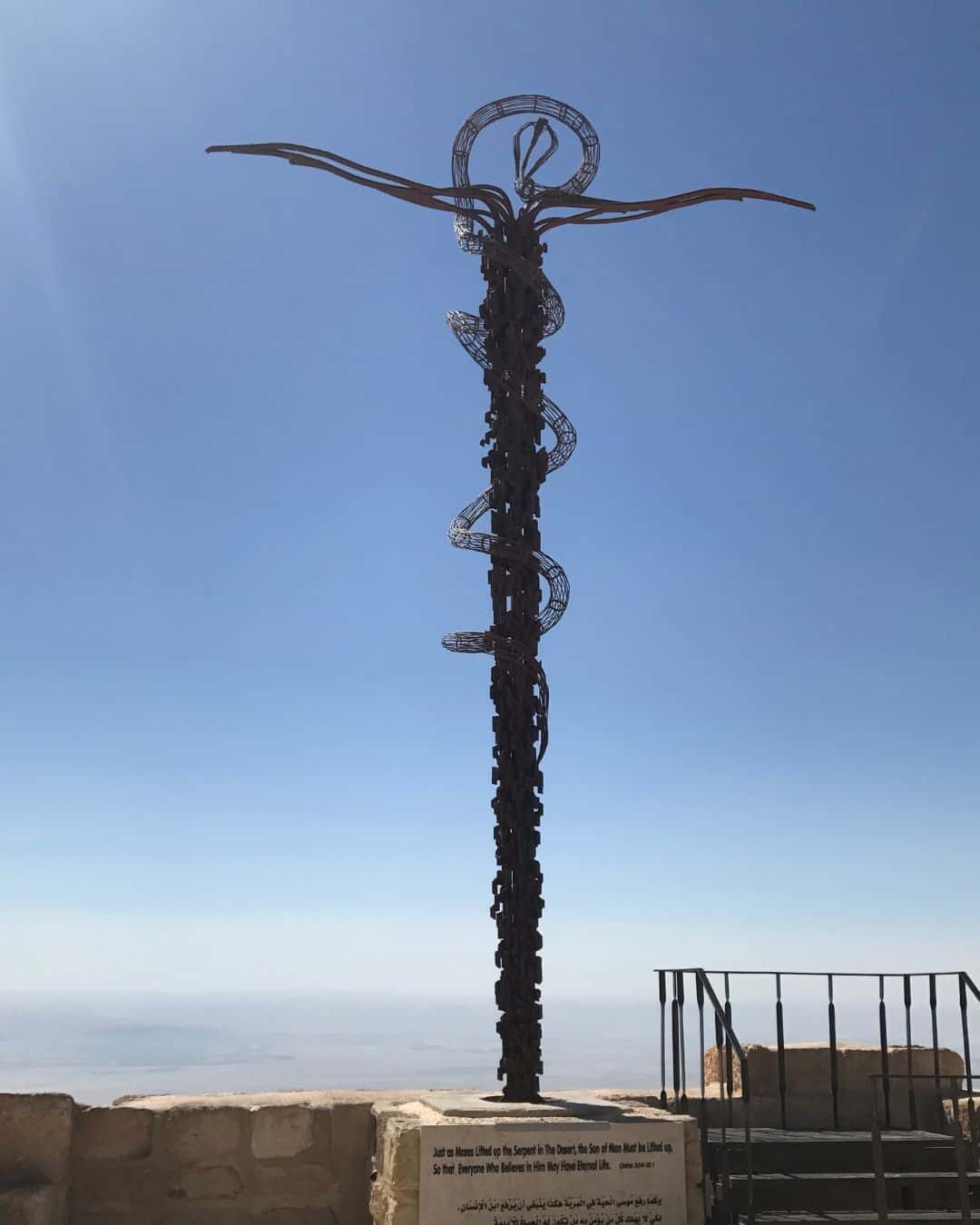
The serpent in the wilderness was a type. The reality is the Son of Man lifted up on a Roman execution stake outside the walls of Jerusalem. The condition of salvation is the same in both scenes: look and live.
Read through the Genesis 3:15 framing, the typology deepens. At Calvary, the seed of the woman permitted the serpent to strike His heel. And in the striking, His head was crushed. The image of the curse, raised up, became the means of healing for everyone who looked in faith.
The bronze serpent had been a rehearsal, and a small one. It saved those who were bitten from the venom in their blood. The cross saves from sin and death, worked by that old serpent, the devil.
Follow the Theme with Living Passages
Standing at the base of the snake pillar at Saqqara, you are standing inside a story older than the Exodus. Standing under the uraeus-crowned colossus of Ramesses II, you are seeing what Moses saw when he walked the halls of Pharaoh’s court. Standing at the Hathor shrine at Timna, you are standing in the ruin of a temple that Egyptian miners built and Midianite hands repurposed.
Our travelers walk this thread across several journeys, from the banks of the Nile to the Hathor shrine at Timna and on into the wilderness of Arabia, standing in the places where the Bible becomes an advent of realization.
Living Passages guides biblically-focused groups through Egypt. We are offering sites that have not been traditionally visited by Biblical tourism, from the Nile River where Moses was pulled out as a baby to Joseph’s storehouses during the famine.