The Corinth Canal: The Shortcut Paul Never Got to Take
Why the Isthmus of Corinth Demanded a Canal
When the Apostle Paul boarded a ship at Cenchreae bound for Jerusalem, he was leaving from the eastern harbor of Corinth (Acts 18:18). The Corinth Canal that today cuts straight through the isthmus, connecting the Aegean and Ionian seas, did not yet exist and would not exist for another eighteen centuries. Roughly four miles to the west, on the other side of a narrow neck of land, lay the city’s western harbor at Lechaeon and the open waters of the Gulf of Corinth. Paul knew that another sea lay only four miles to the west. To reach it by ship, however, he would have had to sail south for hundreds of miles around the dangerous capes of the Peloponnese, or pay to have his vessel hauled overland on a stone trackway.
This was the great frustration of the ancient Mediterranean. And the obvious solution, a canal cut through the isthmus, would not be completed until 1893, more than 1,800 years after Paul’s voyage.
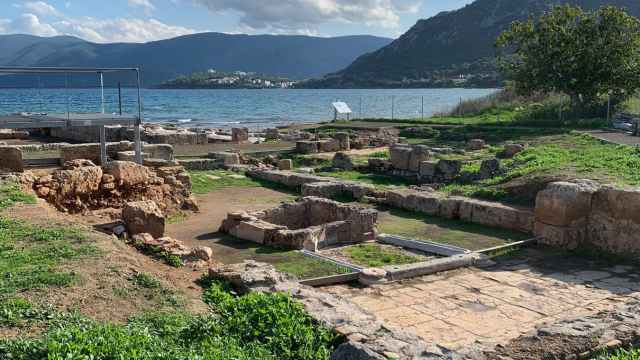
Kenchreai or Cenchreae, Corinth’s eastern port. Acts 18:18 tells us Paul cut his hair here to mark a Nazirite vow before sailing to Ephesus (with Priscilla and Aquila) on his way to Caesarea and then Jerusalem. Most scholars hold that Nazirite vows ended at the Temple, where the hair was burned with the peace offering.
The Peloponnese is the great southern peninsula of Greece, joined to the rest of the country by a slender bridge of land called the Isthmus of Corinth. At its narrowest point that bridge measures only about four miles across. Water on both sides, land in between. It is a feature so striking that ancient geographers gave it its own name and its own mythology.
For sailors, the isthmus was a curse. A merchant in Athens who wanted to ship goods west to Italy faced a choice between two unhappy options. The first was to sail his cargo nearly two hundred extra nautical miles south around the Peloponnese, navigating Cape Malea, a headland so feared it produced the proverb, “When you double Malea, forget your home.” Wrecks were routine and ships disappeared. The second option was to put in at one of Corinth’s two harbors, offload, and pay to have either the cargo or the entire ship hauled across the isthmus on the diolkos, a paved stone trackway built by the tyrant Periander in the seventh century before Christ. Smaller vessels were placed on wheeled cradles and dragged across by oxen and slaves. Larger ships transferred their goods to a different vessel waiting on the other side.
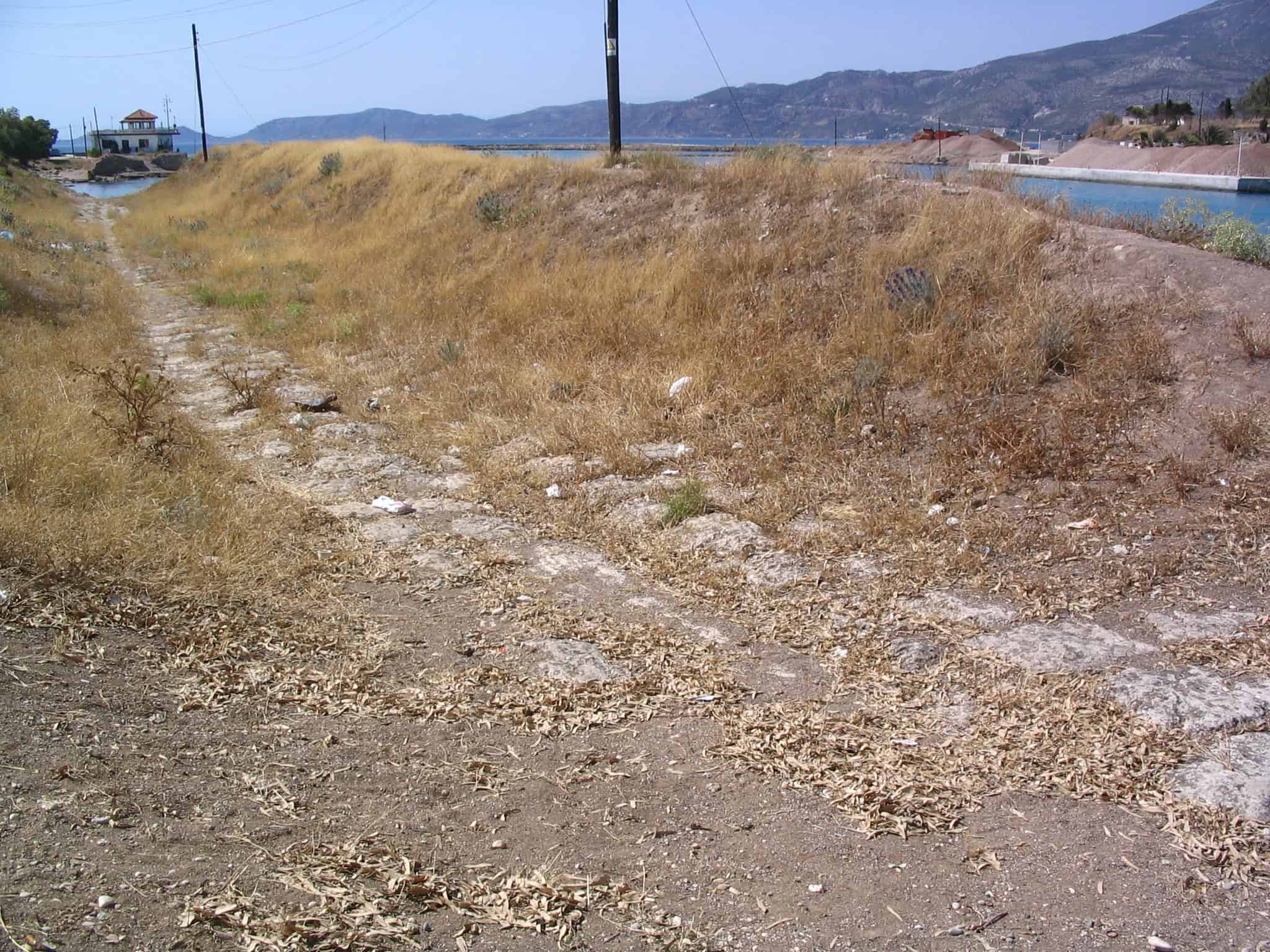
The western end of the ancient diolkos at the modern Corinth Canal. Erosion from the canal has damaged the paving. Photo: Dan Diffendale, CC BY-SA 2.0 <https://creativecommons.org/licenses/by-sa/2.0>, via Wikimedia Commons
This arrangement made Corinth one of the wealthiest cities in the ancient world. It sat astride the chokepoint of east-west Mediterranean trade and collected fees coming and going. The city was famous for its luxury, its temples, and its vices, and Paul spent eighteen months there preaching the gospel and founding the church to which he later wrote his two great Corinthian epistles. When he left for Jerusalem, he sailed from Cenchreae harbor, having shaved his head at the port as part of a Nazirite vow (Acts 18:18).
Who First Tried to Build the Corinth Canal?
The idea of cutting a canal through the isthmus was older than Paul by more than six centuries. Periander himself had considered it before settling for the diolkos. After him came Demetrius Poliorcetes in the fourth century before Christ, who abandoned the project when his engineers warned, incorrectly, that the two seas were at different elevations and a canal would flood the Peloponnese. Julius Caesar planned a canal as part of his refounding of Corinth as a Roman colony, but was assassinated before he could begin. The emperor Caligula commissioned a survey in AD 40, received the same erroneous report about sea levels, and was assassinated before any work was begun.
The Greek philosopher Apollonius of Tyana reportedly prophesied that anyone who proposed to dig a canal at Corinth would meet a violent end. Caesar, Caligula, and eventually Nero all did.
Nero was the only one of them who actually broke ground. He came to Greece on a celebrated tour in AD 66 and 67, performing in musical and athletic competitions and granting the province of Achaea its formal liberty. On November 28, AD 67, he inaugurated the canal project at the isthmus. According to Suetonius, the emperor took up a mattock, struck the earth, lifted a basket of soil onto his shoulders, and carried it away before an audience of the Praetorian Guard. (A mattock is a heavy two-headed digging tool, somewhere between a pickaxe and a hoe, used since antiquity to break hard ground.)
The workforce that did the actual digging consisted of six thousand Jewish prisoners of war. Vespasian, then commanding the Roman campaign against the Jewish revolt, had captured them earlier that year at the Sea of Galilee, in the aftermath of the siege of Tarichaeae. Josephus, who was himself a Jewish prisoner of Vespasian and would later write the standard history of the war, records that the prisoners were sent west to Greece to dig the canal. They began trenches from both ends, around 130 to 160 feet wide, while a third crew sank vertical shafts along the ridge to test the rock. Pliny the Elder reports that they advanced about four stadia, roughly 2,300 feet, before the work stopped.
It stopped because the infamous Nero died. By June of AD 68 he had been declared a public enemy by the Senate and had taken his own life. The empire fell into the chaos of the Year of the Four Emperors. Vespasian, the man who had captured the Jewish prisoners, ultimately emerged as emperor and turned his attention to finishing the war his son Titus would conclude with the destruction of the Temple in AD 70. The canal was forgotten.
When Was the Canal Finally Built?
For the next 1,800 years the trenches sat there. Herodes Atticus, the great Greek philanthropist of the second century, considered taking up the project and did not. The Venetians considered it after their conquest of the Peloponnese in 1687 and did not. The newly independent Greek state considered it in 1830 and concluded it to be too costly.
But in 1881 work began at Corinth using modern explosives and steam-powered excavators. Engineers traced the path Nero’s prisoners had begun, found the old shafts and trenches, and incorporated them into the modern cut. The canal was completed and opened on July 25, 1893.
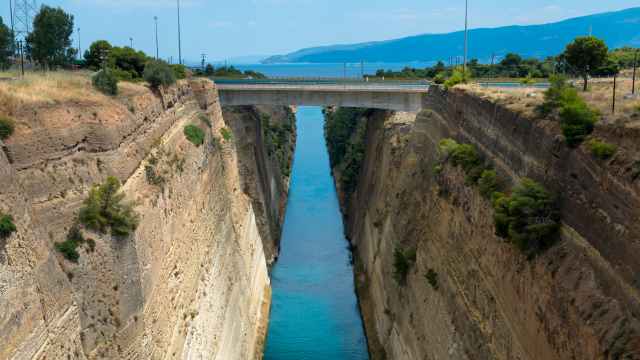
In a literal sense, the canal you can stand and look down into today is partly the work of those six thousand Judean prisoners. The walls that rise on either side of the water still bear, in places, the marks of ancient tools alongside modern ones. A weather-beaten relief of Hercules carved by Nero’s workers can still be seen in the rock face.
How Long Is the Corinth Canal Today?
The Corinth Canal runs about 3.9 miles long. At sea level it is 79 feet wide, narrow enough that a person standing on one of the bridges that cross it can easily see both banks at once. The walls rise as high as 295 feet in places, sheer rock cut straight down to the waterline.
The canal is too narrow for modern commercial shipping. It is used today mostly by tourist boats, small cruise vessels, and the occasional yacht. Ships still go around the Peloponnese to get from the Aegean to the Ionian, just as they did in Paul’s day, simply because they have grown too large for the cut. In that sense the ancient problem the canal was meant to solve is still being solved the ancient way.
But for travelers retracing the steps of Paul, the canal is one of the more powerful sights in Greece. To stand on the bridge above it is to see, in a single glance, both seas, the chokepoint that built Corinth’s wealth, the dream that killed three Roman rulers, and the labor of six thousand Jewish captives whose names are unknown but whose hands shaped a cut that would not be finished for another eighteen centuries. Paul would have walked across the isthmus on his way from Lechaeon to Cenchreae. He would have known the diolkos. He could not have known the canal. No one in his lifetime saw it.
Living Passages tours see Cenchreae and the Corinth Canal on our biblical tours of Greece, alongside ancient Corinth itself and the Bema seat where Paul stood before Gallio (Acts 18:12).