When and Where Saul’s Name Changed to Paul
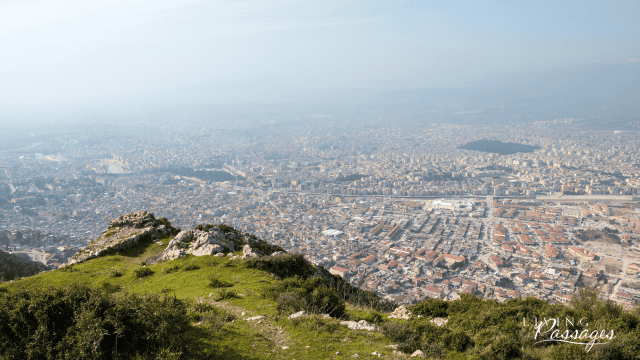
“And when he had found him, he brought him to Antioch. For a whole year they met with the church and taught a great many people. And in Antioch the disciples were first called Christians. “
Paul’s Spiritual Journey: From Christian Persecutor to Gospel Preacher
Every traveler to the ancient world eventually asks the same question: what connects the story on the page to the ground beneath my feet? On Paul’s first missionary journey, one of the most compelling answers lies in a small museum in the Turkish town of Yalvaç, and it begins with a name change.
When Luke first introduces us to the man who will become the most traveled missionary in the ancient world, he calls him Saul (his Hebrew name, Sha’ul). Even after his dramatic encounter with the risen Christ on the road to Damascus, it is Saul who boldly began to preach the gospel until threats against his life sent him home to Tarsus in Cilicia. Later, the encouraging Barnabas brought him to Antioch in Syria, where they taught new believers in Jesus, who were the first to be called Christians (Acts 11:26).
Barnabas & Saul’s Missionary Journey
Then Barnabas and Saul were commissioned to Cyprus, the home of Barnabas. There they cross paths with the island’s Roman proconsul, a man named Sergius Paulus. Luke describes him as “a man of intelligence” who “sought to hear the word of God” (Acts 13:7). It’s a portrait that archaeology has done a great deal to fill in. When a magician in the proconsul’s court tried to obstruct Paul’s message, Saul rebuked him and struck him temporarily blind. “Then the proconsul believed, when he saw what had occurred, for he was astonished at the teaching of the Lord” (Acts 13:12, ESV).[1]
From this point forward, Luke calls Saul “Paul,” and whereas previously “Barnabas and Saul” were ministering together, now it was “Paul and Barnabas” who were doing the Lord’s work under Paul’s lead. The conversion of a Roman proconsul appears to have marked a turning point in more ways than one. Some scholars have proposed that Sergius Paulus may have extended his patronage to include a formal adoption, a common Roman practice, that brought with it the gift of his own name. Others see the name shift as simply Luke’s way of signaling Paul’s new role as leader of the mission to the Gentile world. Either way, a man who began his journey with a Hebrew name now carries a Roman one.

A Stone in Yalvaç, Turkey
After Cyprus, Paul and Barnabas sailed to the coast of Perga and then made an unexpected turn inland, up into the rugged plateau of central Galatia to a Roman city called Pisidian Antioch, or Antioch towards Pisidia.[2] It’s a journey that has puzzled readers of Acts. Why travel so far into the interior? The answer, many scholars now believe, may be sitting in a museum.
Sergius Paulus is thought to have “possessed large estates in Galatia near Pisidian Antioch.”[3] And the Yalvaç Museum, located in the modern town adjacent to the ruins of Pisidian Antioch, houses a fragmentary stone inscription that clearly bears the names Paulli and Sergi. It is widely regarded as evidence that this was family territory.
Sir William Ramsay, who spent decades excavating in this region, discovered a second nearby inscription referencing “L. Sergius Paullus the younger, son of Lucius” who was possibly the proconsul’s own son.[4] The picture that emerges is that Paul’s inland detour was not random. He may have been heading directly to the home territory of the man who had just come to faith and whose family name he now bore.

Visiting Pisidian Antioch, Turkey Today
The 4th-century Basilica of St. Paul marks the spot where, according to tradition, the apostle preached.[5] And just a short drive away, the Yalvaç Museum holds not only the Sergius Paulus inscription but seven panels of the Res Gestae which is Augustus’s own account of his reign carved in stone.[6] Read more in our recent article, Paul’s First Sermon at Pisidian Antioch: The Correlation to Caesar Augustus.
There was a Jewish presence even in this provincial location, and the synagogue was always the first priority. Addressing both Jews and Gentile God-fearers, Paul briefly recapped Israel’s history up to God’s promise to King David that one of his descendants would be the Savior, whom Paul identified as Jesus Christ. His words were so well-received that the following Sabbath, “almost the whole city gathered to hear the word of the Lord. But when the Jews saw the crowds, they were filled with jealousy and began to contradict what was spoken by Paul, reviling him” (Acts 13:44-45). Many believed, but others drove them out.
It is a pattern that will repeat itself across the rest of this journey: an open door, a harvest, and then opposition that pushes the mission forward rather than shutting it down. From Pisidian Antioch, Paul and Barnabas pressed on to Iconium, where the crowds would again be moved and resistance would again gather.
On our Seven Churches of Revelation and Footsteps of Paul tours, visitors to the site can walk the same Roman road Paul would have traveled, stand before the ruins of the Temple of Augustus, and explore the remains of the ancient city gate and a theater likely constructed during the Hellenistic period. Explore the Bible lands of Turkey on our Christian travel expeditions to uncover biblical archaeology and bring the Word to life.

Join one of our Seven Churches of Revelation or Footsteps of Paul Tours to visit Ephesus and other key biblical locations in Greece and Turkey. Explore Our Biblical Expeditions HERE
References:
[1] All Scripture quotes are from The Holy Bible, English Standard Version (ESV, Crossway , 2001).
[2] Dr. Mark Wilson in an interview by Bryan Windle, “Scholar’s Chair Interview with Mark Wilson,” Bible Archaeology Report (https://biblearchaeologyreport.com/2021/07/01/scholars-chair-interview-dr-mark-wilson/), 2021.
[3] Randall Price and H. Wayne House, Zondervan Handbook of Biblical Archaeology (Grand Rapids, MI: Zondervan, 2017), 300.
[4] W.M. Ramsay, The Bearing of Recent Discovery on the Trustworthiness of the New Testament, (London: Hodder and Stoughton, 1915), 151.
[5] Fig Tree Ministries, “Footsteps of Paul: Antioch of Pisidia, Week 1. YouTube (https://www.youtube.com/watch?v=fKfgqT5N2vw&list=PLCaBz_NhYH3F1wgr5Nf1Jrisno_qgUXoF&index=1), 2020.
[6] Dr. Carl Rasmussen, “Res Gestae Detail,” Holy Land Photos (https://holylandphotos.org/browse.asp?s=1,3,8,21,96&img=TUANPATA51), 2026.