Top 10 Biblical Sites of Ephesus Every Christian Traveler Should See
"And they came to Ephesus, and he left them there, but he himself went into the synagogue and reasoned with the Jews. When they asked him to stay for a longer period, he declined. But on taking leave of them he said, “I will return to you if God wills,” and he set sail from Ephesus. "
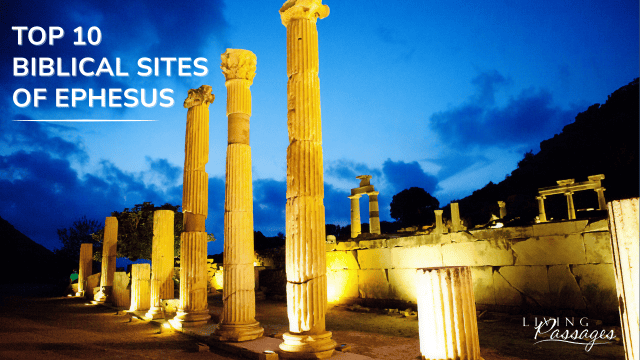
Top 10 Biblical Sites of Ephesus
Ephesus is one of the most important biblical cities in the New Testament. Located in modern-day Turkey, this ancient Roman metropolis was a major center of commerce, religion, and culture during the time of the apostles. Today, it is one of the best-preserved archaeological sites in the world, making it a must-visit destination for Christian travelers seeking to walk in the footsteps of the early church.
The Apostle Paul spent approximately three years in Ephesus during his third missionary journey, teaching first in the synagogue and later in the lecture hall of Tyrannus, where he held daily discussions that spread the gospel throughout the Roman province of Asia (Acts 19:8–10). The impact of his ministry was so powerful that both Jews and Greeks across the region heard the message of Christ.
Ephesus is also remembered in the Book of Revelation as the “loveless church.” In Revelation 2:1–7, Jesus commends the believers for their perseverance and hard work but rebukes them for abandoning their first love. This powerful message reminds Christians today of the importance of maintaining spiritual passion and devotion.
For pilgrims and travelers exploring the lands of the Bible, Ephesus offers an unforgettable journey through history. Here are the Top 10 biblical and archaeological highlights of Ephesus that every Christian visitor should experience.
- Magnesian Gate – The Apostle Paul’s Entrance into Ephesus
The Magnesian Gate, also known as the Eastern Gate, was one of only two main entrances into the Roman city of Ephesus. When the city was relocated in the 3rd century BC due to silting from nearby rivers, new defensive walls and gates were constructed under Lysimachus, a general of Alexander the Great.
During Paul’s third missionary journey (around AD 53–57), it is very likely that he entered Ephesus through the Magnesian Gate while arriving from the eastern regions of Asia Minor. Walking through this gate today gives visitors a powerful sense of entering the same city Paul once did nearly 2,000 years ago.
- The Tomb of Luke – Possible Resting Place of the Gospel Writer
One of the most intriguing sites in Ephesus is the traditional Tomb of Luke, the author of the Gospel of Luke and the Book of Acts.
Archaeologists discovered a stone featuring a cross and the image of an ox or bull, symbols historically associated with Luke the Evangelist. Biblical accounts connect Luke with Ephesus because he traveled with the Apostle Paul during portions of his ministry. Luke's companionship with Paul is first implied in Acts 16:10, where Luke’s narrative shifts from third person to first person, indicating his presence with Paul. This change occurs in Troas, where Paul receives the Macedonian call: "After Paul had seen the vision, we got ready at once to leave for Macedonia, concluding that God had called us to preach the gospel to them" (Acts 16:10). This marks the beginning of Luke's firsthand account of the missionary journey.2
Although the identification cannot be confirmed with certainty, many early Christians believed this location to be Luke’s burial site.
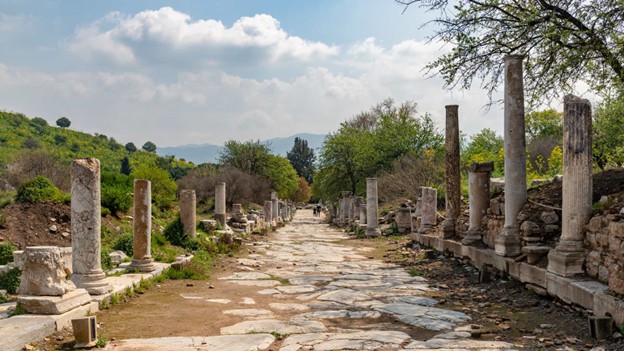
- Upper Agora – The Administrative Heart of Ephesus
The Upper Agora served as the political and administrative center of ancient Ephesus. It included:
- A Roman forum
- Government buildings
- Temples
- Meeting spaces for civic leaders
A marble road connected the Upper Agora to the harbor district, and it is very likely that Paul walked this very road while traveling through the city.
Standing in this location helps visitors imagine the bustling civic life that surrounded early Christian ministry.
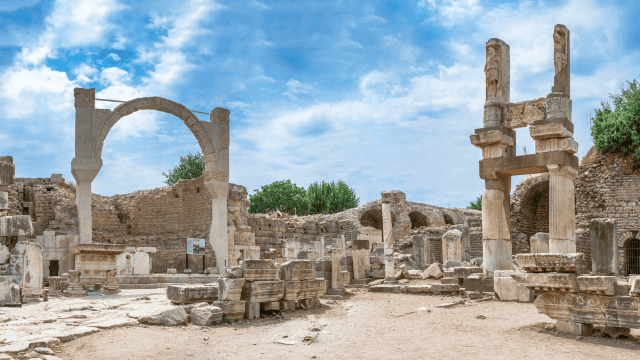
- Temple of Domitian – The Imperial Cult in Ephesus
The Temple of Domitian, built between AD 90–94, was dedicated to the Roman emperor Domitian, the brother of Titus—the general who destroyed the Jerusalem Temple in AD 70.
Domitian was unique among Roman emperors because he openly declared himself “Lord and God.”
During the temple’s dedication ceremony, citizens were ordered to wear white garments as a symbol of loyalty. Early Christians refused to participate, refusing to honor the emperor as divine. According to historical accounts, this defiance led to persecution, including the exile of the Apostle John to the island of Patmos where he received the visions recorded in the Book of Revelation.
By the mid-90s AD, Rome had already executed or exiled multiple Christian leaders (Acts 12:2; 2 Timothy 4:6–8). Domitian (reigned AD 81–96) demanded imperial worship, punishing refusal as treason. Suetonius (Dom. 13), Pliny the Younge (Letters of Pliny the Younger), and Tacitus (Ann. 15.44) confirm Christians were tried for “atheism” (denying the gods) and “stubbornness.” Exile to small islands (deportatio ad insulam) was a standard penalty for perceived subversion, documented in Digesta 48.22.7.§3 and exemplified in the banishments of the philosopher Musonius Rufus and the historian Cassius Dio. Patmos, a rocky Aegean outcrop about 34 square kilometers, served precisely this penal role. 3
Seeing this temple reminds us of the trials and persecution the early church went through and how we should be prepared to stand up for our faith in Christ, no matter the earthly outcome.
- Curetes Street – The Grand Avenue of Ephesus
Curetes Street was the main luxury boulevard of Ephesus, connecting the upper city to the harbor area. The street was lined with:
- Elegant homes
- Monuments
- Shops
- Public buildings
It was one of the busiest streets in the city, and it is highly likely that apostles such as Paul and John walked along this very road during their ministry.
Today, visitors can still walk the marble stones that once echoed with the footsteps of the early church.
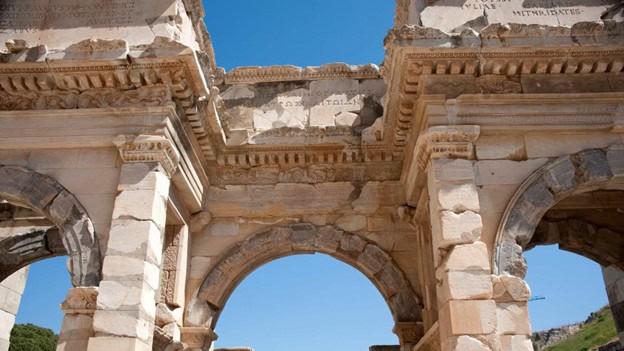
- Gate of Mazeus and Mithridates – Monument of Gratitude
Built around 2–3 BC, the Gate of Mazeus and Mithridates served as a monumental entrance to the Commercial Agora.
The gate was constructed by two freed slaves, Mazeus and Mithridates, who had been liberated by Emperor Augustus and his son-in-law Agrippa. After gaining wealth through construction projects in Ephesus, they built the gate as a gesture of gratitude to the emperor.
Biblical figures such as Paul and John likely passed through this impressive gateway when entering the marketplace.
- Commercial Agora – Where the Gospel Was Preached Publicly
The Commercial Agora, also called the Tetragonus Agora, was one of the largest marketplaces in the ancient world. Measuring approximately 400 feet by 400 feet, it functioned as both a commercial hub and a public gathering space.
This location may have been where Paul referred to preaching “publicly” in Acts 20:20. The Greek word used in the passage is agora, suggesting he proclaimed the gospel in the city marketplace.
Historical writings also indicate that:
- The Apostle John preached here
- Justin Martyr, a theologian in the second century, wrote his famous apologetic text, “Conversation with Trypho,” in this area
The Agora would have been one of the best places to share the message of Christ with large crowds.

-
The Great Theater – Scene of the Riot Against Paul
The Theater of Ephesus is the largest theater in the ancient world, capable of holding up to 30,000 people.
This famous structure appears in Acts 19, when a silversmith named Demetrius organized a massive protest against Paul. The gospel had become so influential that craftsmen who made idols of Artemis feared losing business.
"Soon the whole city was in disarray. They rushed together into the theater, dragging with them Gaius and Aristarchus, Paul's traveling companions from Macedonia." Acts 19:29
Inside the Theater, the crowd shouted, "Great is Artemis of the Ephesians!" for about two hours, demonstrating the deep-seated devotion to their goddess and the threat they perceived from the burgeoning Christian movement. The city clerk eventually calmed the crowd, warning them of the legal repercussions of their actions and dismissing the assembly. 4
Although Paul wanted to address the crowd, his companions prevented him from entering the dangerous situation (Acts 19:30).
Today, visitors standing in the theater can vividly imagine the dramatic moment when the spread of Christianity shook the economy and religion of the city.
-
Harbor Street – The Gateway to the Ancient World
Harbor Avenue was one of the most important streets in ancient Ephesus, connecting the city to its once-busy harbor on the Aegean Sea. As a major commercial and transportation route, this wide marble avenue welcomed travelers, merchants, and sailors arriving from across the Roman Empire.
Several important New Testament figures likely traveled along this road, including Paul, John, Timothy, Priscilla, Aquila, and Apollos, as they journeyed in and out of Ephesus during their missionary work.
Today, visitors can still see many of the original marble stones that once formed this grand avenue. Although the harbor has long since disappeared due to centuries of silting that pushed the coastline miles away, Harbor Street remains a powerful reminder of Ephesus’ role as a gateway for the spread of the gospel across the Mediterranean world.


-
Library of Celsus
Walk in the Footsteps of the Apostles in Ephesus
Few places bring the New Testament words to life like Ephesus. From the streets Paul walked to the theater where the gospel sparked a riot, every corner of the city tells a story of the early Christian movement.
For believers, visiting Ephesus is more than an archaeological tour—it is an opportunity to experience the places where the message of Christ transformed the ancient world.
Christian travelers exploring Turkey often combine Ephesus with other biblical destinations such as:
- The Seven Churches of Revelation
- Patmos, where John received the Revelation
- The ancient cities visited during Paul’s missionary journeys
Together, these sites provide a powerful journey through the history of the early church and the spread of the gospel across the Roman Empire.

Join one of our Seven Churches of Revelation or Footsteps of Paul Tours to visit Ephesus and other key biblical locations in Greece and Turkey.
References:
- Gürçavdi, İsa Levent. The Handbook of Seven Churches. Özyurt Matbaacilik İnşaat Taah. Şan. Ve Tic. Ltd. Sti, 2024
- Bible Hub. “Luke: Accompanies Paul in his Tour of Asia and Macedonia.” Bible Hub. https://biblehub.com/topical/naves/l/luke--accompanies_paul_in_his_tour_of_asia_and_macedonia.htm
- Bible Hub: “Why was John on Patmos in Rev 1:9?” Bible Hub. https://biblehub.com/q/Why_was_John_on_Patmos_in_Rev_1_9.htm
- Bible Hub. “The Theater in Ephesus.” Bible Hub. https://biblehub.com/topical/t/the_theater_in_ephesus.htm
- Cartright, Michael. "Library of Celsus." World History Encyclopedia, 2019.
Related Articles