Tower of Babel: Was it Actually in Northern Mesopotamia?
Two Candidates at Opposite Ends of Mesopotamia
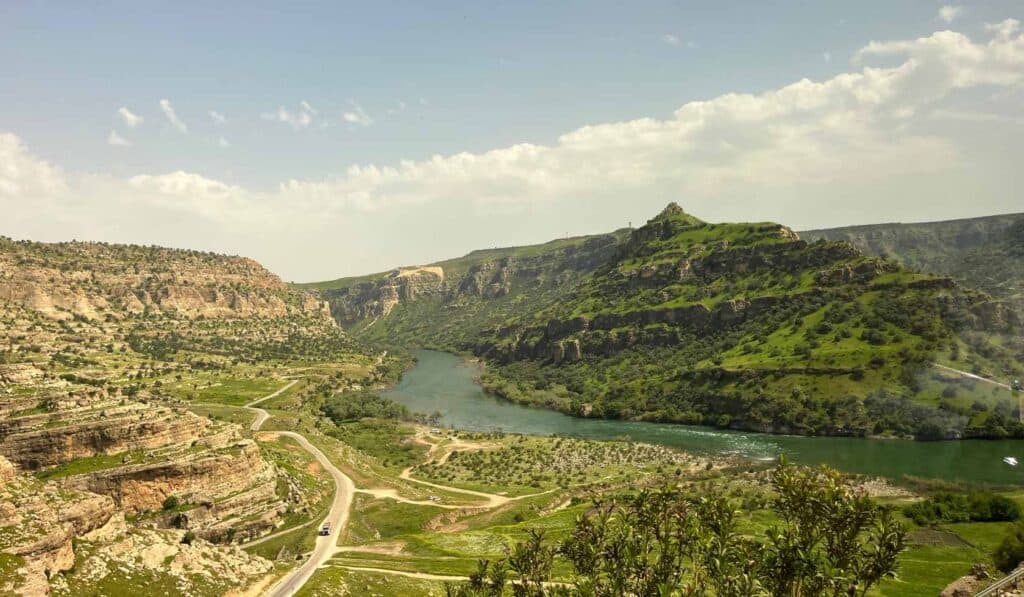
Genesis sets the Tower of Babel in a place it calls Shinar, and says nothing about where Shinar was. That single missing detail has produced two rival proposals that could hardly sit farther apart. One places Babel in the far south of Mesopotamia, near Babylon or older still at Eridu, among the first cities of Sumer. The other places it more than six hundred kilometers north, on the upper Tigris in what is now southeastern Turkey.
This is the most concentrated stretch of early-Genesis geography anywhere on earth, the ground where the flood, the dispersion, and the call of Abraham all leave their traces. And the Babel question hangs over the whole of it. Our route runs through the northern one, so it is worth laying out plainly how the argument actually stands, and where it is strong, weak, or simply unproven.
Now the whole earth had one language and the same words. And as people migrated from the east, they found a plain in the land of Shinar and settled there. And they said to one another, “Come, let us make bricks, and burn them thoroughly.” And they had brick for stone, and bitumen for mortar. Then they said, “Come, let us build ourselves a city and a tower with its top in the heavens, and let us make a name for ourselves, lest we be dispersed over the face of the whole earth.”
— Genesis 11:1-4 (ESV)
The southern case, and why it is the default
Begin with the south, because it is the default, and it earns that standing. “Shinar” appears eight times in the Hebrew Bible, and in Genesis 10:10 the land of Shinar contains not only Babel but Erech, which is Uruk, a city firmly in the south. This is the single hardest fact any northern reading has to survive, because a territory large enough to hold Uruk reaches deep into Sumer. By the books of Daniel and Zechariah, Shinar plainly means Babylonia, and on the traditional reading Babel is Babylon, below modern Baghdad.
A number of scholars, including David Rohl and Douglas Petrovich, move the tower further south still, to Eridu, one of the oldest cities yet excavated in Sumer, whose ruined temple platform they take as the likeliest foundation. Petrovich in particular builds an archaeological case rather than a textual one: he reads the Late Uruk expansion, the sudden radiating of southern Mesopotamian culture outward in every direction, as the post-Babel dispersion itself, with the abrupt abandonment of Eridu as the scattering. Notice what this does to Uruk. The city now anchors the southern case twice, once in the text as Erech and once in the ground as the namesake of that expansion, so any northern Babel has to answer it on both fronts rather than skip past it.
Where the text pulls north
And yet Genesis never names Babylon. It names Shinar, and Shinar may not be a simple synonym. Three features of the text read more comfortably northward.
The first is the name. In Egyptian and Amarna-era records, the cognate Sangar or Sanhar denotes a region in upper, not lower, Mesopotamia, a name that survives today as Sinjar near the Khabur river.
The second is the order of Nimrod’s later cities. Genesis 10 has him leave Shinar, go up to Asshur, and build Nineveh, Rehoboth-Ir, Calah, and Resen, a list that runs north to south down the Tigris, as though his earlier kingdom lay above Nineveh rather than far below it. Nimrod is contested ground, though, since both camps claim him: the northern reading hears his cities descending the Tigris, while the southern reading identifies him with Sargon of Akkad, the first empire-builder of the south, so the same figure pulls in opposite directions and settles nothing on his own.
The third is the approach in Genesis 11:2, where the builders come “from the east.” The Hebrew is ambiguous, readable as a direction or as a time, “eastward” or “in earliest times,” but taken as “from the east” it suits a plain entered by people coming down out of the eastern mountains better than it suits Babylon in the south. “From the east” works naturally if the Ark site is on or near Ararat and Babel is in the upper Tigris valley (people moving south-southwest from the mountains into a plain). With a southern Babel at Eridu, you have to route the post-Flood population down the Zagros first, then west into Mesopotamia, which is awkward.
Have you wondered about traveling to Eastern Turkey to see some of the ancient biblical sites like the Tower of Babel? Fill out the form to be contacted about upcoming Eastern Turkey tours.
The scholarship behind the north, and a distinction that matters
The northern reading is not a recent enthusiasm, but it is narrower than popular versions make it, because what Sayce and Albright moved north was the name, not the tower. A. H. Sayce argued in the 1890s that Shinar was the Šanḡar of the Egyptian records, a region in Upper Mesopotamia, while openly conceding that the Bible also uses Shinar of the south.
W. F. Albright, who became the most influential biblical archaeologist of his century, made the fuller case in 1924, deriving Shinar from Sangar and tracing it to the Kingdom of Hana on the middle Euphrates, around the Jebel Sinjar that still carries the name. Yet Albright sent the Tower itself in the opposite direction. Once Northern Mesopotamia was absorbed into Assyria, he wrote, the name passed south, “in which sense we find it frequently in the Old Testament,” so that the Plain of Shinar in Genesis is the broad Mesopotamian lowland where Nimrod’s Babel, Erech, Accad, and Calneh all belong. The scholar who carried the name furthest north still set Babel in the south. The real pedigree behind a northern Shinar is a pedigree about a word, and even its strongest advocate left the tower on the southern plain. But here is the distinction a careful explorer should keep straight, because popular versions blur it. The northern Shinar of Sayce and Albright is not Diyarbakır. Their Shinar sits on the middle Euphrates, in what is now eastern Syria, well over two hundred kilometers southeast of the city.
The proposal that the tower itself stood near Diyarbakır, on the Çınar plain along the upper Tigris, is newer and far more specific. It was set out in a 2021 paper by Ken Griffith and Darrell White, who identify an unexcavated mound on that plain. Their supports are the concentration of the earliest farming and the earliest monumental building in the region, certain Assyrian inscriptions they read as preserving the names Erech and Calneh, and a record of Sargon of Akkad moving a city called Babylon out of the northern region of Subartu. That reading of Erech is the north’s direct answer to the Uruk problem: if the name surfaces in northern inscriptions, then the Erech of Genesis 10:10 need not be Uruk in the south, and the verse stops pulling Shinar into Sumer. Whether the inscriptions will bear that weight is a separate question.
Weighing the upper-Tigris proposal
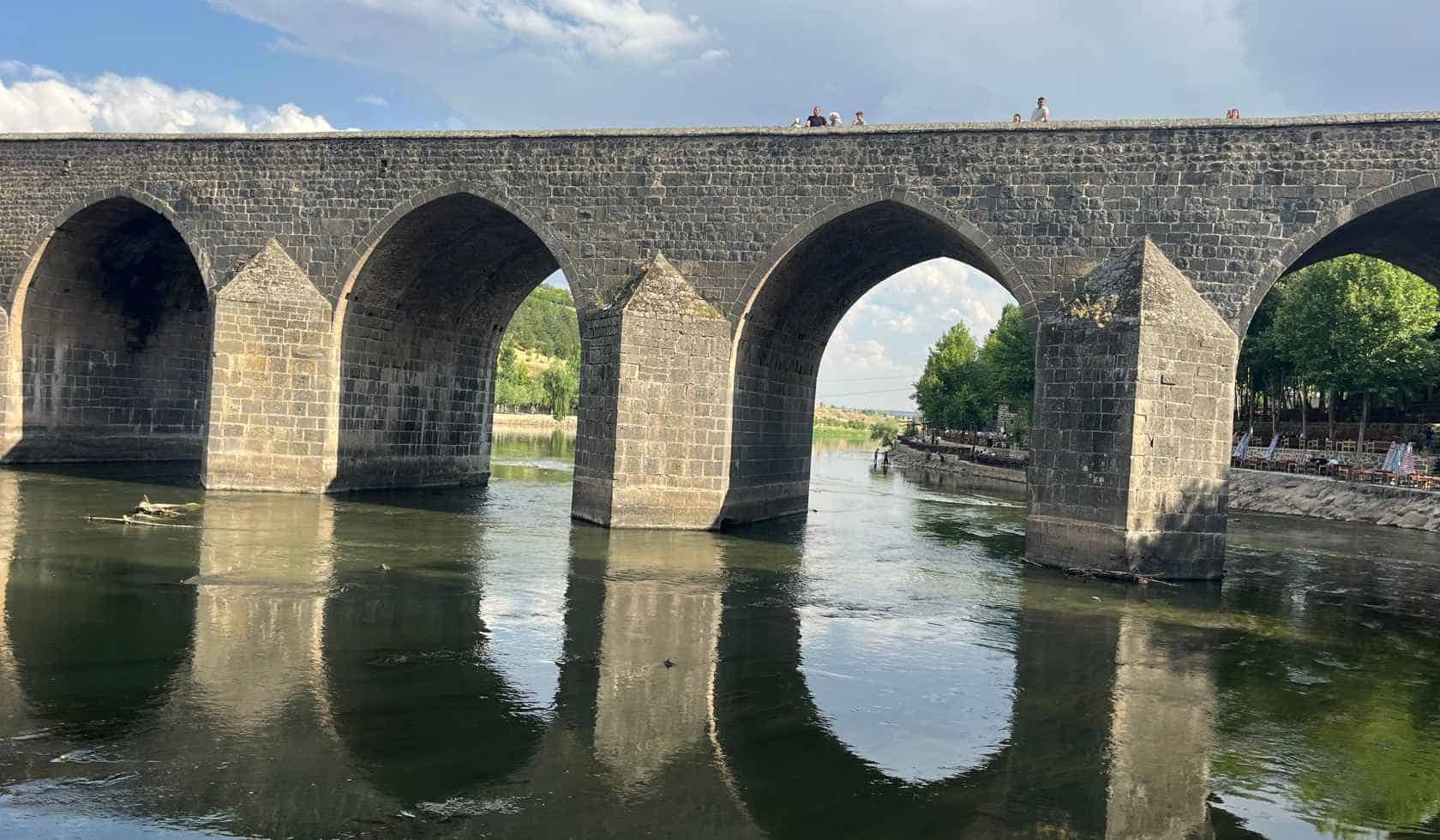
The upper-Tigris is near the river’s headwaters in southeastern Turkey. That case deserves a fair hearing, and its soft spots should be named. Its strongest archaeological move equates the region’s oldest farming culture, the Pre-Pottery Neolithic, with the generation just after the flood, which requires setting aside the conventional dating that places those sites thousands of years earlier.
Here the two readings do not strain the chronology equally, and honesty requires saying so. Petrovich’s Eridu model leans on the Late Uruk period, which sits far closer to any biblical flood horizon than the Pre-Pottery Neolithic does, so it bends the conventional dating without having to snap it. The upper-Tigris case must reach back millennia further and reclassify the very oldest farming culture in the region, a much heavier lift, and that asymmetry belongs on the scale.
The toponym is thin as well. Çınar is a town and district within Diyarbakır Province itself, sitting roughly 25 to 30 kilometers south to southeast of the city of Diyarbakır, on the upper Tigris. Çınar resembles Shinar to the ear, but simply means “plane tree” in Turkish, and the firmer survival of the ancient name lies eastward, at Sinjar. The mound has never been dug, and no inscription names it. The responsible claim is that the upper Tigris is one live possibility in an argument that remains open, not that the tower has been found.

The climb, and what the stones are
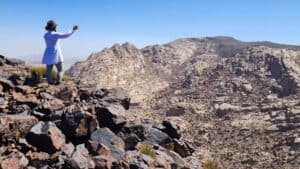
We have stood inside the question. Living Passages President Rhonda Sand made the climb with a local guide and a man from the nearby village who walked up with them, a rough scramble over big tumbled stones. What catches the eye first is the way the rock lies in long stacked courses that read, from certain angles, almost as terracing, so that the mind reaches at once for the stepped tiers of a ziggurat. Then honesty catches up with the eye. These are boulders, not bricks, rough black basalt, the same volcanic stone that gives Diyarbakır its famous dark walls.
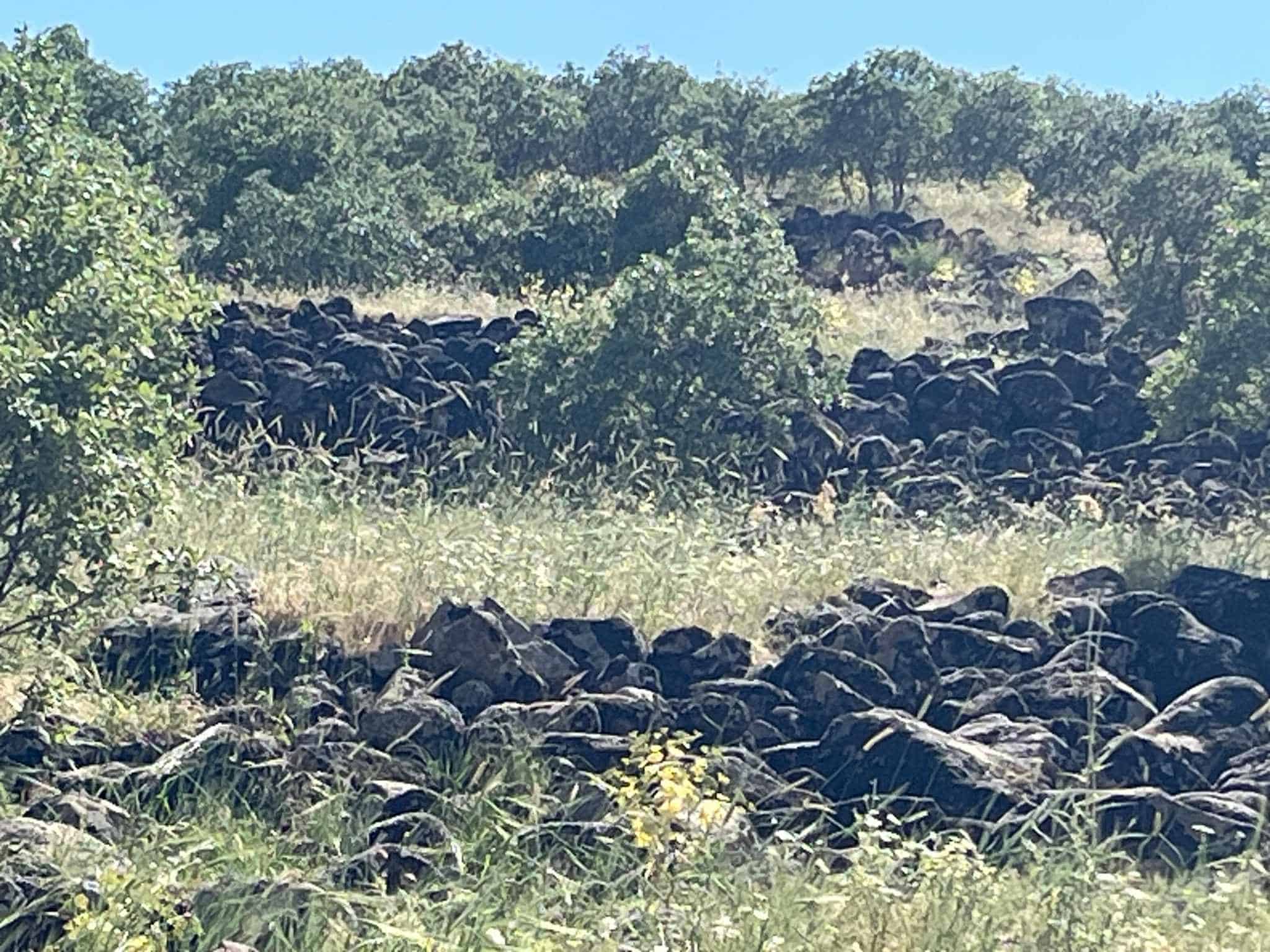
And here a fair reader should pause, because those surface stones are not what Griffith and White propose as the tower at all. Their leading candidate is a buried mound, a textbook occupation tel with potsherds scattered over its surface, beneath which they expect the original city and tower to lie under a thousand years and more of later building. The fired brick a true Babel should show, if any survives, would sit deep in that undug core, not in the grass where a visitor walks. The authors are candid that this is the one thing their survey cannot yet supply. Their site, they grant, meets every parameter they set for it save two parameters they acknowledge the paper did not address. And the missing brick and kiln “will require an archaeological excavation.”
Scripture does still seem to tug south here. The builders, it says, had brick for stone, and a plain with no stone to build from seems to describe the southern alluvium far better than these volcanic uplands, where stone lies everywhere underfoot. But Griffith and White anticipate even this. Fired brick was costly and labour-hungry, they note, and at any early city would have been kept for the temple and tower rather than spent on ordinary houses, so one should not expect it strewn broadly across the ground. For the asphalt mortar the same verse names, they point to the dense oil and gas country around Diyarbakır as a sign that bitumen was ready to hand. The honest position, theirs and ours alike, is that the decisive brick has not been dug, not that it has been ruled out.
The tower no one can show you
It helps to remember that bare ground is the ordinary condition of every Babel candidate, not a peculiar weakness of this one. Even at Babylon’s Etemenanki there is no tower to see. A ziggurat of fired brick is a quarry waiting to happen, and Nebuchadnezzar’s was carried off over centuries into other people’s walls, leaving a measured footprint and almost no standing fabric. Eridu in the south is a ruined platform a visitor must be taught to read. No one on any side of this question gets to show the traveler a tower. They can show the ground, and whatever argument the ground still carries.
Holy ground, within living memory
What is not in doubt is that this ground near Diyarbakir was held sacred within living memory. The villager spoke of a tradition that lasted into roughly the 1990s, in which the people of the area, Kurds among them, treated the hill as a ziyaret, a place of visitation and veneration, and brought a lamb to it to sacrifice one day each week. A ziyaret in this region is its own kind of holy ground, the sacred hill or tomb or tree that local devotion settles upon, and such places are scattered across Anatolia.
But it is something to stand where the local memory still calls the ground holy, and to be led up it by a man whose kin offered sacrifices here. The holes in the ground nearby are not archaeology either. They were dug by people who came back looking for gold their families had buried while fleeing invaders, the old cached-treasure lore that clings to half the hills in this country, and our guide, partway up, confirmed with a smile that we had not brought a metal detector.

A landscape thick with Genesis
None of this makes the ground less worth walking. It makes it more interesting, because you are standing inside a live question rather than at a settled monument with a plaque. And much of the region’s weight does not depend on the Babel debate at all.
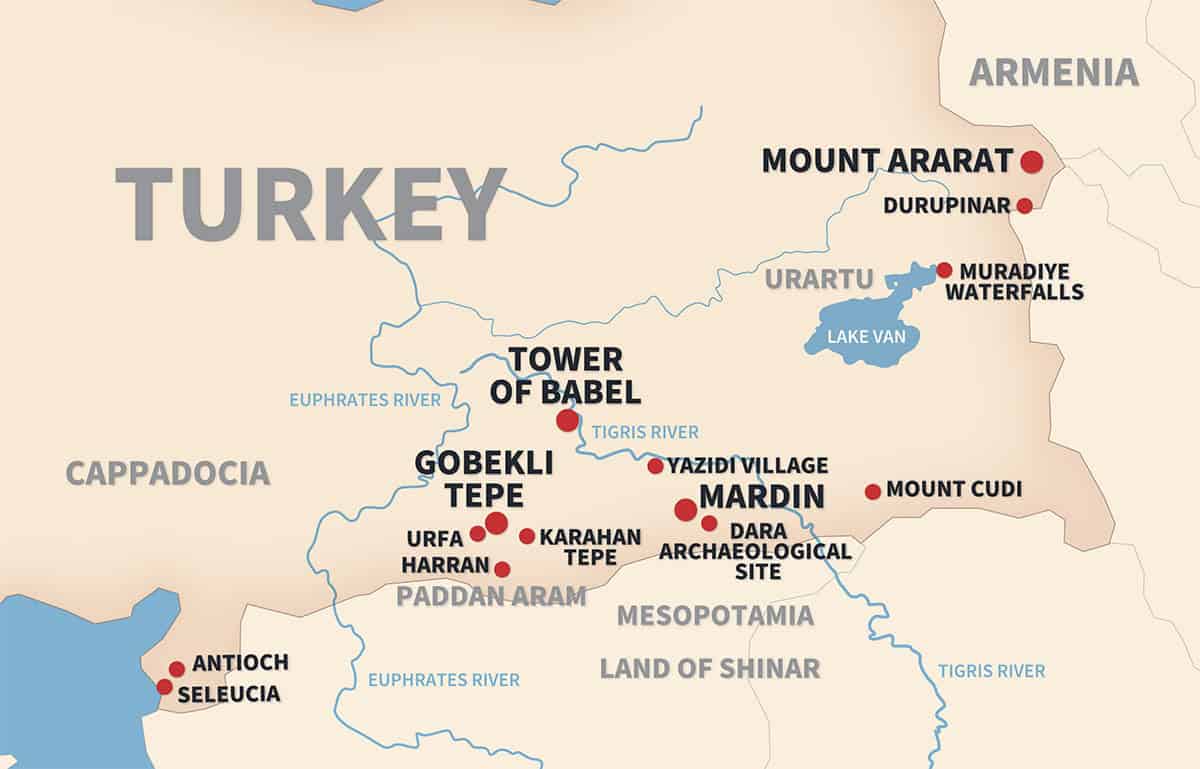
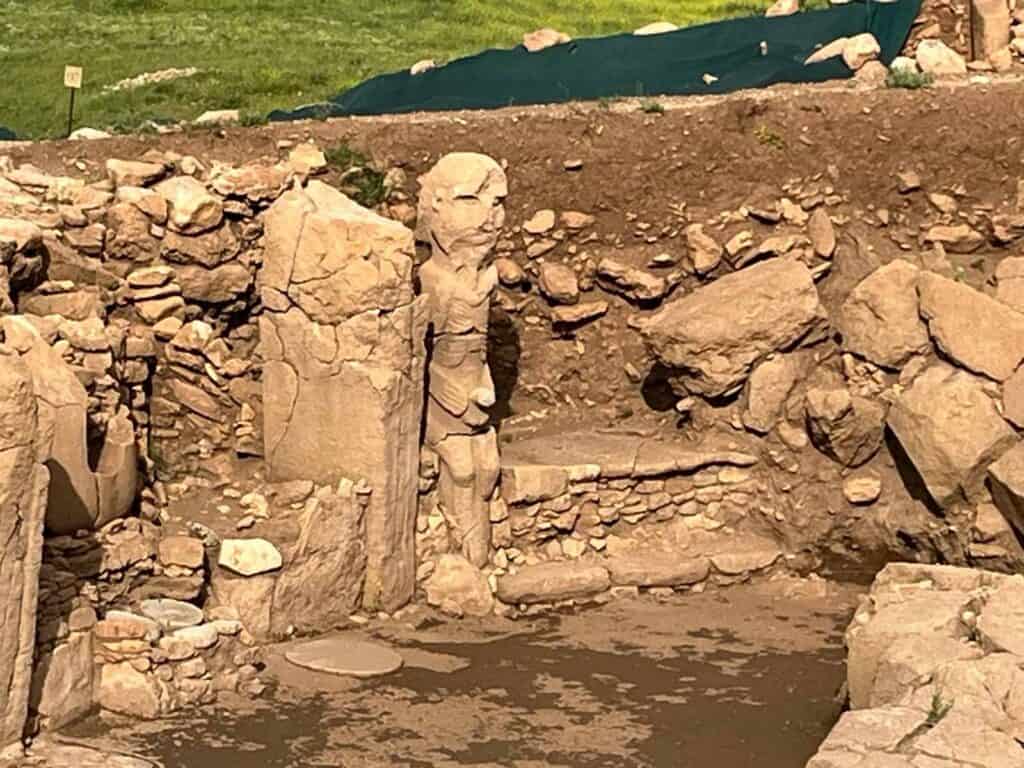
The hills near Diyarbakır hold Göbekli Tepe and Karahan Tepe, the oldest monumental architecture yet found anywhere on earth, though whether they bear on Babel turns on the very dating in dispute, so they are best taken as the independent marvel they are. To the north stand the two rival ark traditions, Ararat with its fame and Cudi Dağ with its older pedigree in the early Eastern church and the Quran. To the south and west lie Şanlıurfa and Harran, the country of Abraham’s origins and Terah’s household. The Babel argument is one thread in a landscape where the early chapters of Genesis are unusually concentrated.
The bottom line
So the question has two real answers, at opposite ends of Mesopotamia, and our route runs through the northern one. The southern identification, whether with Babylon or with Eridu, is the long default and has real support, both in the text and in the ground. The case for a northern Shinar is old and well argued. The case for the upper Tigris in particular is recent and unproven.
What can be said without hedging is that the terrain where that argument is being fought is exactly where our Eastern Turkey journey goes. You will not be shown a tower. You will be shown the question, on the ground that produced it.
Sources:
W. F. Albright, “Shinar-Šanḡar and Its Monarch Amraphel,” AJSL 40, no. 2 (1924): 125–133, at 130.
Ken Griffith and Darrell K. White, “An Upper Mesopotamian location for Babel,” Journal of Creation 35(2):69–79, 2021.
“Where was the Tower of Babel? – Dr. Douglas Petrovich” YouTube.
Explore Eastern Turkey with Living Passages
Living Passages has been guiding biblically-focused groups through western Turkey for many years, and now we are turning eastward to discover new sites that have not been traditionally visited. We’re planning our inaugural trip for June 2027 with bestselling author Joel Richardson.