Did Jethro Know YHWH Before Moses?
The Priest of Midian and the God of Abraham
Did Jethro, the priest of Midian and the father-in-law of Moses, know YHWH before Moses did? Everything turns on what we mean by the question. YHWH is the name of the Lord, and to ask whether Jethro knew YHWH is really to ask two things at once. Did he know the name, the four letters revealed in Moses’ day? And did he know the One who bears that name, the Lord himself? Those two come apart in the text, and holding them apart is the key to the whole matter.
The Name Was Revealed
On one side of that question, Scripture speaks plainly. In Exodus 6:3, God tells Moses, “I appeared to Abraham, to Isaac, and to Jacob as El Shaddai, but by my name YHWH I did not make myself known to them.”
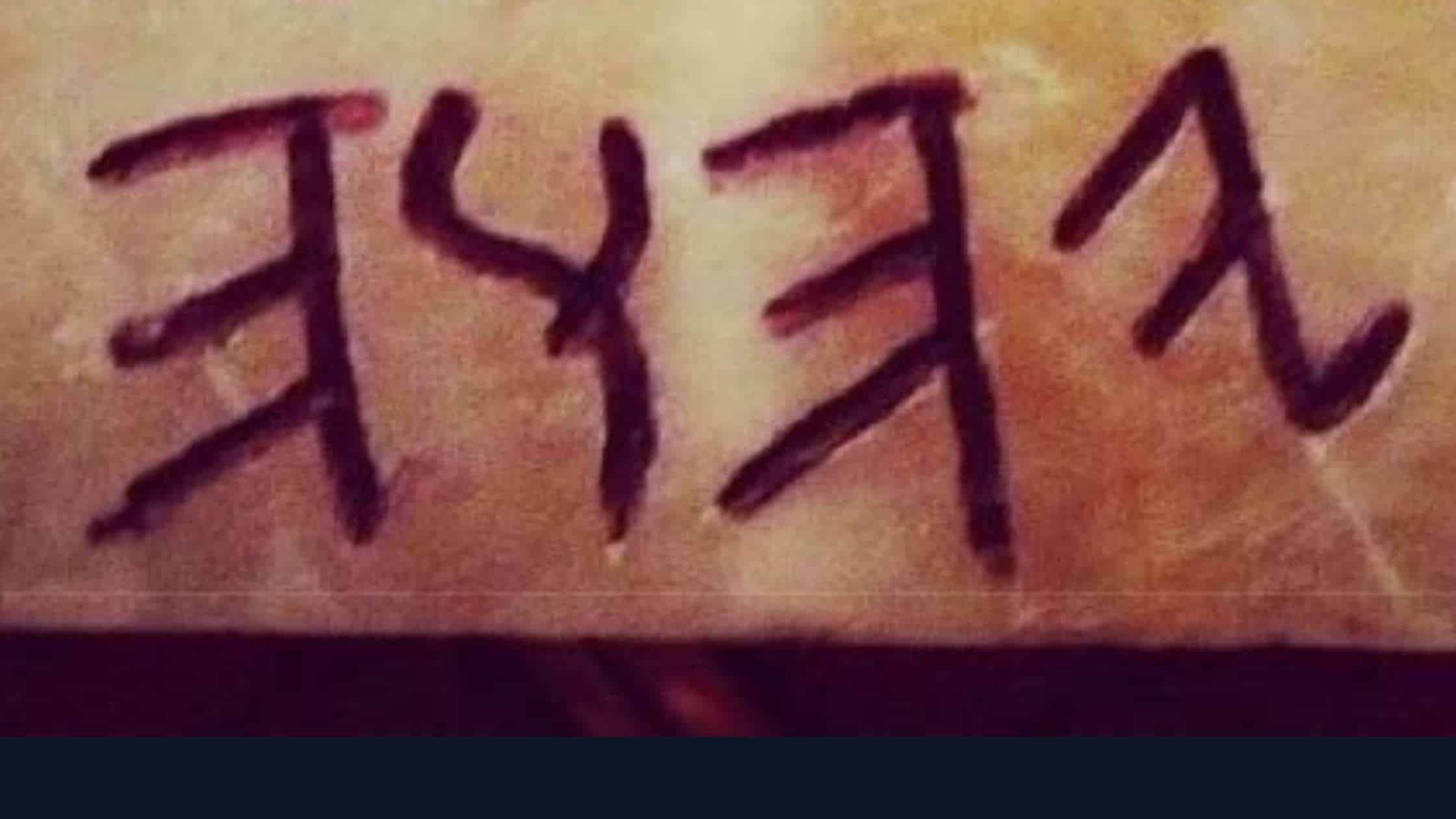
Yet the way the name comes to Moses is more careful than our English habits allow us to hear. At the burning bush it arrives in two moments rather than one. First comes the self-definition, “Ehyeh Asher Ehyeh,” meaning “I will be what I will be,” with the instruction to say that Ehyeh has sent him (Exodus 3:14). Then, in the very next verse, comes the name itself: “Say YHWH, the God of your fathers, sent you. This is my name forever” (Exodus 3:15). So the bush gives Moses both the meaning and the name in two consecutive lines. Ehyeh, “I will be,” is how God speaks of himself in the first person, while YHWH, “He will be,” is how the worshipper speaks of him in the third. The two are bound to each other, and yet they are not quite the same word.
This lets us say with some care what the patriarchs actually lacked. They knew God as El Shaddai, God Almighty, which is the name under which Abraham received the covenant of circumcision (Genesis 17:1). What Moses is lifted into at the bush goes further than that. He receives the Ehyeh of God’s own self-disclosure and the covenant name YHWH. And that name comes into its full weight not at the bush but at the mountain, where it opens the Ten Matters, the aseret ha-devarim, as the founding word of a nation: “I am YHWH your God, who brought you out of the land of Egypt, out of the house of bondage” (Exodus 20:2). By Sinai the name is no longer a private word spoken to a shepherd. It has become linked to the identity of a whole people.
The name unfolds, then, in stages, and all of them sit plainly in the text. El Shaddai is the name the patriarchs carried, and so it is the name that Abraham’s eastern children would have carried as well. Ehyeh is the self-definition given to Moses alone. YHWH is the covenant name, revealed at the bush and inscribed at Sinai. If the patriarchs themselves stood only at the first of those stages, we have little reason to expect a priest of Midian to have stood any further along. On the matter of the name, the answer is settled, for these later words were Moses’ to receive.
A name, though, is not the same thing as the One who carries it.
The God Was Not New
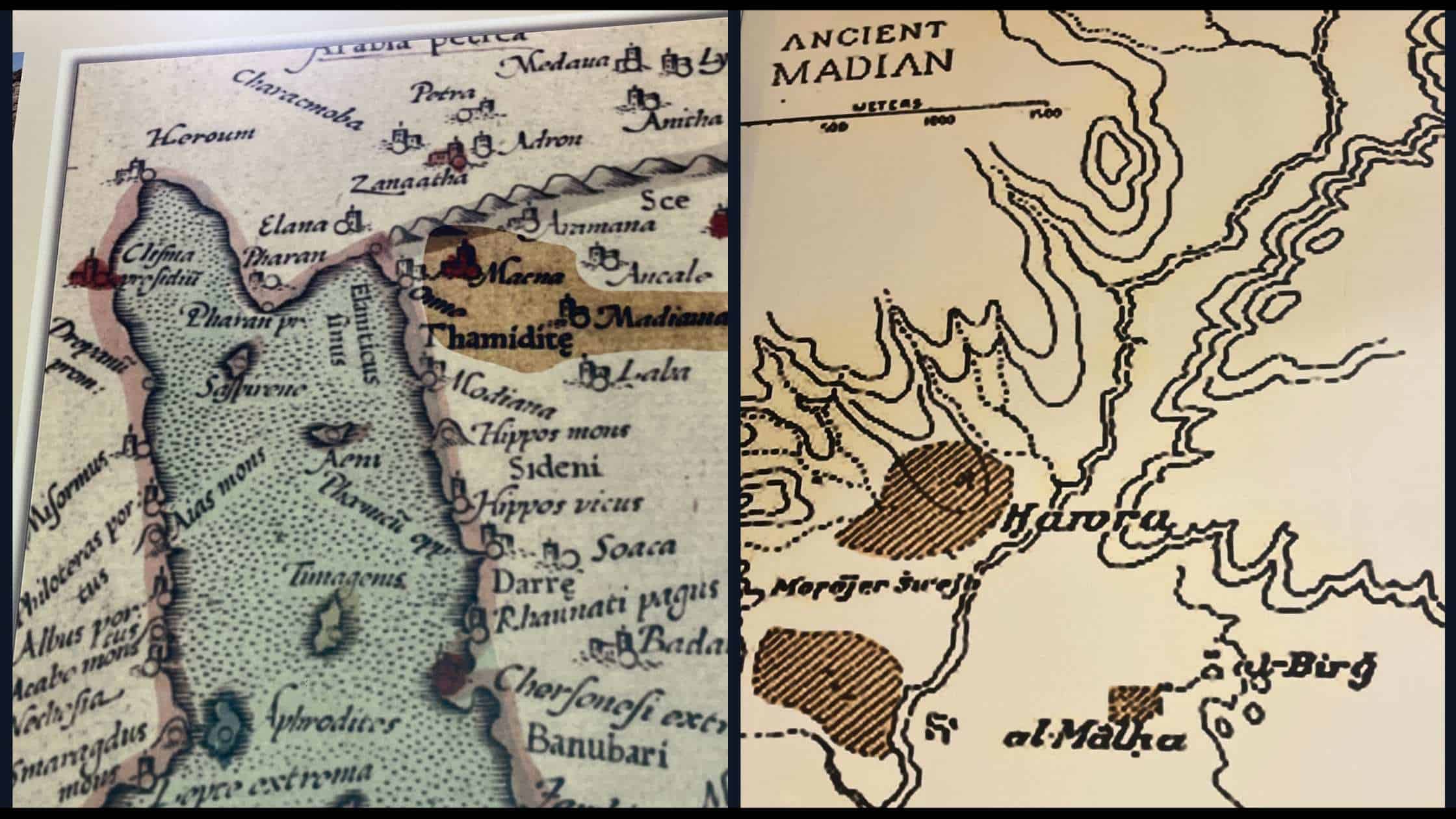
The priest of Midian, the text calls him, but a priest of whom? Scripture never says outright. It does, however, tell us something elsewhere that answers the question quietly enough that we can read right past it. Midian was a son of Abraham.
After Sarah died, “Abraham took another wife, whose name was Keturah,” and she bore him several sons, Midian among them (Genesis 25:1-2). The genealogies are not perfectly smooth here, since Genesis names Keturah a wife while 1 Chronicles 1:32 names her a concubine, but that difference does not touch what matters. Wife or concubine, the line belongs to Abraham, and the God of Abraham travels down it regardless.
Scripture also refuses to leave these eastern sons as bare names in a list. It tells us what Abraham did with them. He “gave gifts” to them and “sent them away from Isaac his son, eastward, to the east country” (Genesis 25:6), into the very region that would come to be called Midian. He sent them east with their inheritance, and we have every reason to believe that inheritance amounted to more than livestock and silver.
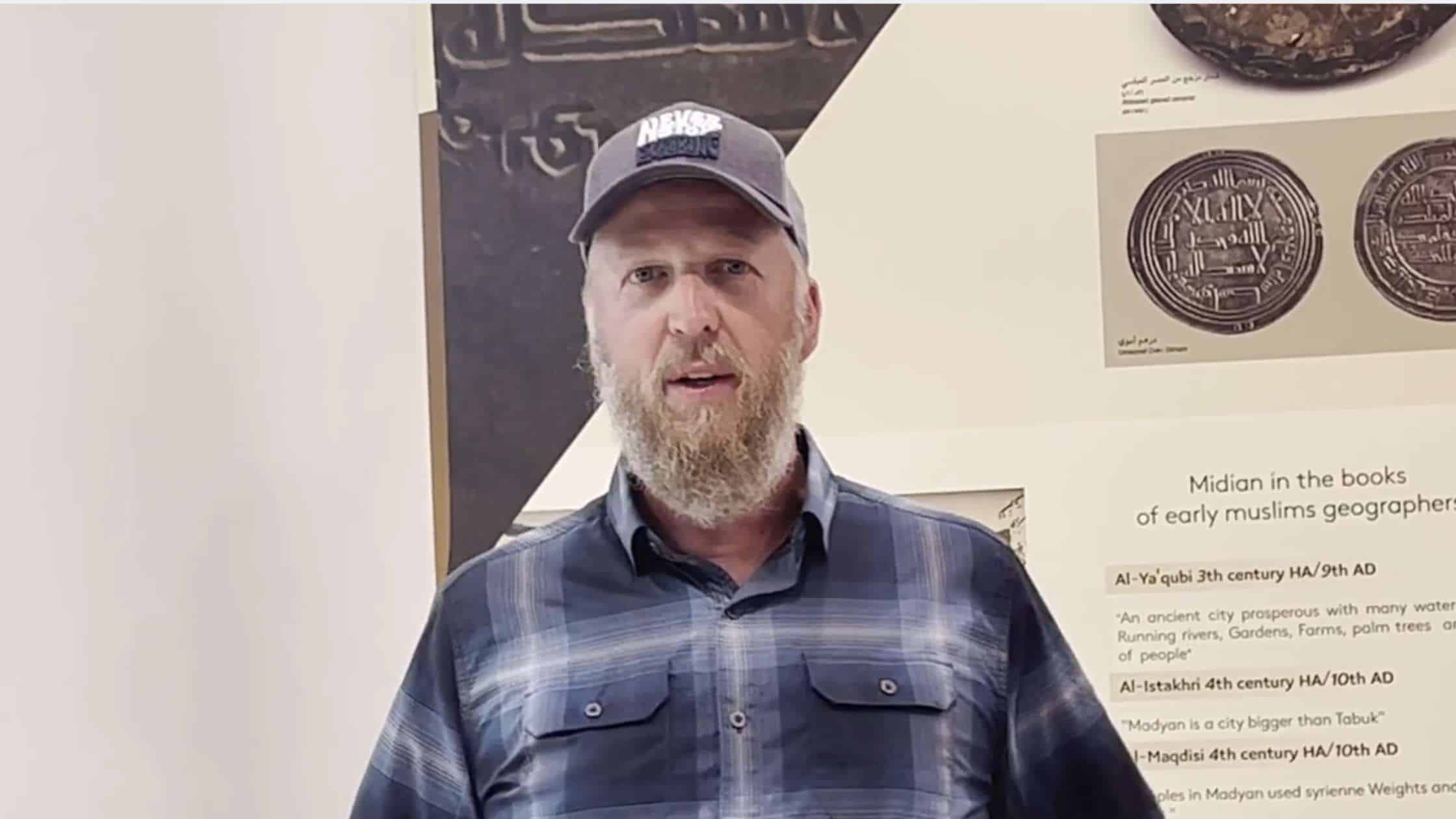
“Jethro was a Kenite, a descendant of Abraham through Midian. And Abraham surely taught those six sons of Keturah his ways. There was an oral tradition there.” — Todd Bennett, teaching at Mughair Shuaib, Midian
Here is the turning point of the whole matter. Abraham did not raise sons who knew nothing of the God who had called him out of Ur, led him the length of the land, and cut covenant with him beneath the stars. He taught them his ways. And in a world that had no written Bible, those ways could only travel by oral tradition, passed from father to son across the generations and carried eastward into Midian.
A Faith After Abraham’s, Without the Name
This gives us a clear and satisfying way to answer the question we began with. Jethro knew the God of Abraham following the manner Abraham himself knew him, in relationship but without the four-letter name. He stood toward the God of his fathers exactly as Abraham had stood toward the covenant, joined to the deity while the name still lay in the future.
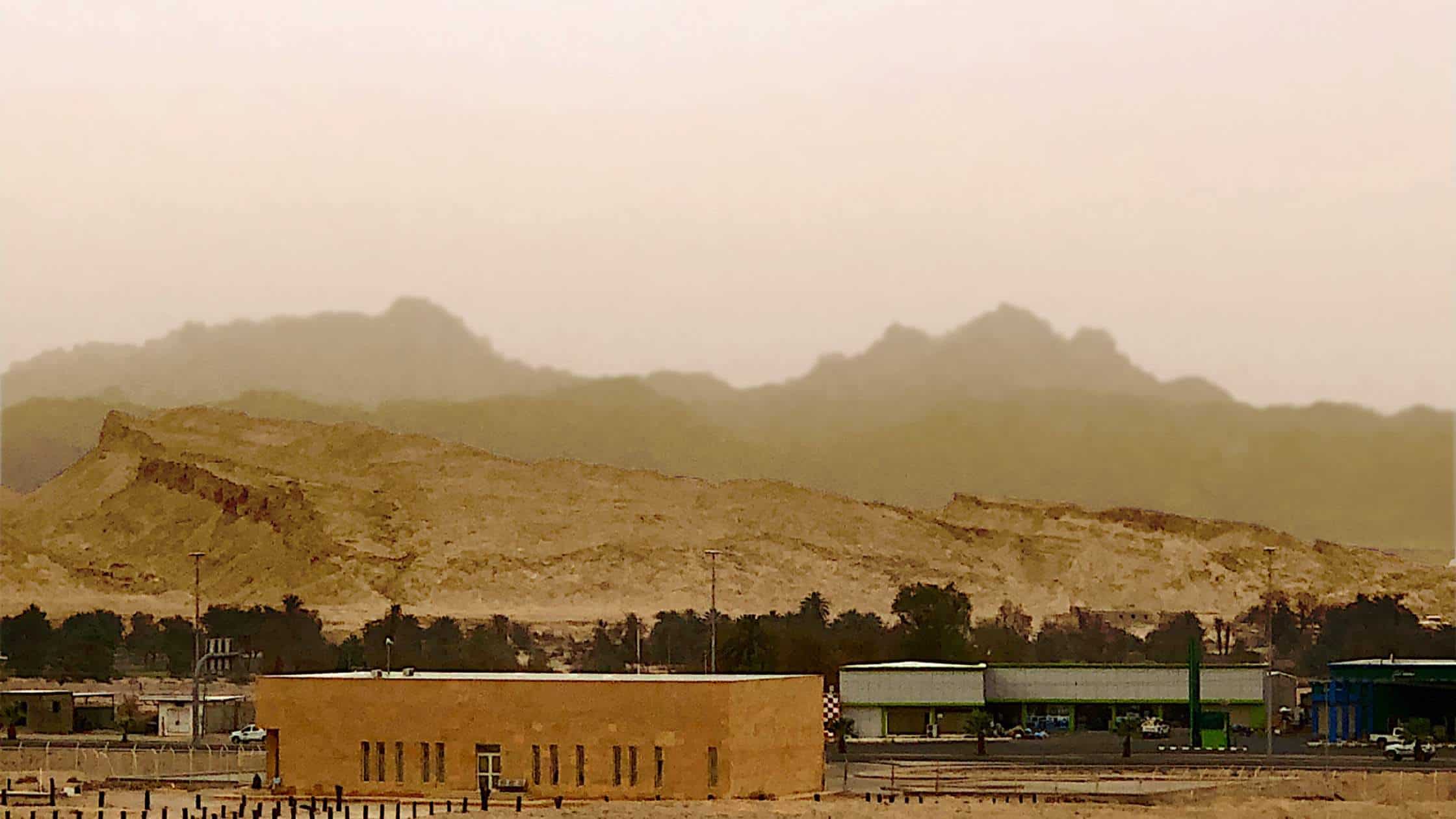
Notice, too, where Moses encounters the Lord. Before Moses ever climbs it, the text already calls the place the mountain of God (Exodus 3:1). Its holiness does not begin with Moses at all. This is holy ground inside the territory of an Abrahamic priesthood, kept by a man whose fathers had been taught the ways of the Lord long before a Hebrew shepherd wandered up its slopes. If the mountain was already holy, that holiness belonged to someone, and the likeliest someone is the priest in whose land it stood.
“Now I Know,” a Recognition Rather Than a Conversion
This reframes one of the most striking scenes in the Torah. When the families are reunited after the Exodus, it is Jethro, the Midianite priest, who pronounces the blessing, brings the burnt offering, and presides while Aaron and the elders of Israel eat bread before God (Exodus 18:12). And he declares, “Now I know that YHWH is greater than all gods” (Exodus 18:11).
For generations this line has been read as a conversion, the moment a pagan priest first acknowledges the true God. But the grammar of it points elsewhere, because “now I know” is the speech of confirmation rather than first acquaintance. Teaching in Midian, Todd Bennett locates the reason.
“When Jethro says, ‘Now I know that YHWH is greater than all gods,’ he wasn’t saying he had just learned about Him. He’s saying now he knows, because he saw the promise fulfilled.”
Which promise? The one given to Abraham generations before, in the covenant of Genesis 15, that his descendants would be strangers in a land not their own, afflicted four hundred years, and would afterward come out “with great possessions” (Genesis 15:13-14). That prophecy belonged to Abraham, and it would have traveled down the Keturah line along with everything else Abraham taught his sons.
“They had an oral tradition, just as we have prophecies written in texts. These cultures handed down promises through the generations.” — Todd Bennett, teaching at Mughair Shuaib, Midian
So when Jethro watched Israel walk out of Egypt after four hundred years, carrying the wealth of the people who had enslaved them, he was not being introduced to a stranger. He was watching his own forefather’s promise come true in front of him. “Now I know” is not the language of a man meeting a new God. It is the language of a man whose inherited faith has just been confirmed before his eyes.
The Covenant Already Named His People
There is one more thread to follow, and it leads back to that same covenant in Genesis 15. When God passed between the divided pieces as a smoking firepot and a flaming torch, he named the peoples of the land he was granting, and the first of them is the Kenites (Genesis 15:19). In Bennett’s reading, that is the very line that runs down to Jethro, so the covenant record carries the priest of Midian’s own people within it from the very start. That makes the Kenite anything but a latecomer to the story of the covenant.
The Journey from Egypt to Midian
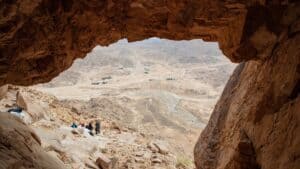
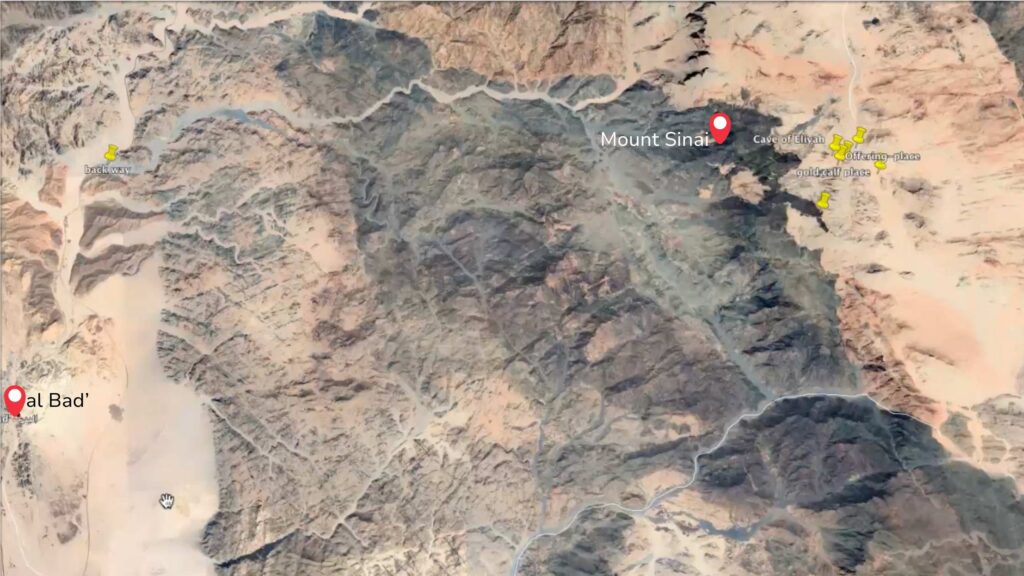
There is a site at al Bad’, in the northwest of Saudi Arabia, that local tradition has tied for centuries to Jethro himself. The Arabs call it Mughair Shuaib, the caves of Shuaib, Shuaib being the Arabic name for Jethro. To stand there is to stand where Moses once tended a flock that was not his own, in the land of the priest who already knew the Lord.
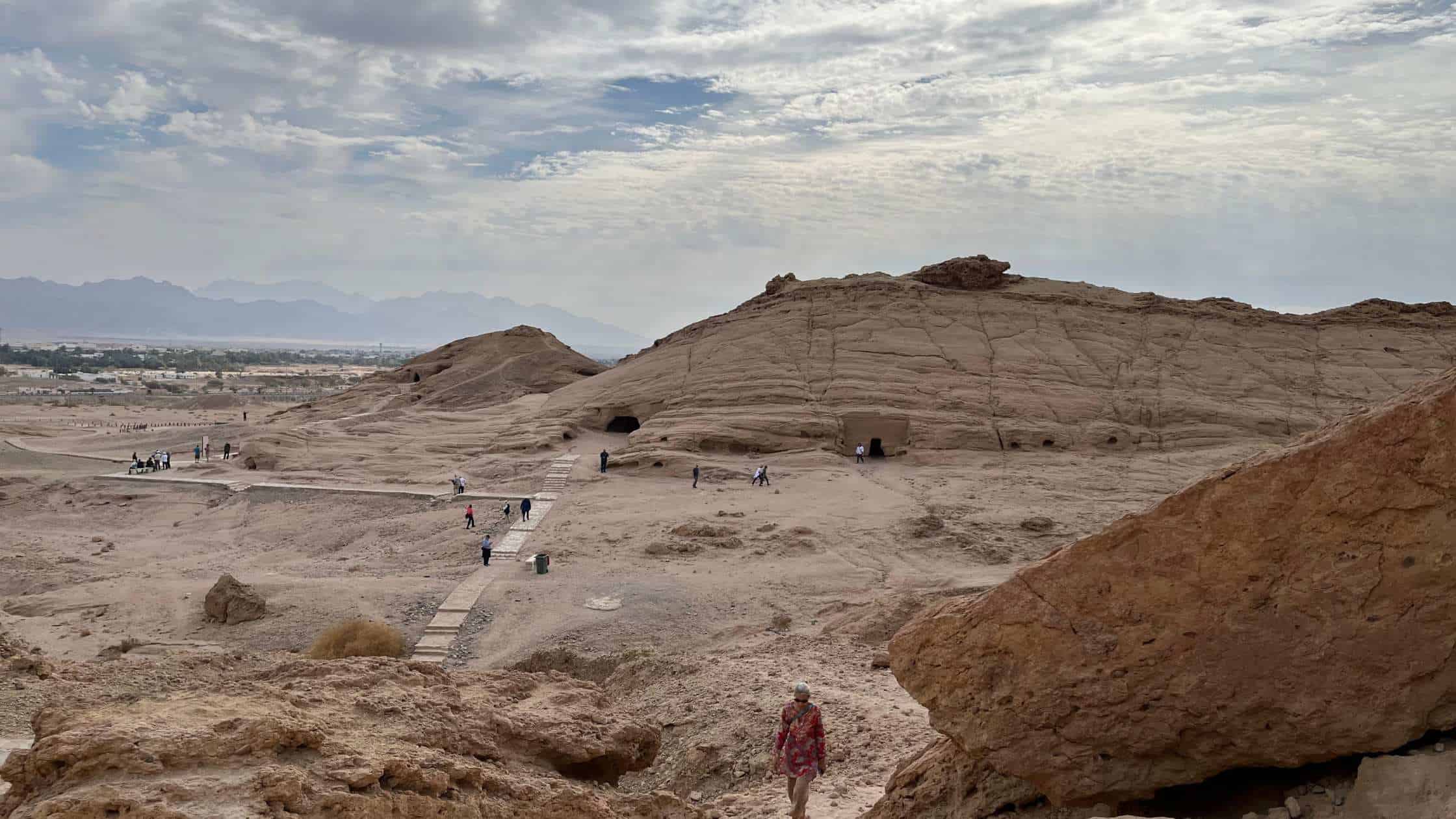
This is the reason the journey from Egypt to Midian is no detour in the story of the covenant but a part of its very spine. The God of Abraham was known in Midian before his name was ever spoken at the bush, kept however dimly by a priesthood descended from Abraham himself and carrying an oral memory of promises older than Moses.
When Moses fled east, then, he did not carry the Lord into a godless wilderness. He walked into the keeping of his own extended family, and there, in the priest of Midian, he found a man who already knew the God whose name he was about to learn. The names were new in Moses’ hand, but the God who answered to them had been known in that land for generations.
Walk the Exodus Paths with Living Passages
Living Passages has been guiding biblically-focused groups through Saudi Arabia since the kingdom first opened to international tourism in 2018. Our Exodus itineraries often begin in Egypt and include sites most standard tours overlook. Some tours focus on the Saudi Arabia portion exclusively (or along with Jordan). Experience the meaning of the Exodus journey while being taught on the ground by knowledgeable guides and teaching leaders.