Temple Zero and the Tent of David: Where Zadok Anointed Solomon King
When King David brought the Ark of the Covenant to Jerusalem, he did not place it in the existing tabernacle at Gibeon. Instead, he pitched a tent for the Ark in the city of David, set Zadok the priest before it, and there the Ark remained for forty years, until Solomon completed the Temple.
The tent has always been a mystery. Where exactly was it? The biblical text tells us only that it was in the city of David. We know one thing more, hidden in a single verse most readers pass over without noticing.
When David made Solomon king, he sent Zadok down to the Gihon Spring to anoint him.
“Zadok the priest took the horn of oil out of the tent and anointed Solomon. They blew the trumpet, and all the people said, ‘Long live King Solomon!'” (1 Kings 1:39)
The horn of oil was kept in the tent. Zadok descended from the tent to the Gihon. The tent, in other words, was near the Gihon.
In 2010 and 2011, Israeli archaeologist Eli Shukron excavated a remarkable cultic complex on the eastern slope of the City of David, directly above the Gihon Spring. A standing stone, deliberately preserved. An altar with a drainage channel. An olive press. A sealed chamber packed with sacred objects, whose last functional use dates exactly to the era of David and Solomon.

Excavated by Eli Shukron (2010–2011); published in ʿAtiqot 116 (2024).
“This is the beginning of the monotheism, and this temple zero. This is the beginning.”
— Eli Shukron, City of David excavation director, in conversation with Pastor Tim Remington (December 2018)
Eli calls the site “Temple Zero” and the name has stuck. But what the most recent archaeological publication suggests, and what a careful reading of 1 Kings 1 confirms, is that Temple Zero may be the place where Zadok the priest ministered, where the horn of oil was kept, and where Solomon was anointed king of Israel.

The Temple Zero Discovery
The site is a series of rock-cut rooms carved into bedrock on the eastern slope of the City of David. In 2024, Eli Shukron and four co-authors from Tel Aviv University and the Ancient Jerusalem Research Center published the complete excavation report in ‘Atiqot 116, the peer-reviewed journal of the Israel Antiquities Authority. The paper documents every wall, every floor, every fragment of pottery, every sealing and scarab.
The features that emerge from this report align with the description of a cultic site of national significance, used and maintained over centuries.
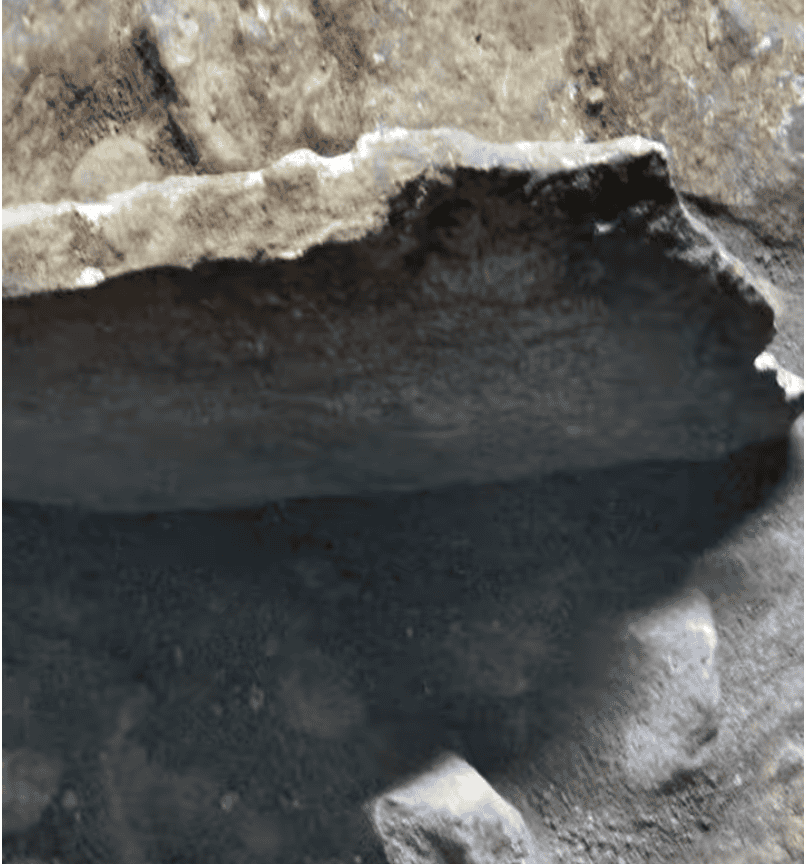
Room 4, the standing stone. A flat, thin limestone slab mounted horizontally on a built platform of fieldstones. In Hebrew, a maṣṣebah, a standing stone of the kind the patriarchs raised. Jacob set one up at Bethel, anointed it with oil, and called it “the house of God” (Genesis 28:18-22). The excavators call this the single most important find in the complex, the clearest evidence that worship happened here. The stone in Room 4 was preserved, not destroyed, when the site was eventually decommissioned.
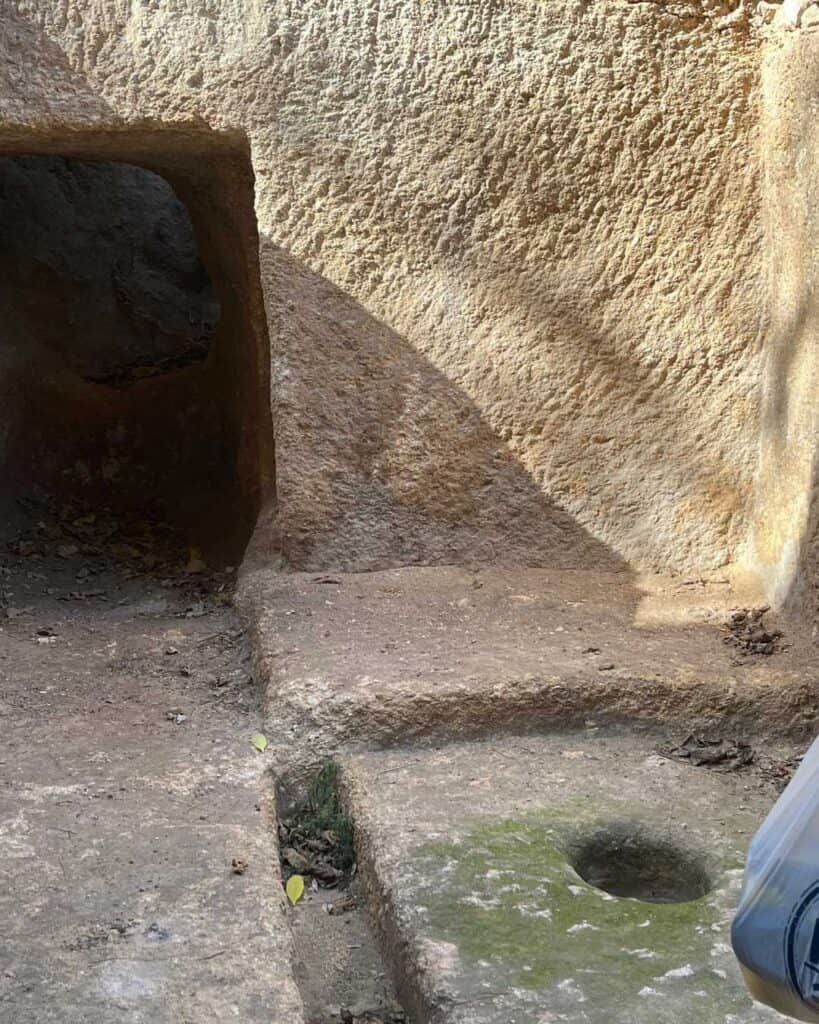
Room 1, the altar. A raised platform in the northwest corner with a carved channel running from its southeast corner to a step in the rock. The channel widens as it descends, designed for liquid to flow quickly. The excavators interpret this as an altar with a drainage channel for libations or sacrificial offerings. Every room in the complex opens onto Room 1.

Room 2, the olive press. Round depressions cut into the rock floor, with a rectangular vat alongside, identified as a small olive press. (Room 7, just to the north, has a similar round depression, but the excavators leave its function open.) Together with the winepress, these installations appear to have served the worship at the maṣṣebah producing the oil of anointing and wine of offering.
Photo by Judith Ransom.
Room 3, the winepress. A treading floor plastered with clay, likely a small winepress for producing wine used in worship.

Room 5 — the grooves and the hidden chamber. The rock floor here is carved with three V-shaped grooves and other depressions, probably for crushing or pressing liquids. In the northwestern corner, two steps descend into a small rock-cut chamber. At some point in the eighth century BCE, the most sacred objects were gathered, placed inside this chamber, and the entrance sealed behind a carefully built stone wall. Inside were intact pottery, loomweights, scarabs, sealings bearing cartouches and royal motifs, clay figurines, animal and fish bones, and a unique limestone vessel with three sockets unlike anything else known from Jerusalem. This kind of deposit is called a favissa: a sealed cache of sacred objects, buried because they were too holy to simply discard.
The Dating Match
This is where the case becomes compelling. The seals and scarabs found in the favissa date to Iron IIA, the period of King David and King Solomon. The paper notes that these objects are similar to those found in the rock-cut pool nearby, and “attest to the date of the last use of the structure.”
In other words, the site was actively used as a cultic installation through the era of David and Solomon. Then, around the time Solomon’s Temple was completed and the Ark was carried up to its permanent home, the site fell into respectful disuse. It sat untouched for nearly a century. Only later, during the reforms of the eighth century BCE, was it formally sealed.
This dating fits the biblical scene with remarkable precision. David pitched a tent for the Ark in the city of David. Zadok ministered there. The horn of oil was kept there. Solomon was anointed from oil taken out of that tent. And then, when Solomon’s Temple was built, the tent’s function passed to the Temple, and the site that had housed the tent was left in honored silence.
Brent Nagtegaal of the Armstrong Institute of Biblical Archaeology, who has worked Jerusalem excavations for over a decade alongside the late Dr. Eilat Mazar, has argued that this convergence is striking enough to take seriously. The archaeology and the biblical text line up at every joint. Shukron himself developed this identification in a 2020 essay co-authored with Rabbi Dr. Yoel Bin-Nun, the prominent Bible scholar and co-founder of Yeshivat Har Etzion. They specifically identified a raised hewn area south of the matzevah room as the likely location of the tent David pitched for the Ark. The same essay points to a specific hewn platform south of the matzevah complex, distinguished from the older rock-cutting by later quarrying technique, large enough and flat enough to have pitched a tent on.
An Older Story?
The site is older than David. Pottery from the lowest layers, in Room 8 on the easternmost edge of the dig, dates to the Middle Bronze Age, the era of the patriarchs. Radiocarbon dating confirms it. This means the cultic installation above the Gihon Spring was already standing when the proto-Jerusalem of the patriarchal world was a small Canaanite settlement built around its life-giving spring.
Eli has long suggested that this is connected to the era of Melchizedek and the earliest worship at the site that would become Jerusalem. You can hear him discuss this in his on-camera conversation with Pastor Tim Remington of the Altar Church in Coeur d’Alene, Idaho, embedded below.
Whatever the deepest origin of the site, the most striking biblical match is with the era of David and Solomon, when the Ark of the Covenant rested in a tent above the Gihon and Zadok the priest kept the horn of oil that anointed Israel’s most famous king.
Why the Site Was Buried
The decommissioning of the site, in the eighth century BCE, is the second great drama in its story. The book of 2 Kings tells us:
“He did what was right in the eyes of the LORD, just as his father David had done. He removed the high places, broke down the sacred stones and cut down the Asherah poles.” (2 Kings 18:3-4)
This is the consolidation of worship at the Temple in Jerusalem and the removal of competing cultic sites throughout the land, a reform that culminated under King Hezekiah. The paper’s Iron IIB dating of the final sealing of Temple Zero places the work in exactly this period.
But here is what the archaeology shows. When the reform reached this site, the standing stone was not smashed. It was covered. The sacred objects were not scattered, they were sealed in a hidden chamber. The site was handled with reverence.
The same pattern appears at Tel Arad in the Negev, the textbook archaeological example of this kind of reform. There too, the altar and standing stones were carefully dismantled and respectfully buried. These were not pagan shrines being smashed by zealots. These were old, deeply venerated sites being retired with reverence as worship was consolidated at the Jerusalem Temple.
The Assyrian field commander Rabshakeh, taunting Hezekiah’s officials in 701 BCE, complained: “Is it not He whose high places and altars Hezekiah has removed?” (2 Kings 18:22). Even Israel’s enemies understood that what had been pulled down belonged in some sense to the LORD. The careful burial of Temple Zero is the archaeological signature of that understanding.
Did David Pitch His Tent Here?
A standing stone above the Gihon Spring, set up in the era of the patriarchs. An altar for offerings, an olive press for the oil of anointing, a chamber for sacred objects. A site whose most active use, according to the seals in the favissa, falls in the era of David and Solomon. The plausible location of the tent David pitched for the Ark of the Covenant, where Zadok the priest kept the horn of oil, and from which Solomon was anointed king of Israel. A reverent decommissioning a century later, as worship was consolidated at the Temple. A sealed chamber preserved for nearly three millennia, now uncovered. At joint after joint, the scripture and the archaeology seem to meet.
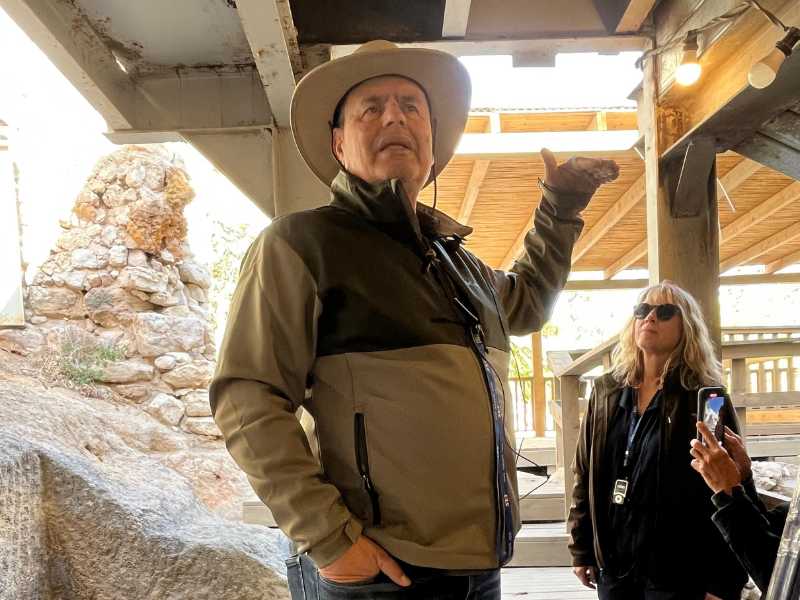
See Temple Zero with Eli Shukron
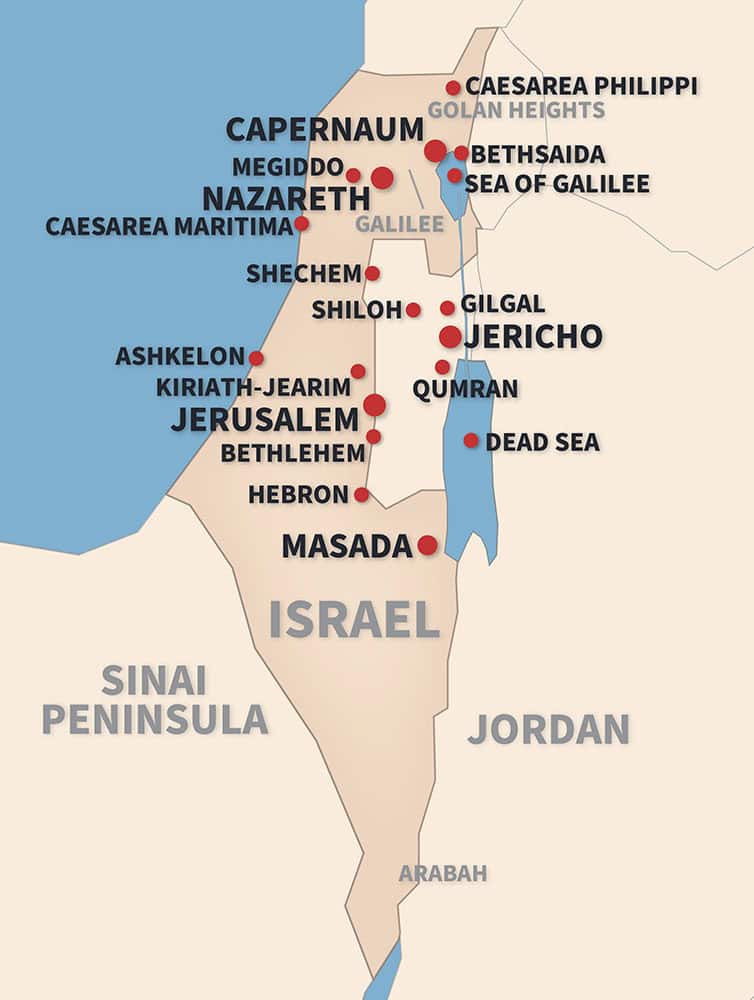
For LP travelers who want to walk this site with the man who excavated it, our Israel tours feature Eli Shukron. We walk the City of David, descend to the Pool of Siloam, climb the Pilgrim Road, and stand in the very rock-cut rooms where the standing stone was preserved for nearly three millennia. Eli will narrate the archaeology firsthand. You will see, with your own eyes, the place where Zadok the priest ministered before the Ark of the Covenant, and where Solomon was anointed king of Israel.
Sources:
Eames, Christopher. “Worship—or Workshop? Making Sense of the City of David ‘Rock-Cut Rooms.'” Armstrong Institute of Biblical Archaeology (April 2026).
Nagtegaal, Brent. “Let the Stone Speak” podcast/video analysis of the City of David rock-cut rooms (Armstrong Institute, 2026).
Shukron, E., Freud, L., Roth, H., Avisar, R., and Bocher, E. “Evidence of Worship in the Rock-Cut Rooms on the Eastern Slope of the City of David, Jerusalem.” ‘Atiqot 116 (2024): 77–124. Doi.org/10.70967/2948-040X.1126
Shukron, Eli, and Yoel Bin-Nun. “A Matzevah Temple from the Period of the Patriarchs in the City of Salem, Later the City of David.” 2020. https://yoel-binnun.com/a-matzevah-temple-from-the-period-of-the-patriarchs-in-the-city-of-salem-later-the-city-of-david/
We extend a special thank you to our traveler Judy Ransom for her recent Temple Zero photos.