Baal Peor – Uncovering the Biblical Location
From Ancient Idolatry to Contemporary Treasure Hunts
Baal Peor: UnCovering the Biblical Location
Original post published 2024 | Updated November 2025
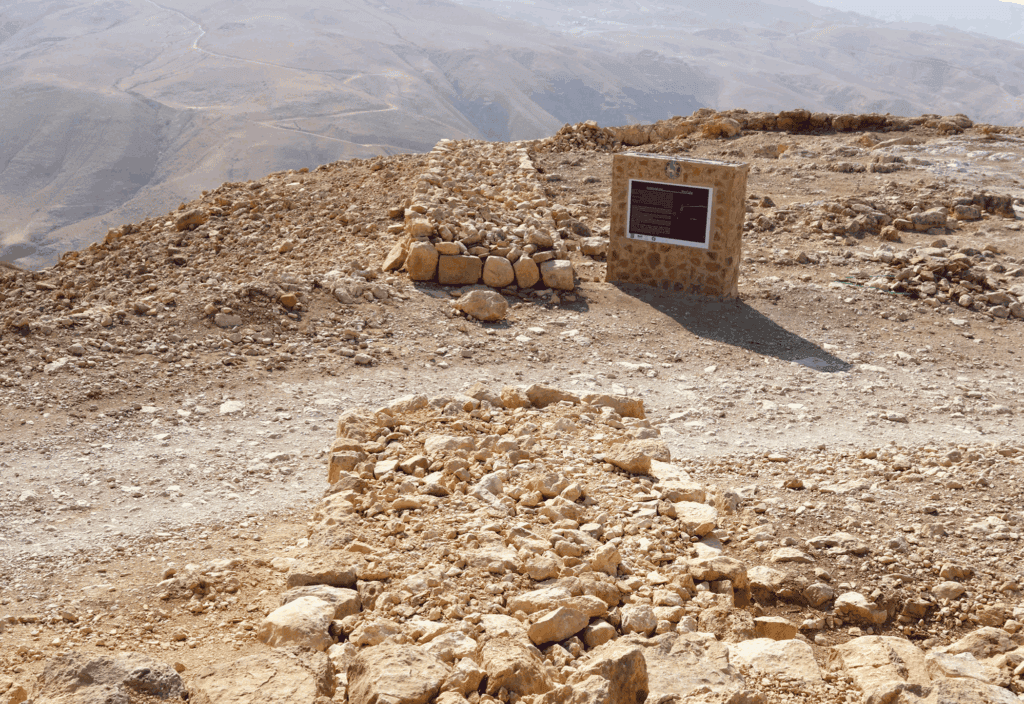
New signage at Baal Peor location
Major Developments Emerge
Thanks to new information provided to us by our on-the-ground observer Ralph
Schwarz, we can report that two major developments have emerged: some official
restoration effort seems to be now underway, and there is a renewed focus on the site's crucial role along a historic Pilgrims' route.
He explained: “Recently I happened to go to Google Maps while showing someone the
location of the site. I got a shock, the site had changed dramatically.” This prompted
him to return to Beth Baal Peor to have a closer look at changes to the site. In a surprising and positive development, Jordanian officials have initiated upgrades at the site, including new signage. There are three guard towers or strong points marking the length of the reconstructed Southern Wall of the city.

3 Guard Towers at Baal Peor Location
Illegal Digs Continue
Despite this crucial progress, the long-standing problem of illegal treasure hunting continues. The holes being dug are going deeper, according to Schwarz. The Revived “Egeria Way” Egeria was a pioneering 4th-century Spanish-Galician nun who was one of the first recorded female pilgrims to the Holy Land. According to the Jordan Tourism Board: "Egeria likely used the Roman road between Husban and Jericho—an ancient path also said to have been traveled by the three Magi. Along this road, remnants of Roman watchtowers, milestones, guest houses, and sections of original pavement remain visible.”

Illegal Dig Site at Baal Peor
Jordan is actively expanding the John the Baptist Trail into the comprehensive Egeria
Way, a 50 km route which has been twinned with Spain's highly popular El Camino de
Santiago. This ambitious initiative was inspired by local guide Oscar Koshebye and his colleagues, who sought to revive the 1,600-year-old route traveled by Egeria. It was on the hike of a portion of this route from Husban with Koshebye that Ralph Schwarz was first introduced to the Beth Baal Peor site.
The organizers of this modern spiritual route committed to establishing its historical
accuracy, specifically naming the research co-authored by archaeologist Scott
Stripling. Dr. Stripling and David E. Graves published a significant Re-examination of the Location for the Ancient City of Livias. Livias was a major administrative center in Perea, described as lying on the road connecting Esbus (Husban) with Jericho and Jerusalem. Stripling and Graves’ work is foundational because the Egeria Way trail specifically passes through this ancient city.
Validation of True Location
The validation of Livias’s location solidifies the geographical context of the entire corridor, including the proximity of Beth Baal Peor. Eusebius, cited in Dr. Stripling's
scholarship, recorded that Beth-Peor was located just 6 Roman miles east of Livias on the road leading toward Husban. This area holds immense biblical weight, as the early Christian pilgrims associated Livias with the events at Abel-Shittim, the plains where the Israelites camped before the Conquest and where they succumbed to the spiritual
seduction at Beth Baal Peor.
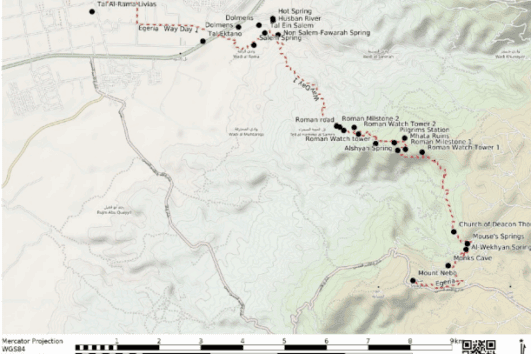
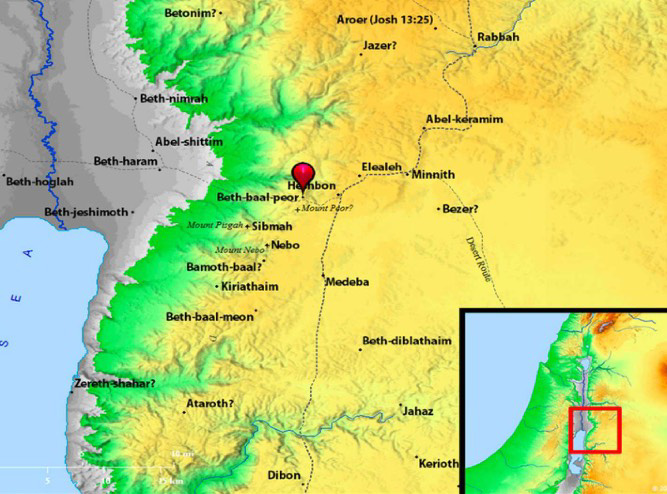
Map of Baal Peor
The revived pilgrimage route accurately traces the route linking Livias, Beth Baal Peor, and Mount Nebo. The sixth Roman mile station from Esbus was located at a promontory called Khirbet el-Mehatta indicated above as Mhata Ruins, known to us as Beth-Poor (map provided by the Jordan Tourism Board).
From Beth-Peor, travelers could see Mount Nebo and take a side path to the Springs of
Moses and Mount Nebo, as recorded by Egeria. The establishment of the Egeria Way
and its inclusion as a key stop on this newly revived Christian pilgrimage route brings
renewed attention and resources to the area, potentially paving the way for proper
archaeological study while honoring the site's religious significance
Original Post from 2024:
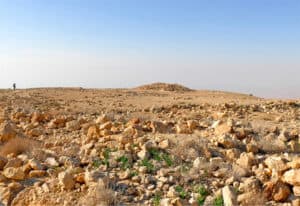
Beth Baal Peor stands as a testament to the tumultuous spiritual journey of the ancient Israelites. Near Mount Nebo in present-day Jordan, this ancient locale is historically associated with Baal worship.
The biblical narrative, particularly in the book of Numbers chapter 25, recounts a critical moment in Israel's exodus journey. The Israelites, led astray by Moabite women, partook in the worship of Baal of Peor, which invoked divine wrath that manifested in a deadly plague. It was the zealous action of Phinehas, the grandson of Aaron, that halted this plague, taking a firm stand for divine righteousness against idolatry.
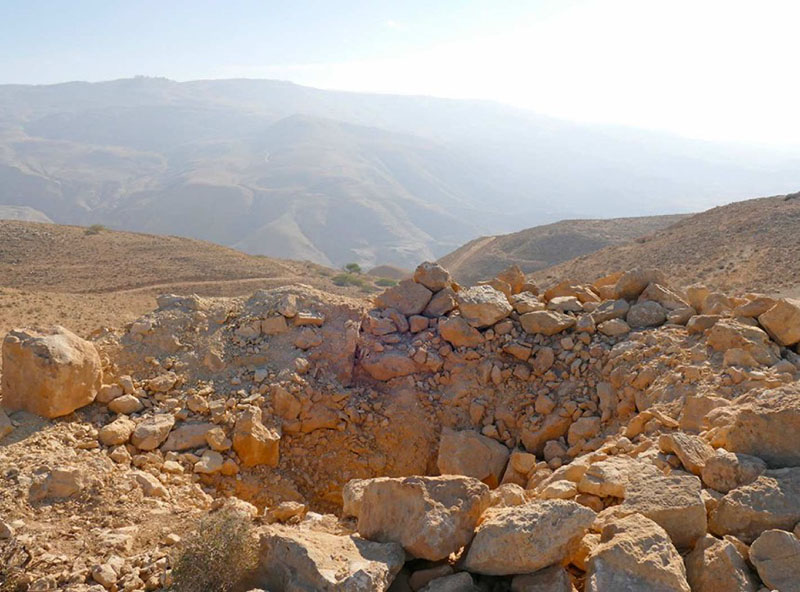
Its proximity to Mount Nebo is significant. According to Deuteronomy 34:1-4, Moses went up from the plains of Moab to Mount Nebo to the top of Pisgah, which is opposite Jericho. From there the Lord showed him the promised land before his death, juxtaposing the divine faithfulness against the backdrop of Israelite idolatry at Beth Baal Peor. The incident at Beth Baal Peor reveals the constant struggle between the Israelites' covenantal faith and the allure of local pagan practices.
The story of Beth Baal Peor unfolds in the biblical accounts narrated in the book of Numbers, where the Moabite King Balak beckoned the prophet Balaam to curse the Hebrews led by Moses. Despite his initial reluctance as he was forbidden from cursing the descendants of Jacob, Balaam eventually faltered, advising Balak to place a stumbling block before the Israelites. This led to the calamitous event where 24,000 Israelites were entangled in the sins of idol worship and fornication, leading to their destruction in a plague of judgment. Balaam's deceitful counsel led to his demise at the hands of the Israelites, marking a dark episode and illustrating the spiritual warfare embedded in their journey.
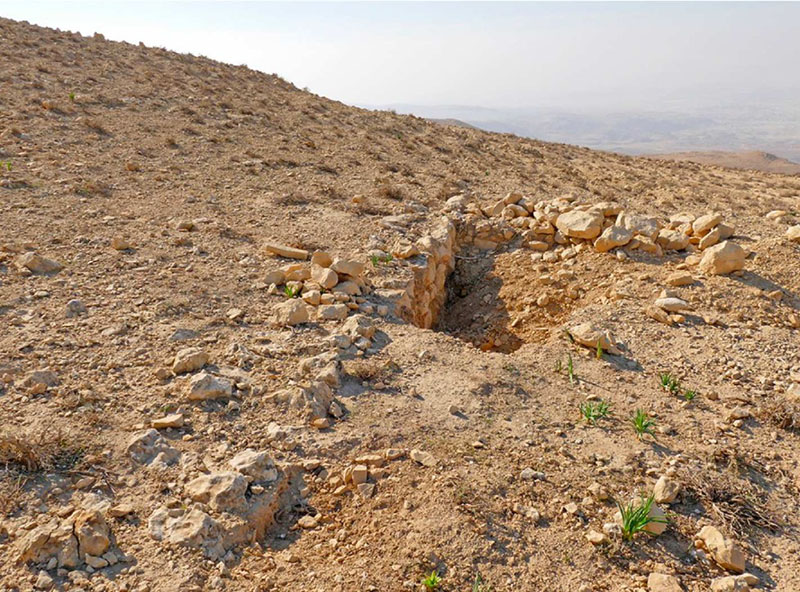
Illegal Digs At The Site
Due to the lack of archaeology, Beth Baal Peor's exact location has continued to be debated, yet the geographical and historical significance of Beth Baal Peor extends beyond its biblical narrative. Positioned along the ridge route from Tel Hesbon, the ancient capital of the Moabites, to the plains before the Jordan river, this site was a bastion of Baal worship in Moab.
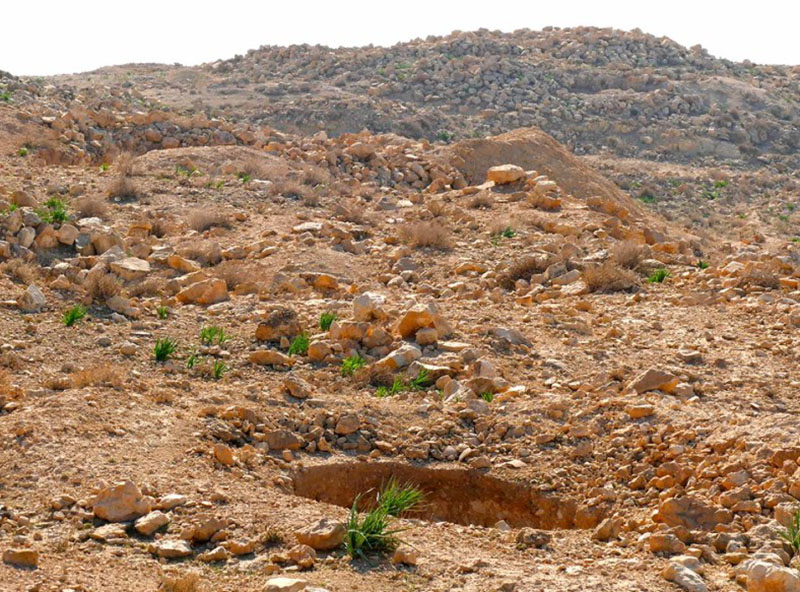
The region whispers tales of hidden treasures as evidenced by numerous illegal digs, often prompted by local lore of buried gold. The desire to unearth hidden treasures, especially gold, is a common aspiration among some local Jordanians. The tumultuous history of the region saw numerous invading armies traverse its landscapes, often leading to inhabitants burying their treasures to protect them from plunder.
Recent discoveries at Beth Baal Peor, although conducted through unauthorized digs, have unearthed walls of ancient structures meters below the present surface. These remnants, as seen in some of the photos, unveil a glimpse into the human activity that once flourished in this historical site.
The region's historical tapestry is further enriched by its connection to the Pilgrims' route from the East side of Jordan, extending from the plains of Madaba to Jericho and onto Jerusalem. The route, as depicted in the map below, highlights the passage through Beth Baal Peor, depicting a trail taken by early and later Christians in their spiritual quest.
“Beth Baal Peor is an important site and should be properly dug, archaeologically researched, and the new knowledge acquired shared with all. But it isn’t, as you can see…”
Ralph Schwarz
Beth Baal Peor holds a treasure trove of historical and biblical knowledge waiting to be unearthed through proper archaeological explorations. However, the political sensitivities surrounding the narratives of this site may be hindering its thorough examination. The scripture, particularly detailing God's blessings on His people, remains a delicate topic, especially among the descendants of Abraham and Lot. The lack of archaeological endeavors has left Beth Baal Peor susceptible to unauthorized digs which could cause problems in the future for archaeologists.
Reading through the chapters of Numbers that recount the events surrounding this site, one can find solace in the enduring covenant that binds the faithful to their Heavenly Father. The episodes of Beth Baal Peor are an invitation to delve deeper into biblical narratives, anchoring faith on the solid rock of historical testimony.