Mount Cudi (Judi) Turkey: The Oldest Claim to Noah’s Ark
Mount Cudi, written Cudi Dağı in Turkish and pronounced “Judi,” is a limestone ridge in Şırnak province in southeastern Turkey, rising to about 2,114 meters above the Tigris near Cizre. It holds the oldest recorded claim to be the landing place of Noah’s Ark. A Babylonian priest named it in the third century BC, the Aramaic translators of Genesis placed the Ark on its highland, Syriac Christians built a monastery on it, and the Quran calls it al-Judi. Mount Ararat, four hundred kilometers north, acquired the association only in recent centuries. Cudi has never been properly excavated.
Where Is Mount Cudi, and Why Isn’t It Mount Ararat?
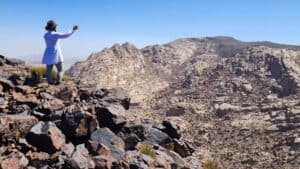
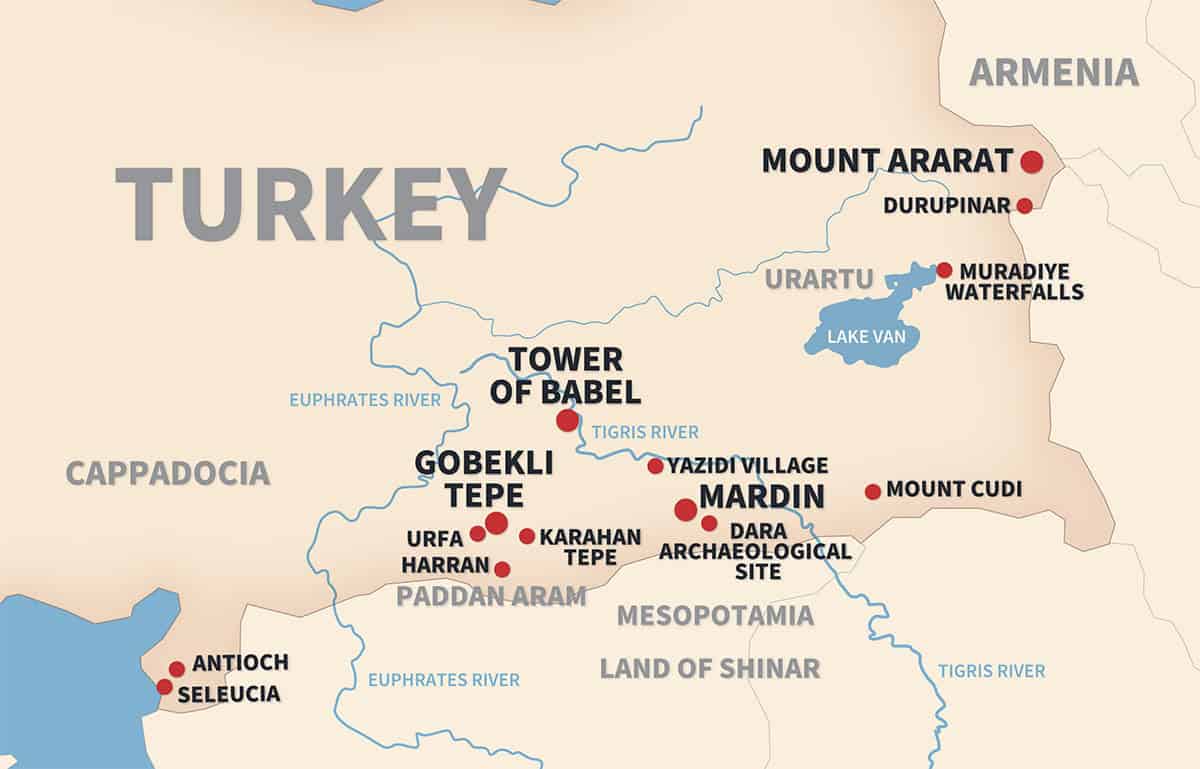
The mountain that holds the oldest claim to Noah’s Ark is not the one you have seen in the paintings. Mount Ararat announces itself from fifty miles off, a snow-crowned cone standing alone above the plain, and for two centuries it has pulled climbers up its flanks with ice axes and permits and the hope of finding timber under the glacier. The mountain the earliest witnesses actually named is easy to drive past. Mount Cudi sits about four hundred kilometers south, a long grey limestone ridge above the Tigris in Şırnak province, in the corner of Turkey where the Iraqi and Syrian borders very nearly touch. Its high point reaches about 2,114 meters, a shade under 6,940 feet, and the ridge carries four separate summits above 2,000. The one this article is about is not the highest. The place associated with the Ark is a named peak roughly a hundred meters below the top, high enough to hold snow in its folds into early summer, low enough that you could travel the road beneath it and never look up.1
Its name is Cudi Dağı. The Turkish c is pronounced like an English j, so the spoken word is “Judi.” You will meet it spelled several ways: Mount Cudi, Mount Judi, Cudi Dagi, and al-Judi in the Arabic sources.
And yet for close to two thousand years the people who lived nearest the mountains in question pointed to Mount Cudi and not north to Ararat. A Babylonian priest writing in Greek said travelers were still prying tar from the wreckage on this mountain. A first-century Jewish historian repeated him. Syriac Christians built a monastery on the heights and called it the Cloister of the Ark. A Byzantine emperor climbed it to see the place for himself. When Islam came, the Quran named the same summit, al-Judi, and pilgrims kept the path warm. Jews, Greeks, Babylonians, Christians and Muslims agreed on almost nothing across those centuries. They agreed on this unremarkable ridge.
That convergence is the reason to take Mount Cudi seriously as an answer to where Noah’s Ark landed. Whether those witnesses are as independent of one another as they look is the question that has kept the argument alive.

What the Oldest Sources Say About Noah’s Ark on Mount Cudi
We begin with the strangest detail, because it is also the oldest. In the third century BC a Babylonian priest named Berossus, writing in Greek for a Hellenistic readership, recorded that a remnant of the great vessel still lay on a mountain in his part of the world, and that people climbed to it and scraped off the hardened tar to carry away as charms against misfortune. He calls the place the mountain of the Korduaians, the Qardu country, the highland above the Tigris that later maps mark as Corduene. That is Mount Cudi.
Berossus had every reason to say something else. The Babylonian flood story he inherited put the boat on a different mountain well to the southeast, and he set it aside, giving as his reason that people had seen the remains on this one.
Three hundred years later Josephus, the Jewish historian, quotes Berossus almost word for word and adds that in his own day the locals were still being shown the remains.2 He does not stand alone; he gathers up other authorities now mostly lost to us, Nicolaus of Damascus among them, and puts the wreck in the same southern highland. None of them is describing the tall cone to the north. They are describing a reachable mountain above a plain, close enough that ordinary people made the climb and came home with souvenirs. Nobody was casually chipping relics off the ice cap of Ağrı Dağı at five thousand meters.
The witnesses are not only outsiders looking in. Ephrem the Syrian, writing in the fourth century, belonged to this country. He lived and taught at Nisibis, within sight of the same range, in a Syriac-speaking Christian world with its own memory of the mountain, and in his commentary on Genesis he set the Ark on Mount Qardu.3
Did Sennacherib Take a Beam from Noah’s Ark?
Then there is the story no guide can resist. The Babylonian Talmud preserves a legend about Sennacherib, the Assyrian king who came up against Jerusalem in Hezekiah’s day. In it, Sennacherib finds a beam from the Ark, carves it into an idol, and hails it as the great god who delivered Noah from the flood. He vows to sacrifice his two sons to it if his campaign succeeds. His sons overhear the vow and kill him, which the Talmud reads as the fulfilment of 2 Kings 19:37, where Adrammelech and Sharezer strike their father down in the house of Nisroch and flee to Ararat. The whole reading turns on a play between neser, a beam, and the name Nisroch.4
Although striking, it is a late story, aggadah, a teaching legend grown up to make sense of a hard verse. We are reluctant to press this into service as a report that anyone in the seventh century BC actually held a piece of Noah’s Ark.
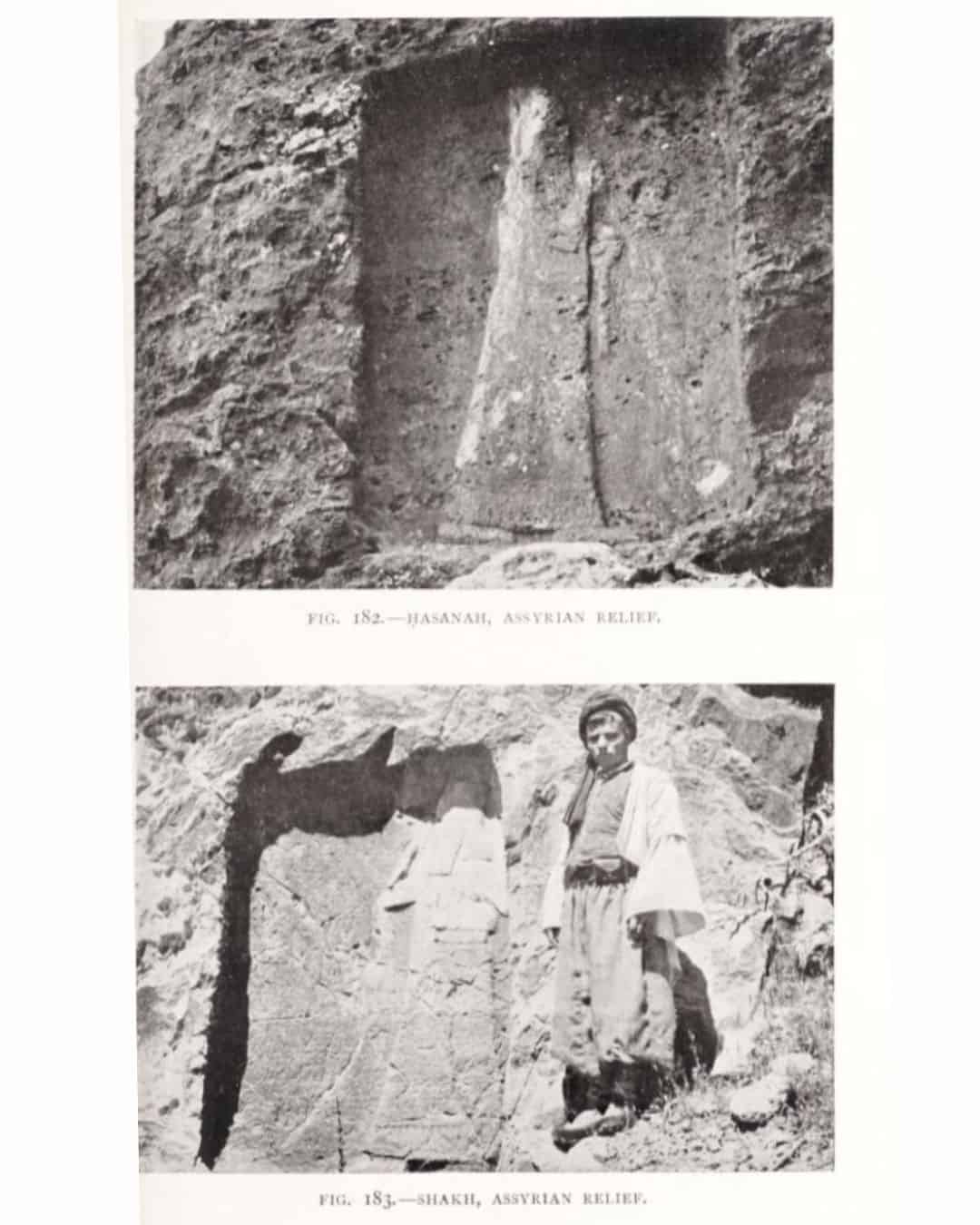
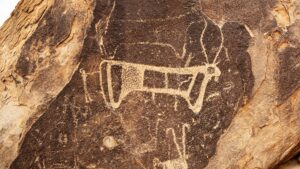
Fig. 183. The Assyrian relief at Shakh, photographed by Gertrude Bell in 1909. Bell was shown three of the four reported here; the fourth is cut into the cliff face and cannot be reached without ropes.
But Sennacherib is not a random villain to pin it on. He campaigned in this exact country in 697 BC, a few years after the disaster that overtook his army in Judah (see Isaiah 37:36), and he left his mark on the mountain in the most literal way available to an Assyrian king: a series of rock panels carved into the stone of the massif, recording his exploits.5 He knew the mountain by another name, Mount Nipur. So the tradition lays Sennacherib’s hands on the Ark’s timber at this mountain, and Assyrian archaeology, entirely independently, shows Sennacherib carving himself into it.
Of course his inscriptions say nothing whatever about the Ark; they are imperial war monuments. And the attributions are not all secure: at least one carving long tied to Sennacherib has been read by the Assyriologist Alan Millard as a provincial governor, Shamshi-ilu, instead. It is not that the reliefs prove the legend. It is that a real Assyrian king, carved for twenty-seven centuries into the mountain everyone already called the Ark’s, is precisely the kind of thing a story like the Talmud’s would grow up around. The carving is plausibly the seed.
Why Did the Aramaic Bibles Translate Ararat as Qardu?
When ancient Jewish and Syriac translators reached Genesis 8:4 and had to put the Hebrew phrase into Aramaic, they did not simply carry the sound of the word across. Targum Onkelos gives the mountains of Qardu. Targum Neofiti does the same. So does the Peshitta, the Bible of the Syriac-speaking church.6 These were not men speculating from a distance about a foreign range. They were working in the language of the country, for readers who lived within reach of the hills in question, and when the text said the Ark came to rest on the mountains of Ararat, they understood that to mean the Qardu highland. Mount Cudi is in that highland. The identification is not a later embellishment laid over the Bible. For the Aramaic-speaking world it was inside the Bible.
The Christian writers who follow are not all saying the same thing with the same precision. Epiphanius of Salamis, in the fourth century, places the landing in the highlands of Ararat between Armenia and the Cordyaeans, on a mountain he calls Lubar, and adds that the remains are still shown in the Cordyaean country, with the ruins of Noah’s altar to be found at the foot of the mountain if anyone looked properly.7 Lubar is a name he has taken from Jewish tradition rather than from local knowledge, so he is not naming Cudi outright. What he is doing is placing the Ark in the Kurdish highland and treating its remains as a thing people could go and see. Isidore of Seville, writing in Spain around 600, records that historians attest the Ark settled on Ararat, a mountain of Armenia, and that traces of its timbers can still be seen there.8
The most explicit Christian statement comes latest and from the Arabic-speaking church. Eutychius of Alexandria, a physician and patriarch writing a world history in the tenth century, is credited with stating without hedging that the Ark rested on the mountains of Ararat, which is to say Jabal Judi near Mosul.9 There is the identification, made flatly, by a Christian writer, naming the mountain we will be standing under.
What Happened to the Monastery on Mount Cudi?
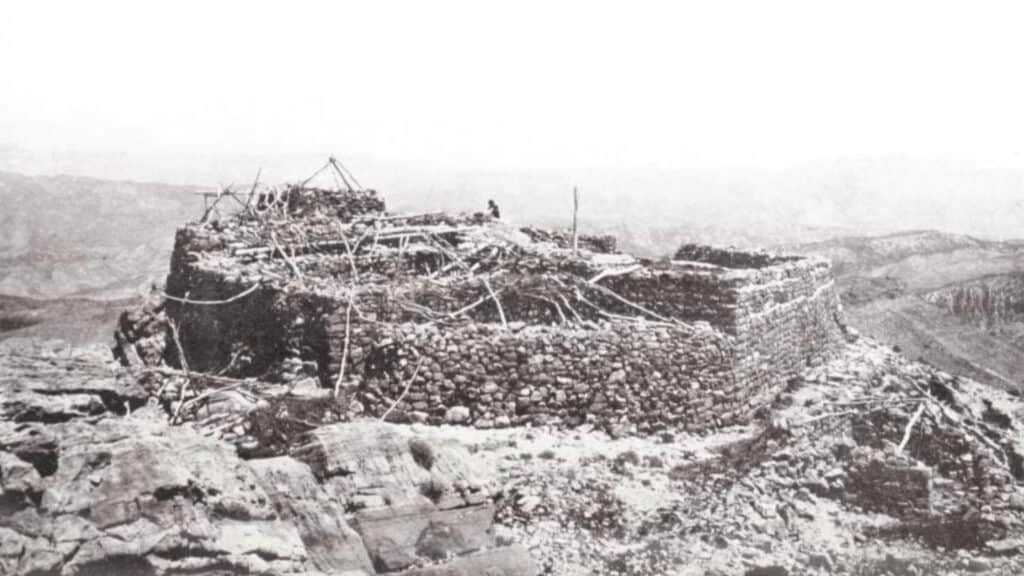
What grew from that reading was not a theory but a practice. By late antiquity a monastery stood on the heights of Mount Cudi, known in the sources as the Cloister of the Ark and in Turkish to this day as Geminin Manastırı, the Monastery of the Ship, along with other shrines and stone structures on the ridge. Syriac tradition credits its founding to Jacob of Nisibis, the bishop who taught Ephrem, and Turkish heritage records say he converted an older structure on the summit into a monastery in the fourth century. This was a working religious house on a mountain and its existence tells you how settled the tradition was. The most striking visitor came in the seventh century. After breaking the Persian armies at Nineveh, the Byzantine emperor Heraclius turned aside on his way home, went into the district the Arabic sources call Themanin, and climbed Mount Judi to look at the place where the Ark landed.10 An emperor at the height of his triumph made a detour up this ridge, and the chronicler reports it as an ordinary thing for a man in his position to want. Fourteen centuries later the detour is still worth making, which is why Mount Cudi sits on our Genesis expedition itinerary alongside Göbekli Tepe, Harran, Durupınar and Ararat itself.
The monastery did not survive, and a chronicle finished nine years afterwards records how. A large crowd had come up the mountain in November 766 for a customary feast at the place where the Ark came to rest. Lightning struck the shrine and fire consumed it with the people inside, turning its stones to lime. The chronicler puts the dead at seven or eight hundred and says nobody got out.[23] It was not rebuilt on the same footing. Foundations and worked stone remain on the heights, which is the reason anyone can still speak about the place in the present tense at all. Whatever else is uncertain about Mount Cudi, there are ruins on it, and they are ruins of buildings that existed specifically because of Noah.
At the foot of the mountain the medieval Arabic geographers place a village called Thamanin, and Ibn Hawqal, writing in the tenth century, reports the local claim plainly: that Noah’s companions came down from the Ark here and built the place.11 The name has been read as a memory of the eight souls who came off the boat, though the Arabic word means eighty rather than eight, and the identification of the site is itself unsettled, with the ruins under the village of Şah among the candidates. The interesting thing is not whether the name proves anything, but that the memory attached itself to this valley rather than any other.
Have you wondered about traveling to Eastern Turkey to see some of the ancient biblical sites? Fill out the form to be contacted about upcoming Eastern Turkey tours.
Why Does the Quran Say Noah’s Ark Landed on al-Judi?
By the seventh century the tradition was old, local and well established, and then it acquired the most widely read endorsement it would ever receive. Where the Hebrew Bible names a region, the Quran names a mountain. Surah Hud gives the account of the flood’s end and states that the ark came to rest upon al-Judi.12
That is the same name, in Arabic dress, that Syriac and Aramaic writers had been using for centuries. The Muslim geographers who catalogued the lands of the caliphate had no doubt which mountain was meant. Al-Masudi, the tenth-century Baghdadi scholar and traveler, says the mountain runs as far as Jazirat ibn Umar, the town on the Tigris now called Cizre, and that the place where the ship came to rest, on the summit, could still be seen. He also puts it eight farsangs from the river, which his translator reckoned at about thirty-two miles. That figure sits awkwardly beside a mountain he has just described as reaching the riverbank, and the farsang was an elastic unit in any case. 13 Ibn Hawqal, his contemporary, fixes it near Nisibin, modern Nusaybin, about eighty kilometers west of the mountain. A thirteenth-century geographer, Qazvini, records that wood from the Ark was still being seen on Mount Judi as late as the Abbasid period.
Scholars who study the Quran’s relationship to the literature around it have long noted how much of its material engages the Syriac Christian world of the late antique Near East, and the al-Judi identification is a natural candidate for that pattern: the Syriac church had been putting the Ark on Qardu for centuries beforehand, and the mountain sits in the middle of Syriac Christian country. Whether one reads the correspondence as borrowing, as shared regional memory, or as independent confirmation depends on convictions about the Quran of course. What can be said without controversy is the historical shape of it. The Quranic identification did not arrive out of nowhere. It landed on a mountain that already had a monastery on it named for the Ark.
The practical result is that pilgrimage to Mount Cudi is documented in every era from which records survive, in one tradition or another, over a longer span than almost any site associated with Genesis.14 And the most remarkable description of what that looked like comes not from antiquity but from the early twentieth century, when the English traveler and priest W. A. Wigram recorded what happened on the mountain each year on the fourteenth of September. Noah’s sacrifice was commemorated at a shrine on the ridge below the summit, and on that day, he wrote, every community in a famously divided country came up the mountain together: Christians of all confessions, Sunni and Shia Muslims, Sabaeans, Jews, and the Yezidis, each group bringing a sheep or a kid to offer, feuds suspended for the day, in what he called a truce of God in turbulent Kurdistan.15 They had come to mark an event, he noted, older than any of the divisions between them.
That is the mountain this article is about. Not a contested archaeological site with rival press releases, but a place where for most of recorded history the argument was not whether the Ark landed here, and where the people who disagreed about nearly everything else climbed the same ridge on the same day to remember it.
How Strong Is the Case for Mount Cudi, Really?
The people who have spent their careers on this question do not agree, and they do not divide along the lines you would expect. The argument is not believers against skeptics. It runs between people who accept the same ancient sources and read them differently, and it cuts across every position on how and when the Flood occurred. Here is the case against Mount Cudi, made as its defenders make it.
Is All the Evidence Really Just Berossus?
The strongest objection is also the most elegant. Rick Lanser of Associates for Biblical Research, who has studied the question for decades and favors Mount Ararat, argues that the impressive chain of ancient witnesses to Mount Cudi is not a chain at all. Trace each link back and they converge on one man: Berossus, whose siting of the Ark in the Gordyaean mountains cannot be separated from the Babylonian flood myth of Xisuthros that he inherited.16 On that reading, Josephus is quoting Berossus, the later writers are following Josephus, and what looks like the testimony of many independent traditions is a single Babylonian source echoing down a corridor for a thousand years. Lanser adds that the field evidence amounts to some bitumen and charcoal that might have come from anywhere. That argument deserves a serious answer rather than a brush-off, and there are two.
The first is that Berossus did not follow his own tradition. The Babylonian flood account he grew up with put the boat on Mount Nisir, generally identified with Pir Omar Gudrun in the Zagros range, a good distance southeast of Cudi. Berossus set that aside and named a different mountain, one that happens to match the Hebrew Bible rather than his own literature, and he gave a reason for it: people had seen the remains there. Whatever is going on in that decision, it is not a priest transcribing his inherited myth.
The second is the Aramaic evidence, which does not run through Berossus at all. The targums and the Peshitta were translating a Hebrew text, not summarizing a Greek historian, and they arrived at Qardu independently of one another. Ephrem the Syrian, writing in his own language a few days’ journey from the ridge, belongs to that stream rather than the Babylonian one. If the whole Cudi tradition were an echo of one Babylonian voice, the Aramaic-speaking translators and the Syriac fathers are difficult to account for.
Does the Geology Favor Ararat or Cudi?
This is where the popular version of the debate gets the direction of the evidence backwards, and it is also where a reader’s own convictions start to matter. The argument divides into a part that depends on a particular model of the Flood and a part that does not.
Let’s begin with what does not depend on it. The identification of Noah’s Ark with the mountain we now call Ararat is recent, and it was reached by inference rather than inherited from anyone. The Encyclopaedia Iranica, a reference work with no stake in this dispute, states that the name was applied to the volcanic massif by Europeans who reasoned that the region’s highest mountain ought logically to be the Ark’s landing place, and that early Armenian tradition up to the tenth century and Islamic tradition alike placed the landfall on Judi.17 That is a mainstream scholarly source conceding the historical core of the Cudi case without being asked to.
The second point is likewise available to anyone. By conventional geology the Ararat cone is young, built in the Pleistocene, and the mountain has remained seismically and volcanically restless into recorded history; the catastrophe of 1840 destroyed the village of Ahora and the monastery of St. Jacob on its flank. Whatever one believes about the Flood, a young and unstable volcano is an unpromising place to expect a wooden structure to survive for millennia, and it is a strange place for a tradition to have gone missing for the first thousand years of its existence.
Beyond that lies an argument made by geologists working within a flood-geology framework, and it is worth reporting accurately because it is usually reported backwards. Within that framework the geology counts against Ararat, not against Cudi. Andrew Snelling, a geologist at Answers in Genesis, describes Ararat as a stratovolcano built on top of thousands of feet of sediments his model attributes to the Flood, with the cone’s lavas dating to the period after the waters drained, so that on his reading the mountain did not yet exist to be landed on.18 The Institute for Creation Research reaches a comparable conclusion and proposes a different site west of Ararat. Cudi, by contrast, is not a volcano at all. It rose from the buckling of the crust, and Friedrich Bender, the German geologist who dug on the mountain, reported that the deposits at the site had been laid down under water.19 Readers who do not share that framework will not find the argument binding, and nothing in the case for Mount Cudi requires them to.
Rick Lanser’s reply, notably, is defensive rather than offensive: he argues that Ararat should not be dismissed for lacking sedimentary rock, which is a case for keeping his mountain in contention rather than a case against this one.20 Whichever framework a reader brings, anyone who says the geology sinks the Cudi claim has the argument pointed the wrong way.
Is Mount Cudi Too Low for Genesis 8?
Genesis says the Ark came to rest in the seventh month, and that the tops of the mountains became visible only in the tenth. A single towering peak has always seemed to fit that better than a modest ridge. But read the passage again with the geography in front of you. What it describes is a boat aground while other summits are still submerged, which requires a mountain among mountains rather than an isolated cone on a plain, and Ararat is precisely an isolated cone on a plain. Cudi sits in a long range at the southern rim of ancient Urartu. It also overlooks the Mesopotamian plain, which matters for what comes next in the story, because the people who came off that boat went to Shinar, and Genesis 11 has them travelling from the east into a plain they settle. A low mountain with an easy descent toward the very country the narrative sends them to is a better fit for the sequence than a five-thousand-meter volcano in the far north.
Which Mountain Is Even Called Cudi?
One more tangle that catches people. The name is not unique. For at least two centuries a high ridge on Mount Ararat itself has been called Cudi. There is a Cudi Dağı in south-central Turkey near Şanlıurfa and Harran, and the people around Harran hold that theirs is the mountain of the Ark. There is an al-Judi in Saudi Arabia, and the Encyclopaedia of the Qur’an argues that the Arabian mountain is what the Quran actually means. Some writers have even placed the Durupınar formation on a Mount Cudi. Any of these can be produced as evidence for or against something, depending on which mountain the writer needed. The Cudi this article is about is Cudi Dağı in Şırnak province, above Cizre, at roughly 37°22.6′ north and 42°27.2′ east, and it is worth checking which one a source means before trusting what it says.
What Bender Actually Found
The physical evidence is thin. At Easter 1954 the German geologist Friedrich Bender climbed Cudi and dug about a metre down at the spot local people identified as the landing place, recovering decayed wood fragments held together by an asphalt-like binder, which is suggestive given that Genesis has the Ark sealed with pitch. His laboratory dissolved the asphalt and dated the wood by radiocarbon, returning a model age of 6,635 years give or take 280, calculated from 1950, which places the material around 4,700 BC. A second test, which used up the remaining sample, confirmed the result.21
What to make of that depends on which chronology a reader holds. On a strict Ussher-style reckoning that dates the Flood to the middle of the third millennium BC, the wood is far too old and cannot be the Ark. On chronologies drawn from the Septuagint genealogies, which run considerably longer, the date sits much closer to plausible. And for a reader who holds no fixed date at all, the result establishes only that worked or burned wood was on that mountain a very long time ago.
Bender read the date against the archaeological evidence for flooding in Mesopotamia in the same period, and argued that the northern limit of that flood would fall at the first range above the plain rather than at Ararat, three hundred kilometers further north. That is an argument for Cudi over Ararat. It is not an argument for a global deluge, and Bender did not make one. Researchers working within a young-earth framework have since offered a different reading of the same wood, dating it to centuries after the Flood rather than to the Ark itself.22
The sample was small and the excavation shallow. A Turkish archaeologist reported wood and rock carvings on the mountain in 1971. Beyond that, no one has gone back to do the work properly in the seventy years since.
Mount Cudi has the oldest, broadest and best-attested claim to be the landing place of Noah’s Ark, and that claim survives the strongest objection raised against it, though not without effort. It also has almost nothing in the way of physical evidence, because almost no one has looked. What Cudi genuinely is, is the site with the deepest tradition and the shallowest excavation trench, which is an unusual combination.
You Can Visit Mount Cudi Today
Cudi stands in the corner of Turkey near where the Iraqi and Syrian borders meet, and that has governed access. The summit lay inside a military restricted zone until the spring of 2013. That September, Timo Roller travelled with Bill Crouse, Gordon Franz, Mark Wilson and John Baumgardner intending to reach the summit and did not get there, though local people made the climb the same year and prayed at the top.23 In July 2020 Turkish forces cleared the Sefine area in an operation named Yıldırım-1 Cudi, and the deputy interior minister prayed at the shrine and announced that citizens would be able to go up from the following day.24
What Is Actually on the Summit
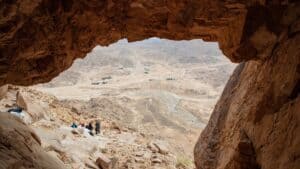
What survives is the wreckage of the tradition rather than of the vessel. Foundations and worked stone from the monastery lie on a small plateau below the top, walls and stone doorposts showing just above the soil. Higher up is the shrine the local name calls Sefine, the ship, on the peak that Turkish maps give as Nuh Peygamber Ziyareti Tepesi, the visitation hill of the prophet Noah. When Gertrude Bell (dubbed ‘the female Lawrence of Arabia’) climbed here in 1909 and photographed it, she found roofless drystone chambers that were roofed with cloth only for the annual gathering. Bell’s guide gave the place a second name, Sefinet Nebi Nuh, the ship of the prophet Noah.25
The summit shrine is not the highest point on the ridge. It sits roughly a hundred metres below it, which is worth knowing if you are looking at a map and wondering which peak people mean.
Why Do So Few Outsiders Come?
Sefine is not a deserted ruin. Şırnak holds an annual commemoration of Noah on the mountain, a mosque is going up at the site, paragliders launch from the ridge, and in July 2026 the Speaker of the Grand National Assembly flew up by helicopter, walked to the shrine among a crowd singing hymns, and prayed in the mosque at the top.26 What is scarce on Mount Cudi is not visitors, but foreign visitors.
The reason is a closure that English accounts of the mountain rarely mention. People had climbed to Sefine between July and September for centuries, the July gathering being the one that persisted longest, and the Turkish heritage record names the same communities Wigram listed: Jews, Christians, Sabians, Muslims and Yazidis. After the military coup of September 1980 those visits were forbidden, and the mountain then sat inside the long conflict between the Turkish state and the PKK, which used the heights. For forty years the shrine was effectively out of reach. Turkish forces cleared the Sefine area in July 2020, and it reopened.27
So the gathering Wigram watched, with every community in a divided district climbing on the same day, did not fade of its own accord. It was stopped by order, and it has been coming back for six years.
Three things still keep outsiders away. (1) The permits. Visits to the shrine require clearance, and a group booking a year ahead may not have its answer until a few months before travelling. (2) The distance. Cudi is a long way from anywhere on the usual biblical-sites circuit, four hundred kilometres from Ararat and further still from the Aegean churches. Reaching it means committing days rather than an afternoon. And (3) the attention went north. Once Europeans fixed the Ark to the volcanic massif they named Ararat, the expeditions, the funding and the documentaries followed. A mountain with no glacier to search and no rumoured hull under the ice makes poor television. Cudi kept its tradition but lost its audience.
Living Passages visits Mount Cudi on our Genesis expeditions, in the eastern Turkey itinerary that also takes in Göbekli Tepe, Harran, Ararat and Durupınar.
Notes
- Terrain data from PeakVisor: high point about 2,114 m at 37°22.6′ N, 42°27.2′ E, prominence 787 m. https://peakvisor.com/peak/mount-judi.html. The pilgrimage summit is separately named Nuh Peygamber Ziyareti Tepesi and sits about a hundred metres lower, around 2,010 m.. ↩︎
- Josephus, Antiquities 1.93 (1.3.6), quoting Berossus; see also Antiquities 1.90–92 (1.3.5), 1.95 (1.3.6), 20.24–25 (20.2.2), and Against Apion 1.130 (1.19). Whiston translation at Perseus: https://www.perseus.tufts.edu/hopper/text?doc=Perseus%3Atext%3A1999.01.0146%3Abook%3D1%3Asection%3D93 ↩︎
- Ephrem the Syrian, Commentary on Genesis 6.12, in St. Ephrem the Syrian: Selected Prose Works, Fathers of the Church 91 (Catholic University of America Press, 1994), p. 141. He makes the same identification in verse at Hymns on Paradise 1.10, freely readable: http://www2.iath.virginia.edu/anderson/ephrem.hymns/parad.1.html. ↩︎
- Babylonian Talmud, Sanhedrin 96a. Aramaic with the William Davidson English translation at Sefaria: https://www.sefaria.org/Sanhedrin.96a.3 ↩︎
- D. D. Luckenbill, The Annals of Sennacherib (University of Chicago Press, 1924), pp. 63–66, free PDF: https://isac.uchicago.edu/research/publications/oip/oip-2-annals-sennacherib. The reliefs were first described by L. W. King in Proceedings of the Society of Biblical Archaeology 35 (1913): 66–94. Published counts vary; the modern survey is Marc Nogaret in Revue d’Assyriologie 79 (1985): 64–66 ↩︎
- Targum Onkelos and Targum Neofiti at Genesis 8:4 render “mountains of Ararat” as the mountains of Qardu, and the Peshitta agrees. Note that Sefaria’s English of Onkelos harmonises to “Ararat”; the Aramaic reads טורי קרדו. For the Aramaic text with discussion: https://creation.com/en/articles/geographical-and-historical-concerns-in-genesis-8-4-part-2 ↩︎
- Epiphanius, Panarion 1.2.1 and 1.2.9, in F. Williams (trans.), The Panarion of Epiphanius of Salamis, Book I (Brill, 2009), pp. 16–17 and 48. The passages are quoted with page citations in Anne Habermehl, “Geographical and Historical Concerns in Genesis 8:4, Part 2”: https://creation.com/en/articles/geographical-and-historical-concerns-in-genesis-8-4-part-2d against the Williams volume itself. ↩︎
- Isidore of Seville, Etymologies 14.8.5: “Ararat mons Armeniae, in quo arcam historici post diluvium sedisse testantur.” Latin text: https://www.thelatinlibrary.com/isidore/14.shtm. ↩︎
- Eutychius of Alexandria, Annals, ch. 1 pt. 4. Latin translation by Edward Pococke, reprinted in Patrologia Graeca 111. No English translation exists. ↩︎
- Ibn al-‘Amid (al-Makin), Historia Saracenica, ed. T. Erpenius (Leiden, 1625), p. 17. Full scan: https://archive.org/details/ned-kbn-all-00001272-002. The episode also survives in the chronicle behind Theophilus of Edessa, trans. R. G. Hoyland (Liverpool University Press, 2011), p. 78. ↩︎
- Ibn Hawqal, in W. Ouseley (trans.), The Oriental Geography of Ebn Haukal (London, 1800), p. 30: https://archive.org/details/orientalgeograp00agoog ↩︎
- Quran, Surah Hud 11:44: https://quran.com/11/44. ↩︎
- Al-Masudi, Meadows of Gold, trans. A. Sprenger (London, 1841), p. 73: https://archive.org/details/historicalencycl00masrich. Sprenger places al-Judi as extending to Jezirah Ibn ‘Omar, eight farsangs from the Tigris; the gloss of about thirty-two miles is his own. ↩︎
- The individual attestations are collected in Al-Jeloo (see note 23): the Catholicos-Patriarch Dad-Isho’ I retiring to the monastery of the Ark in 422 (p. 161); Benjamin of Tudela, writing around 1170, on the Jews of Cizre visiting a synagogue near the Ark each year on 9 Ab (p. 164); J. J. Benjamin II in the late 1840s on a Kurdish tribe ascending to the summit each June (p. 164); Wigram on the September festival (see note 15); and Gertrude Bell’s own ascent in 1909, Amurath to Amurath (London, 1911), pp. 289–294. The record is continuous in the sense that no era leaves it unattested, not in the sense of an unbroken institutional practice: the monastery burned in 766, the site is last mentioned in the thirteenth century by Wilmshurst’s reckoning, and the multi-faith festival waned after the 1910s. ↩︎
- W. A. Wigram and E. T. A. Wigram, The Cradle of Mankind: Life in Eastern Kurdistan (Adam and Charles Black, London), p. 335. Full text at Project Gutenberg: https://www.gutenberg.org/cache/epub/44417/pg44417-images.html ↩︎
- Rick Lanser, “The Landing-Place of Noah’s Ark: Testimonial, Geological and Historical Considerations: Part One,” Associates for Biblical Research: https://biblearchaeology.org/research-articles/the-landingplace-of-noahs-ark-testimonial-geological-and-historical-considerations-part-one/ ↩︎
- Xavier de Planhol, “Ararat,” Encyclopaedia Iranica: https://www.iranicaonline.org/articles/ararat-mount-pers/ ↩︎
- Andrew A. Snelling, “Is Noah’s Ark on Mount Ararat?”, Answers in Genesis: https://answersingenesis.org/noahs-ark/noahs-ark-found/noahs-ark-mount-ararat/ ↩︎
- Bender’s report on the sedimentary character of the deposits, in “Wood Remains from the ‘Landing Site of Noah’s Ark’ Nearly 6,500 Years Old,” Bible and Spade 19, no. 4 (2006): 112–113. https://www.galaxie.com/article/bspade19-4-03
↩︎ - Richard D. Lanser, Jr., “The Case for Ararat,” Bible and Spade 19, no. 4 (2006): 114–116: https://www.galaxie.com/article/bspade19-4-04 ↩︎
- Friedrich Bender, “Wood Remains from the ‘Landing Site of Noah’s Ark’ Nearly 6,500 Years Old,” Bible and Spade 19, no. 4 (2006): 112–113. Bender’s 1972 report gives the year as 1953; Timo Roller, who worked through the Bender family papers in 2009, dates the ascent to Easter 1954 and notes that Bender’s own accounts conflict: https://www.bibelabenteurer.de/html/noahs_berg_2.html ↩︎
- “An Alternative Interpretation of Bender’s Wood,” Associates for Biblical Research: https://biblearchaeology.org/research/flood-of-noah/4164-an-alternative-interpretation-of-benders-wood ↩︎
- Timo Roller, “Pilgrims to Noah: The History of Pilgrimage to Cudi Dagh, the Mountain of the Ark,” in 2. Uluslararası Nuh Tufanı ve Cudi Dağı Sempozyumu (Şırnak Üniversitesi Yayınları, 2021), pp. 65–81, at p. 67. ↩︎
- Operation Yıldırım-1 Cudi and the deputy interior minister’s visit to Sefine are reported by Gazete Vatan, 14 July 2020: https://www.gazetevatan.com/gundem/cudi-dagi-nerededir-sirnak-cudi-dagi-hangi-bolgede-cudi-dagi-yuksekligi-kac-1330840 ↩︎
- The individual attestations are collected in Al-Jeloo (see note 23): the Catholicos-Patriarch Dad-Isho’ I retiring to the monastery of the Ark in 422 (p. 161); Benjamin of Tudela, writing around 1170, on the Jews of Cizre visiting a synagogue near the Ark each year on 9 Ab (p. 164); J. J. Benjamin II in the late 1840s on a Kurdish tribe ascending to the summit each June (p. 164); Wigram on the September festival (see note 15); and Gertrude Bell’s own ascent in 1909, Amurath to Amurath (London, 1911), pp. 289–294. The record is continuous in the sense that no era leaves it unattested, not in the sense of an unbroken institutional practice: the monastery burned in 766, the site is last mentioned in the thirteenth century by Wilmshurst’s reckoning, and the multi-faith festival waned after the 1910s. ↩︎
- Abdulkadir Selvi, Hürriyet, on the commemoration at Sefine attended by the Speaker of the Grand National Assembly in July 2026: https://www.hurriyet.com.tr/yazarlar/abdulkadir-selvi/cudide-terorsuz-turkiyeyi-konusmak-43230053 ↩︎
- Visits to Sefine in the first week of July, the prohibition following the coup of 12 September 1980, the use of the area by the PKK, and the clearing operations are reported by Habertürk, 2 July 2020: https://www.haberturk.com/sirnak-haberleri/79131940-hz-nuhun-gemisinin-karaya-oturduguna-inanilan-cudi-dagindaki-sefinede-turizm-hazirligi ↩︎