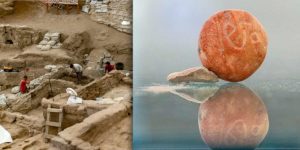
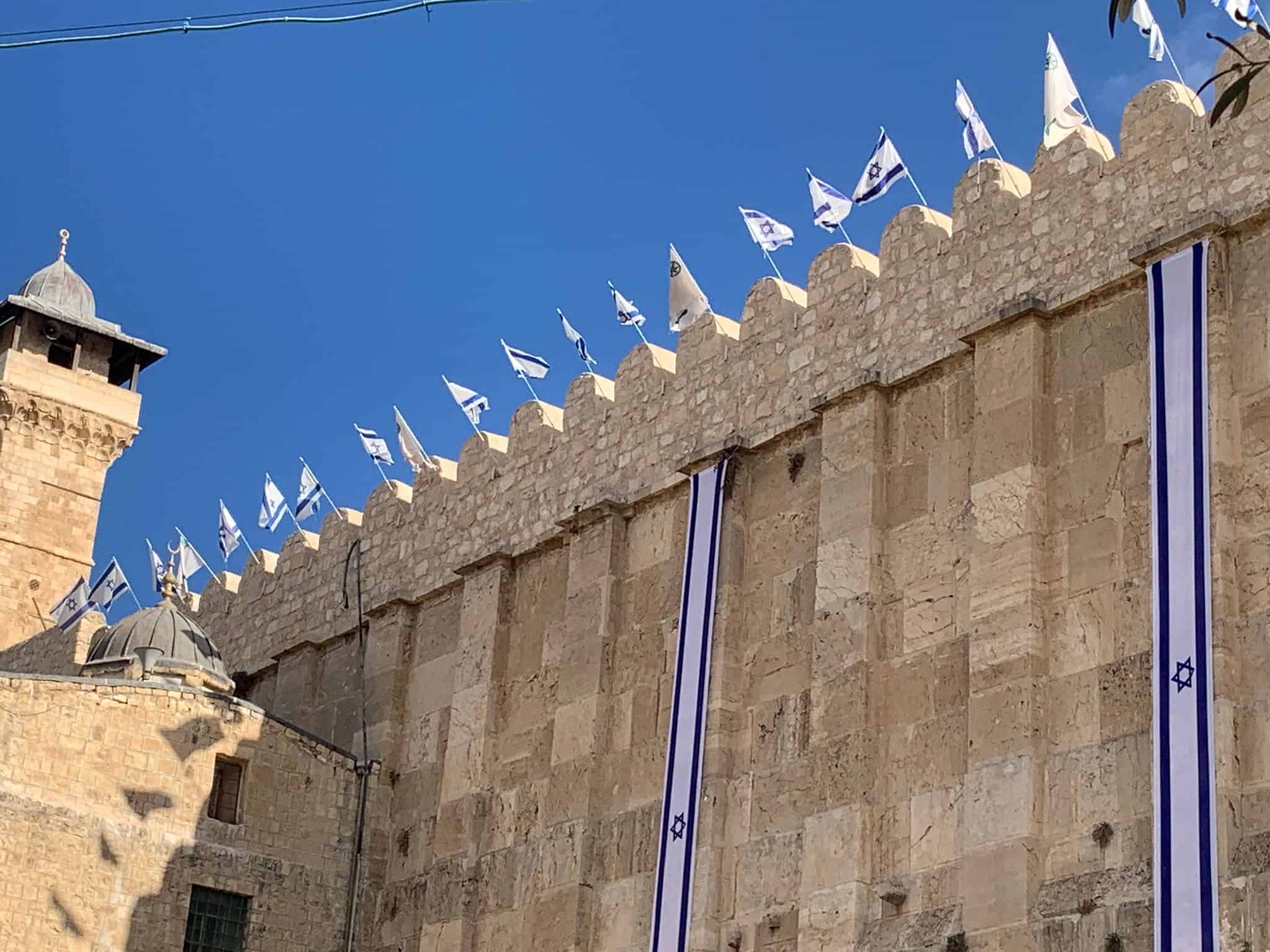
Machpelah Cave in Hebron, Israel
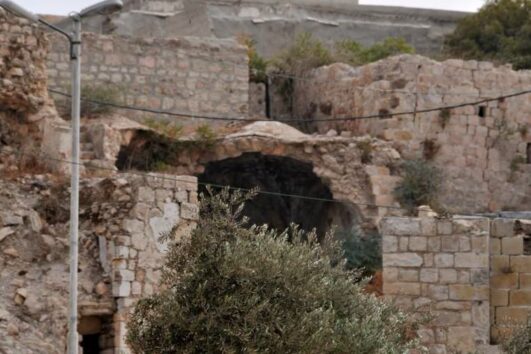
David: “‘To which shall I go up?’ And God said, ‘To Hebron’”
Did Caleb Spy Out Abraham’s Altar? What That Could Mean for Hebron Today?
By Jennifer Bartlett
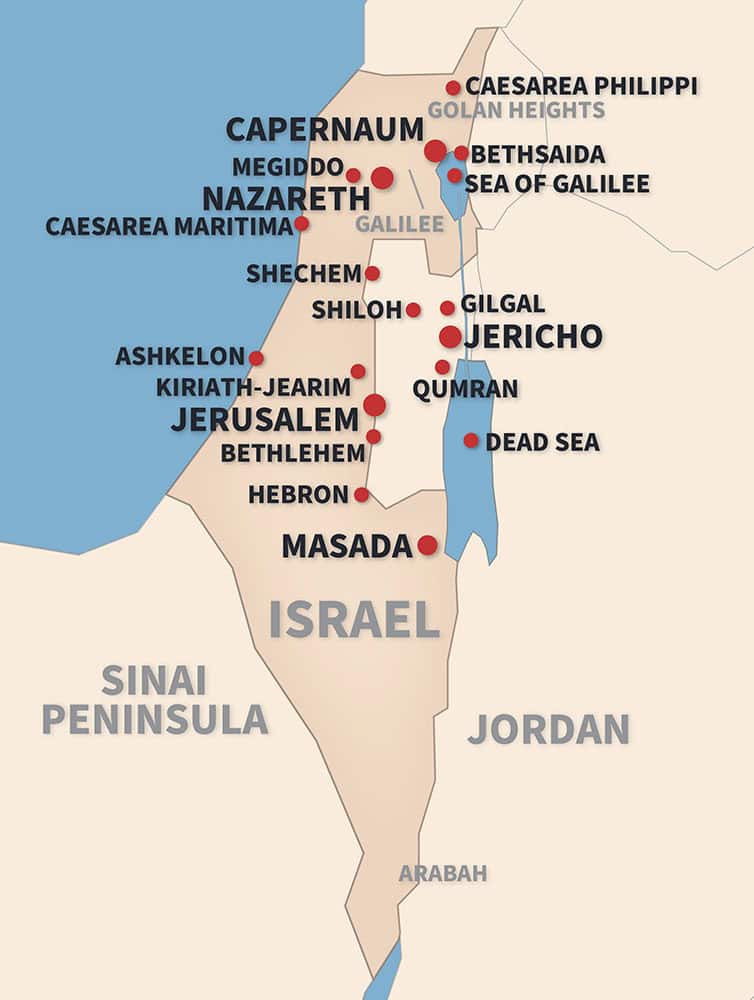
Of the many significant biblical sites throughout Israel and Jordan, the place with the deepest roots to the patriarchs seems to be Hebron. Why is this important to our Living Passages Bible study participants, and how do we know this, and why does it matter?
When God led the Israelites out of Egypt, only two men who had left Egypt as adults over the age of twenty were permitted to enter the land of Canaan: Joshua and Caleb. We know that Joshua was the great warrior who led the Israelites into the Promised Land (detailed throughout the book of Joshua), but what became of Caleb?
Caleb was one of the chiefs of Israel chosen to spy out the Promised Land (Num. 13:2). He was “from the tribe of Judah … the son of Jephunneh” (Num. 13:6). Of the twelve spies who brought back a report, only Joshua and Caleb expressed faith that God would bring them safely to their destination; the rest were vehemently opposed to the plan and incited the people to grumble against Moses and Aaron. As they began plotting to choose another leader who would take them back to Egypt, Joshua and Caleb “tore their clothes and said to all the congregation of the people of Israel, ‘The land, which we passed through to spy it out, is an exceedingly good land’ ” (Num.14:6–7, 14).
These two men trusted that God would go before them, drive out the wicked, idolatrous Canaanites, and give their land to the tribes of Israel, just as He had promised (Josh. 23:5). For their faithfulness, these courageous men not only entered the Promised Land; they both received special land grants: Joshua, who was from the tribe of Benjamin, received “the city that he asked, Timnath-serah in the hill country of Ephraim” (Josh. 19:50), and Caleb asked for the hill country of Hebron.
So, “according to the commandment of the Lord to Joshua, he gave to Caleb the son of Jephunneh a portion among the people of Judah, Kiriath-arba, that is, Hebron (Arba was the father of Anak)” (Josh. 15:13).
Once called Kiriath Arba (so named for the father of the very Anakim the rest of the Israelites feared to face), Hebron was given to Caleb, who “drove out from there the three sons of Anak, Sheshai and Ahiman and Talmai, the descendants of Anak” (Josh. 15:4).
By completing the mission to dispossess the Canaanites in the land of his inheritance, Caleb was as faithful to God after he settled in the land as he had been while wandering in the wilderness.
But why did Caleb want this particular plot of land for his own descendants? Could he have seen the altar that Abraham had built, while he was spying out the land?
To Read the Full Article, Fill Out the Form Below.
The Full Article Will Be Emailed To You!
Living Passages arranges customized Christian travel arrangements for the Bible scholar and their participants that can reach into areas of scripture that are generally overlooked. Call us to plan your next expedition at 208-765-8500.
Related Articles